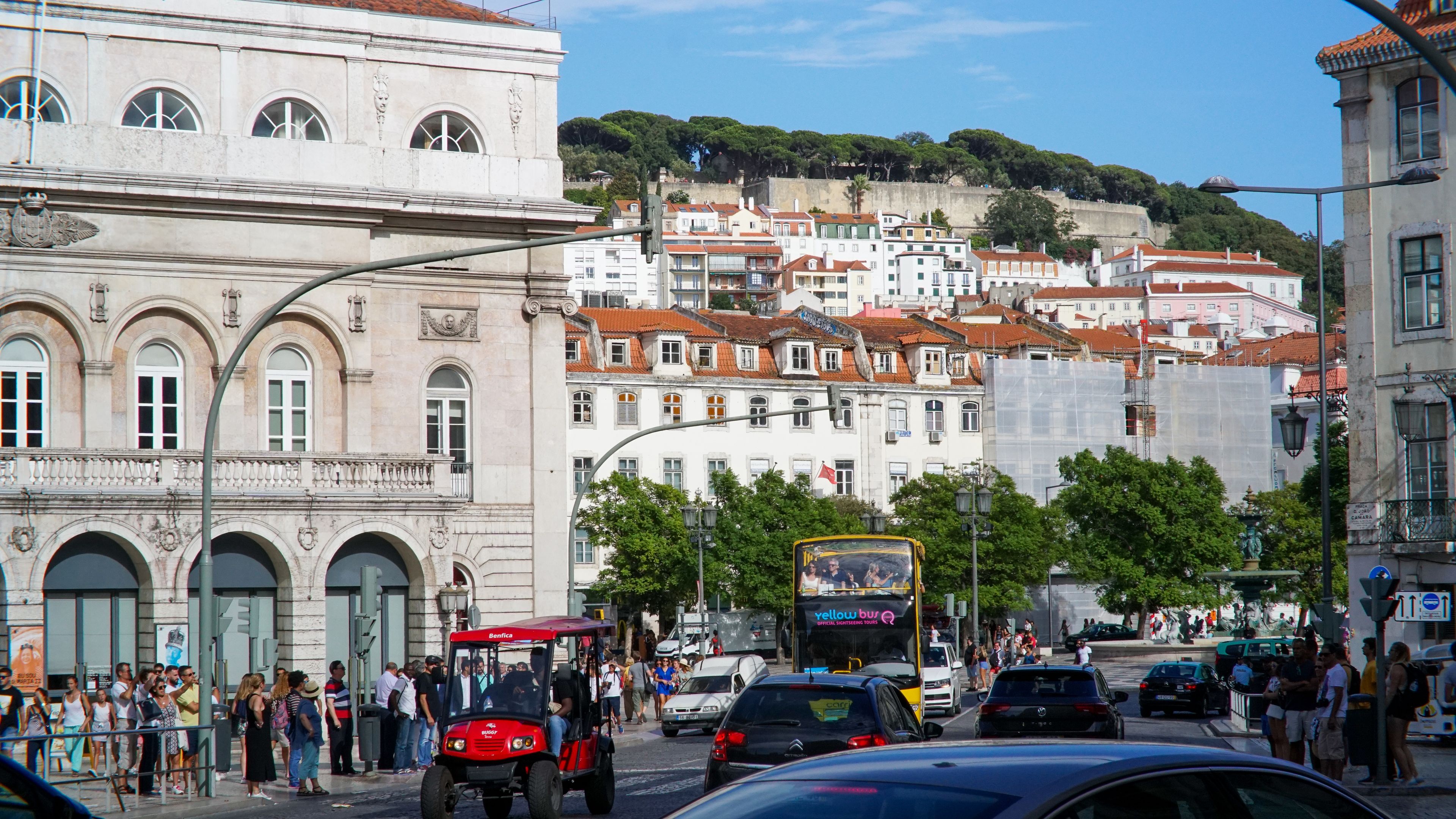
Lisbon Travel Guide for First-Timers: Neighborhoods, Tips & Where to Stay
- Lisbon
- Portugal
- Travel Guide
- First-Timers
- Trip Planning
A first-timer's Lisbon travel guide: the best neighborhoods, how many days you need, getting around the hills, honest 2026 costs, and exactly where to stay.
Most first-timers arrive in Lisbon expecting a flat, easy European city break and discover, about three hours in, that they've booked a hotel at the top of a hill paved in slick marble cobbles. This Lisbon travel guide is the orientation I wish someone had handed me before that first calf-burning afternoon: not a brochure, but the handful of things that actually shape a first trip here — how steep it really is, how many days you need, what it costs in 2026, and which neighborhood to sleep in so the city works for you instead of against you.
Here's the short version for a first visit of three to five days. Lisbon is built on seven hills with the old town spread between them, so two decisions matter more than anything else: base yourself flat and central (which mostly means Baixa or Chiado), and go in shoulder season if you can. Get those right, take the metro from the airport, wear shoes with grip, and eat your big meal at lunch — and Lisbon turns into one of the most rewarding, best-value capitals in Western Europe. The rest of this guide is the why, the how, and exactly where to point yourself next.
Why Lisbon rewards a little planning
Lisbon's appeal and its one real difficulty are the same thing: the terrain. The sights are genuinely spread out — the medieval Alfama quarter and São Jorge Castle on one hill, the nightlife of Bairro Alto on another, the UNESCO monuments of Belém a tram ride west along the river — and the connective tissue between them is a network of steep lanes paved in calçada, the polished limestone cobble that looks gorgeous and turns lethal in the rain (Lisbon Tourism — Travel Guide). None of this is a problem once you know it. It's only a problem if you book on instinct, assume everything's walkable-flat like Amsterdam, and pack the wrong shoes.
So the first-timer's job is small: understand the shape of the city, pick a flat and central base, and let the metro and trams do the climbing they're built for. Do that and the hills stop being a tax and start being the thing that gives every corner a viewpoint.
How many days you need (and when to go)
Three full days is the sweet spot for a first visit. Three days comfortably covers Lisbon's own essentials — the central old town and its viewpoints, the Belém monuments, an evening of fado — without rushing; first-time visitors need about three days of sightseeing to see the main sights without feeling hurried (Lisbon Lisboa Portugal — How many days). Add a fourth day if you want a day trip to Sintra or Cascais, which each eat a full day once you factor in transport (Earth Trekkers — 3 Days in Lisbon). Two days is doable but tight, and you'll be choosing what to skip.
When you go moves your experience — and your hotel bill — more than which hotel you pick. The value windows are the shoulder seasons: late March to mid-May, and mid-September to late October, when the weather is warm (highs typically 18-26°C), the light is good, the queues are shorter, and hotel rates sit well below the July-August peak (Lisbon Tourism — Best Time to Visit; U.S. News Travel). Peak is mid-July through August — highest prices, longest lines at the big monuments, and dinner reservations you'll genuinely need. October is a quiet star, still warm enough for all-day walking and a beach day trip, with crowds and prices dropping sharply after the first week of September (Lisbon Tourism — Best Time to Visit). If your dates flex at all, shifting from August to late September is the single biggest lever you have.
One booking note that bites first-timers: from April to October the good central hotels and apartments fill fast, so book two to three months ahead for anything central in Baixa, Chiado or Príncipe Real (Earth Trekkers — Where to Stay).
Lisbon travel guide to the neighborhoods at a glance
Lisbon's areas are easiest to understand through the two things a first-timer actually feels day to day: how central you are, and how steep the walk home is. Baixa is the flat valley floor between the hills — which is exactly why it's the most forgiving first base — and the gradient bites the moment you climb out of it into Alfama, Bairro Alto or Príncipe Real (Santorini Dave — Where to Stay in Lisbon; Go Ask A Local). Here's the orientation table; for the full area-by-area breakdown with specific hotels, follow the where-to-stay guide linked below.
| Neighborhood | Vibe | Best for | Flat or hilly | Nearest major sights |
|---|---|---|---|---|
| Baixa | Grand, central downtown | Most first-timers; day-trippers, easy walking | Flat (the valley floor) | Praça do Comércio, Rua Augusta, Santa Justa lift |
| Chiado | Elegant, literary, prettier | Couples, shoppers, design-minded first-timers | Gentle slope | Carmo ruins, Bairro Alto, shopping streets |
| Alfama | Medieval, fado, viewpoints | Romantics, atmosphere-first, light packers | Very steep | São Jorge Castle, miradouros, the Sé |
| Bairro Alto | Bohemian, nightlife by night | Night owls; not light sleepers | Hilly | Viewpoints, bars, Chiado below |
| Príncipe Real | Leafy, local, boutique | Couples, foodies who want a real neighborhood | Hilltop / hilly | Garden square, Jardim Botânico, Bairro Alto |
| Avenida da Liberdade | Grand boulevard, upscale | Flat + quiet + metro seekers | Flat | Marquês de Pombal, designer shopping |
| Cais do Sodré | Hip, riverside, loud at night | Foodies, night owls | Flat (riverside) | Time Out Market, Pink Street, river trains |
A one-line "base here if…" for each:
- Baixa — if you want the safest first-timer pick: flat ground, dead-center location, the best transport in town, walkable to almost everything. The only major area with no hill to climb. The trade-off is that it's the busy, touristy heart, so book a room a block off pedestrian Rua Augusta if you're a light sleeper.
- Chiado — if you'll trade a gentle slope for prettier, calmer streets one notch up from Baixa's bustle. It shares Baixa's metro and is considered "the better all-round base for most visitors" by many local guides (Go Ask A Local).
- Alfama — if atmosphere is the whole point and you're packing light for a short stay. It's the most beautiful and photogenic quarter and the spiritual home of fado, but it's the steepest, has no metro, and most stays are small guesthouses rather than full hotels (Santorini Dave). Better saved for a return visit if convenience matters.
- Bairro Alto — if nightlife on your doorstep is the draw; just know it's hilly, has no metro, and "explodes with bars and street parties at night," so it's poor for sleeping (Santorini Dave).
- Príncipe Real — if you want a real, leafy neighborhood with character and don't mind a hill home.
- Avenida da Liberdade — if flat ground, quiet and a metro stop matter most; book the side streets toward Baixa, because the boulevard itself leans luxury.
- Cais do Sodré — if dinner and drinks downstairs and riverside trains on the doorstep are the appeal; book a street back from Pink Street, which "gets very loud on weekends" (Santorini Dave).
The thread running through all of it: on a first trip, buy the most central and flattest room your budget allows, not the fancier room further out or higher up. For the detailed version with specific hotels by budget, see our guide to where to stay in Lisbon for first-timers, and for design-led standout stays, the best boutique hotels in Lisbon.
Getting around: trams, metro, and the walking reality
Lisbon's public transport is one of the genuinely cheap pleasures of the city, and using it well is half of having an easy first trip.
From the airport: take the metro. Lisbon Airport sits right on the metro's Red line, which reaches the Saldanha business district in about 16 minutes and downtown in around 25, with one quick line change at São Sebastião (Blue) or Alameda (Green) to reach Baixa or Chiado (Public Transport Guide — Lisbon). A single metro fare is €1.90, charged to a reusable Navegante card that costs €0.50 to buy; load pre-paid credit (the zapping option) and the per-ride rate drops to about €1.72 (Public Transport Guide — Lisbon). A taxi, Uber or Bolt runs roughly €12-15 and 15-20 minutes door to door (Lisbon Portugal Tourism — Airport). The metro is the obvious value pick unless you land after it stops (it runs roughly 6:30am to 1am), arrive with heavy luggage, or are headed to hilly Alfama, where the metro doesn't reach.
Around town: one Navegante card does almost everything. Loaded with zapping credit, it works across the metro, the historic trams, the funiculars, the buses and the CP trains out to Sintra and Cascais (Public Transport Guide — Lisbon). For a first trip that's all you need — no car, which only buys parking headaches in a walkable center.
The famous Tram 28 is a sight, a tourist trap, and a pickpocket hotspot — all at once. The iconic yellow tram is reliably packed between 10am and 5pm, with queues and a standing-room crush, and it's widely flagged as the single worst pickpocket spot in Lisbon, where organized teams work the jostle at the doors (Lisbon Lisboa Portugal — Tram 28; Alpha Keeper — Tram 28 safety). If you want the ride, board early at the Martim Moniz terminus so you can get a seat, or take Tram 12E, which does much of the scenic Alfama loop with a fraction of the crowds (Lisbon Lisboa Portugal — Tram 28). Either way, keep your phone in a front pocket with a hand on it.
The walking reality: central Lisbon is eminently walkable, but it is not flat, and the cobbles get slippery when wet. Base yourself flat and central and you'll walk far more than you ride — which is the point. Save the funiculars (Glória, Bica, Lavra) and the Santa Justa lift for when you genuinely want to skip a climb.
Does the Lisboa Card pay off? For a typical first-timer's 3-4 day trip, often yes — but do the quick math, don't assume. The card costs €31 / €51 / €62 for 24 / 48 / 72 hours, bundling unlimited public transport (including the Sintra and Cascais trains) with free entry to 50+ sites, among them the Jerónimos Monastery and Belém Tower (Lisboa Card — Prices; Time Travel Turtle — Lisboa Card review). It breaks even fast: if you'll see two or more of the big paid monuments and use transport daily, it typically pays for itself, and the 72-hour version works out to roughly €20.67 a day (Time Travel Turtle). It's weaker value if you're mostly wandering, eating and hitting free viewpoints, or if your days land on a Monday when many sites close (Time Travel Turtle). Helpfully, it activates on first use, not on purchase — so you can buy it ahead and start the clock when you're ready (Time Travel Turtle).
An honest 2026 cost snapshot
Lisbon spent a decade as Western Europe's bargain capital, and that reputation is now half out of date. The fair framing for 2026: it's still the most affordable major capital in Western Europe — cheaper than Paris, London and Amsterdam, a touch under Barcelona, roughly level with Madrid — but it's no longer a true bargain, with prices up sharply since the tourism rebound (Travel Cool Places — Is Lisbon expensive?; Machu Picchu — Lisbon Budget Guide 2026).
The useful way to think about it: Lisbon is a mid-priced city with one expensive category — accommodation — and a lot of genuinely cheap everyday life around it. A first-timer typically budgets roughly €100-150 a day excluding the room, covering food, transport and entries (Machu Picchu).
What a mid-range night actually buys, stated as bands rather than promises (your exact dates swing this, so always check live rates):
- A central 3-star runs roughly €100-180 a night, depending hard on season and neighborhood (Machu Picchu).
- A comfortable central 4-star sits around €140-180 in summer, dropping to €100-130 in winter (Machu Picchu).
The cheap part is daily life. A weekday prato do dia — the daily lunch plate, usually a main and a drink, sometimes soup and bread too — runs about €8-12 in a neighborhood spot off the tourist drag, where the same quality at dinner would cost €20-30 (Machu Picchu; Guide to Lisbon — Price Guide). An espresso (a bica) is €0.70-1.00, and a small draft beer (an imperial) is €1.50-2.50 (Guide to Lisbon). Eat your big meal at lunch and you'll eat better Portuguese cooking for a fraction of the à-la-carte dinner price.
The cost the room rate hides: the city tax. Lisbon charges a tourist tax of €4 per person, per night, capped at the first 7 nights, with children under 13 exempt — it doubled from €2 in September 2024 and has held at €4 through 2026 (Portugal Portfolio — Tourist Tax 2026). It's added at checkout, not in the nightly rate, so fold it into your budget: two adults over four nights is €32.
First-timer mistakes that quietly cost you in Lisbon
The fastest way to have a worse first trip isn't booking the wrong star rating — it's a handful of small, avoidable habits. Here's where first-timers reliably trip up:
- Wearing the wrong shoes. The polished calçada cobbles plus steep hills punish heels, leather soles and flip-flops — they're genuinely slippery, especially after rain. Bring rubber-soled flats, sneakers or boots with grip; this is the single most common regret first-timers voice (The Creative Adventurer — Lisbon mistakes).
- Treating Tram 28 as a must-do attraction. The ride is lovely; the midday crush is not, and it's the city's top pickpocket spot. Board early at the Martim Moniz terminus, or take the quieter Tram 12E, and keep valuables in a front pocket (Lisbon Lisboa Portugal — Tram 28; Alpha Keeper).
- Showing up to dinner at 7pm. Lisbon eats late — dinner is commonly 8-10pm, and many restaurants don't open before 8 (Discover Lisbon — first night mistakes). Roll up at 7 and you'll find the kitchen still setting up. Have a late-afternoon bica-and-pastry, then eat on local time.
- Defaulting to a taxi from the airport. It's the easy habit, but at €12-15 versus under €2 on a nearly-as-fast Red-line metro, it's money better spent on a good dinner (Lisbon Portugal Tourism — Airport). Save the taxi for late arrivals, heavy bags, or an Alfama address the metro can't reach.
- Eating on Rua Augusta and the main tourist drag. The pedestrian heart of Baixa is lined with photo-menu terraces charging tourist prices for ordinary food. Walk three or four streets off the strip and order the prato do dia at lunch — better food, a fraction of the price (Travel Cool Places).
- Not booking São Jorge Castle ahead in peak season. Show up at midday in summer and the ticket line can top an hour; book online in advance at the official site and walk in (Earth Trekkers — 3 Days in Lisbon).
- Buying the Lisboa Card "just in case." Great value if you'll hit multiple paid monuments and ride transport daily — dead money if your trip is mostly free viewpoints, neighborhoods and meals. Decide on your actual plan, not the fear of missing a discount (Time Travel Turtle).
Where to stay: the short version
Pick your neighborhood before your hotel — in that order — and lean toward the most central, flattest room your budget allows. For most first-timers that means Baixa (flat, central, best-connected) or Chiado (prettier, a gentle slope up), with Avenida da Liberdade for flat-and-quiet, Príncipe Real for leafy local character, Cais do Sodré for food-and-nightlife, and Alfama for an atmosphere-first short stay if you pack light. Use the map below to see what's actually free on your dates across the central areas, then go deep on the right guide.
From here, narrow it down by what you need:
- The full first-timer breakdown, area by area, with specific hotels across budgets: where to stay in Lisbon for first-timers.
- Design-led, characterful stays if you want somewhere special: the best boutique hotels in Lisbon.
What to do on a first visit
You don't need a minute-by-minute plan to get oriented — that's what the itinerary is for — but here's the shape of a first trip so the neighborhoods above make sense.
Day one is central Lisbon and its viewpoints. Wander Baixa's grand squares up through Chiado, then climb (or tram) into Alfama for the miradouros — Santa Luzia and Portas do Sol are the postcard ones — and on up to São Jorge Castle for the city's best panorama (Earth Trekkers — 3 Days in Lisbon). Cap it with dinner and a fado performance in Alfama or Bairro Alto, the haunting Portuguese song the city is famous for.
Day two is Belém, the riverside district of monuments a short tram or train ride west: the Manueline masterpiece of Jerónimos Monastery (a UNESCO site and the tomb of Vasco da Gama), the Belém Tower, and the Monument to the Discoveries — finished, obligatorily, with a warm pastel de nata from Pastéis de Belém, baking custard tarts since 1837 (Away Gowe — Jerónimos Monastery; Earth Trekkers — 3 Days in Lisbon). Squeeze in the Time Out Market for a sampler-style lunch if you've time.
Day three slows down — more neighborhoods, a market, the shops of Chiado and Príncipe Real, and the meals and viewpoints you missed.
A fourth day earns a day trip to Sintra, the fairy-tale hill town of palaces an easy train ride away: trains leave from Rossio station in Baixa, take about 40 minutes, run every 20-30 minutes, and cost roughly €4.90 return on your Navegante card (Sintra Portugal Tourism — train). For the full day-by-day version with timings and routes, see our 3 days in Lisbon itinerary.
Plan it in this order
The whole trip gets easier if you sequence the decisions:
- Pick your season. Shoulder (spring or early autumn) for the best value-per-experience; book peak-summer dates early and expect the upper price bands.
- Pick your neighborhood, then your hotel. Use the map above, lean central and flat, and start with where to stay in Lisbon for first-timers.
- Sketch your sights, then decide on the Lisboa Card — buy it only if you'll hit multiple paid monuments and ride transport daily.
- Take the metro from the airport, load a Navegante card, and keep the taxi for late arrivals or heavy bags.
- Check live rates for your exact dates before you commit — that's where the bands above turn into a real number.
Do Lisbon in this order and it stops being a calf-burning logistics puzzle. Sleep flat and central, wear shoes with grip, eat your big meal at lunch a few streets off the tourist drag, take the metro more than the taxi, and ride the trams early — and you've already done the things that separate a smooth, great-value first trip from an expensive, tiring one.
Next, pick your base with our Lisbon neighborhoods guide for first-timers.
FAQ
How many days do you need in Lisbon for a first visit? Three full days covers the city's own essentials — central old town and viewpoints, Belém, and a fado evening — without rushing (Lisbon Lisboa Portugal). Add a fourth day for a Sintra or Cascais day trip. Two days is tight but workable if you prioritize.
When is the best time to visit Lisbon? The shoulder seasons — roughly late March to mid-May and mid-September to late October — pair warm weather (highs often 18-26°C) with thinner crowds and hotel rates below the summer peak (Lisbon Tourism). Mid-July through August is hottest, priciest and busiest; if your dates flex, late September is a sweet spot.
Where should first-timers stay in Lisbon? Baixa for most people — it's the flat valley floor at the center of the old town, walkable to almost everything, on two metro lines plus the Sintra train, and the only major area with no hills to climb. Chiado is the prettier alternative if you'll take a gentle slope. Save hilly, metro-less Alfama for a return visit unless atmosphere outranks convenience. See our first-timer's where-to-stay guide.
Should I take the metro or a taxi from Lisbon Airport? The metro for value: the airport is on the Red line, reaching downtown in about 25 minutes for under €2 with one line change at São Sebastião or Alameda (Public Transport Guide). Take a €12-15 taxi or rideshare if you land after the metro stops (around 1am), have heavy bags, or are staying in hilly Alfama where the metro doesn't reach.
Is the Lisboa Card worth it? For most 3-4 day first-timers who'll see two or more major paid monuments and use transport daily, yes — it bundles unlimited transport (including the Sintra and Cascais trains) with 50+ free entries, and the 72-hour version works out around €20.67 a day (Time Travel Turtle; Lisboa Card). Skip it if your trip is mostly free viewpoints and meals, or falls on a Monday when many museums close.
Is Lisbon expensive in 2026? It's mid-priced by Western-European standards and still the most affordable major capital in the region, though no longer the bargain it once was (Travel Cool Places). Accommodation is the one genuinely expensive category; everyday food and transport stay cheap. Budget roughly €100-150 a day excluding the room, plus €4 per person per night in city tax for the first seven nights, with under-13s exempt (Machu Picchu; Portugal Portfolio).
Sources
- Santorini Dave — Where to Stay in Lisbon (best areas & terrain): santorinidave.com
- Go Ask A Local — Where to Stay in Lisbon (a local's neighborhood guide): goaskalocal.com
- Earth Trekkers — Where to Stay in Lisbon 2026: How to Pick the Best Area & Hotel: earthtrekkers.com
- Earth Trekkers — 3 Days in Lisbon Itinerary: earthtrekkers.com
- Lisbon Lisboa Portugal — How many days do you need in Lisbon? (2026): lisbonlisboaportugal.com
- Lisbon Lisboa Portugal — The number 28 tram of Lisbon (local's guide 2026): lisbonlisboaportugal.com
- Lisbon Tourism — Best Time to Visit Lisbon: Month-by-Month Guide (2026): lisbontourism.org
- U.S. News Travel — Best Times to Visit Lisbon: travel.usnews.com
- Public Transport Guide — Lisbon Transport Guide 2026 (Metro, Tram 28, Navegante & Passes): publictransportguide.com
- Lisbon Portugal Tourism — Lisbon Airport to the Center by Metro, Bus, Taxi (2026): lisbonportugaltourism.com
- Alpha Keeper — Lisbon Travel Safety: Tram 28 Pickpocket Hotspots (2026): alpha-keeper.com
- Time Travel Turtle — Is the Lisboa Card worth it? Detailed review (2026): timetravelturtle.com
- Lisboa Card — Official prices (updated 2026): lisboacard.org
- Travel Cool Places — Is Lisbon Expensive? Real daily costs and honest comparisons (2026): travelcoolplaces.com
- Machu Picchu — Lisbon Budget Guide 2026: Complete Cost Breakdown: machupicchu.org
- Guide to Lisbon — Lisbon Price Guide: Beer, Coffee, Taxi & Dinner: guidetolisbon.com
- Portugal Portfolio — Portugal Tourist Tax 2026: Verified Rates by Region: portugalportfolio.com
- The Creative Adventurer — 14 Tourist Mistakes Not to Make on Your First Trip to Lisbon: thecreativeadventurer.com
- Discover Lisbon — 5 mistakes I made on my first night out: discoverlisbon.org
- Away Gowe — Jerónimos Monastery in Lisbon: How to Visit + What to Expect: awaygowe.com
- Sintra Portugal Tourism — Lisbon to Sintra trains from Rossio station (2026): sintraportugaltourism.com
- Lisbon Tourism — Lisbon Travel Guide (tips, costs, calçada): mapandcamera.com