3 Days in Lisbon: The Perfect First-Timer Itinerary
- Lisbon
- Portugal
- Itinerary
- First-Timers
- City Break
A realistic 3 days in Lisbon itinerary for first-timers: what to do each day by neighborhood, where to base yourself, and how to skip the worst queues.
Most 3 days in Lisbon plans read like a checklist someone scattered across a map — castle here, Belém way out there, a viewpoint up some hill, good luck stitching it together. Then you arrive, discover the city is built on seven steep ones, lose an afternoon to a tram queue, and limp home. This itinerary is built the opposite way: each day is grouped so you walk a loop or ride one short hop, not zigzag the city. Do it like this and three days is genuinely enough to see the headline Lisbon without it turning into a calf-burning forced march.
The plan in one line: base yourself flat and central in Baixa, give Day 1 to the old hills (downhill, on purpose), Day 2 to Belém, and Day 3 to either Sintra or a slower central wander — and pre-book exactly two things, which I'll flag as we go. Everything else is walk-up, free, or a cheap tram ride. Because Lisbon's real tax on first-timers isn't money, it's the gradient and the lines, this guide spends as much ink on how to avoid both as on what to see.
Where to base yourself for these 3 days
For a three-day first trip, base yourself in Baixa — the flat valley floor at the dead center of the old town. This isn't a throwaway rec; it shapes every day below, so here's the reasoning.
Lisbon's hills are the whole catch. Baixa is the flattest neighborhood in the city by a wide margin, sitting in the valley between the hills of Alfama and Bairro Alto, which is exactly why it's the most forgiving base for first-timers or anyone with a wheeled suitcase (Santorini Dave). Step out of that valley and the gradient bites fast — so the trick this itinerary uses again and again is to gain the height by tram or lift and then walk down into Baixa, never up. A flat, central base is what makes that work.
It's also the best-connected address in town: Baixa sits on the Baixa-Chiado metro (Blue + Green lines), with Rossio station's Sintra trains a two-minute walk away (Lisbon Portugal Tourism). That matters here: Day 3's Sintra option leaves from Rossio, and Day 2's Belém run is an easy walk to the riverside transport. You're walking distance to Day 1 and a short hop from the other two.
As a rough 2026 guide, a 3-star in central Lisbon runs roughly €80–150 a night and a 4-star around €120–250, climbing steeply in peak summer (Lisbon Lisboa Portugal); shoulder months are the value sweet spot. Solid flat-and-central anchors for a search are Hotel da Baixa (a 4-star on pedestrianized Rua da Prata) or My Story Hotel Figueira (a 4-star on Praça da Figueira, two minutes from Rossio's trains) — central and genuinely level. For the full area-by-area breakdown across budget bands, see the best areas to stay in Lisbon, or weigh the two central picks in our Baixa vs Chiado comparison.
Because this is a planning post — you're booking later, not tonight — scan live rates for your actual dates now and lock the base when you're ready. The map compares what's free across booking sites:
Since you'll likely book a few days out rather than this minute, a single delayed-booking safety net helps: you can check live rates for central Lisbon stays on Expedia and come back to it within the week. One booking-order rule: lock the hotel and your two timed tickets (the Jerónimos Monastery, and — if you do Sintra — Pena Palace) before you fuss over restaurants. Those are the only things that genuinely sell out or constrain your days.
Day 1 — The old hills and the historic core, walked downhill
Day 1 is the postcard Lisbon — castle, viewpoints, Alfama's maze, the grand riverfront — and the secret to enjoying it is direction of travel. You start high and finish low, so the only real climb is one you take sitting down on a tram.
The loop: Tram 28 up to the castle → Castelo de São Jorge → down through Alfama's miradouros → Sé Cathedral → Praça do Comércio and the Baixa core, with the Santa Justa Lift as an optional cap. It's a full, satisfying day, and after the tram you're walking almost entirely downhill.
Morning — beat the tram, then the castle. The famous Tram 28 is both a sight and a trap: it's the single worst pickpocket spot in Lisbon and a reliably packed crush between roughly 10am and 5pm — but ride it before 9am and the queues are short, the light is lovely, and you'll actually get a seat (Lisbon Lisboa Portugal; Time Travel Turtle). Board at Martim Moniz, the eastern terminus where it starts empty, keep your bag zipped and on your front, and take it up toward the castle. Castelo de São Jorge opens at 9:00 (until 9pm Mar–Oct, 6pm Nov–Feb), with an adult ticket around €15 in 2026 — and the only authorized online seller is BilheteiraOnline (BOL), so ignore the lookalike resale sites (Castelo de São Jorge; Tourism Attractions). Early, you get the ramparts and the city-wide view before the tour groups land.
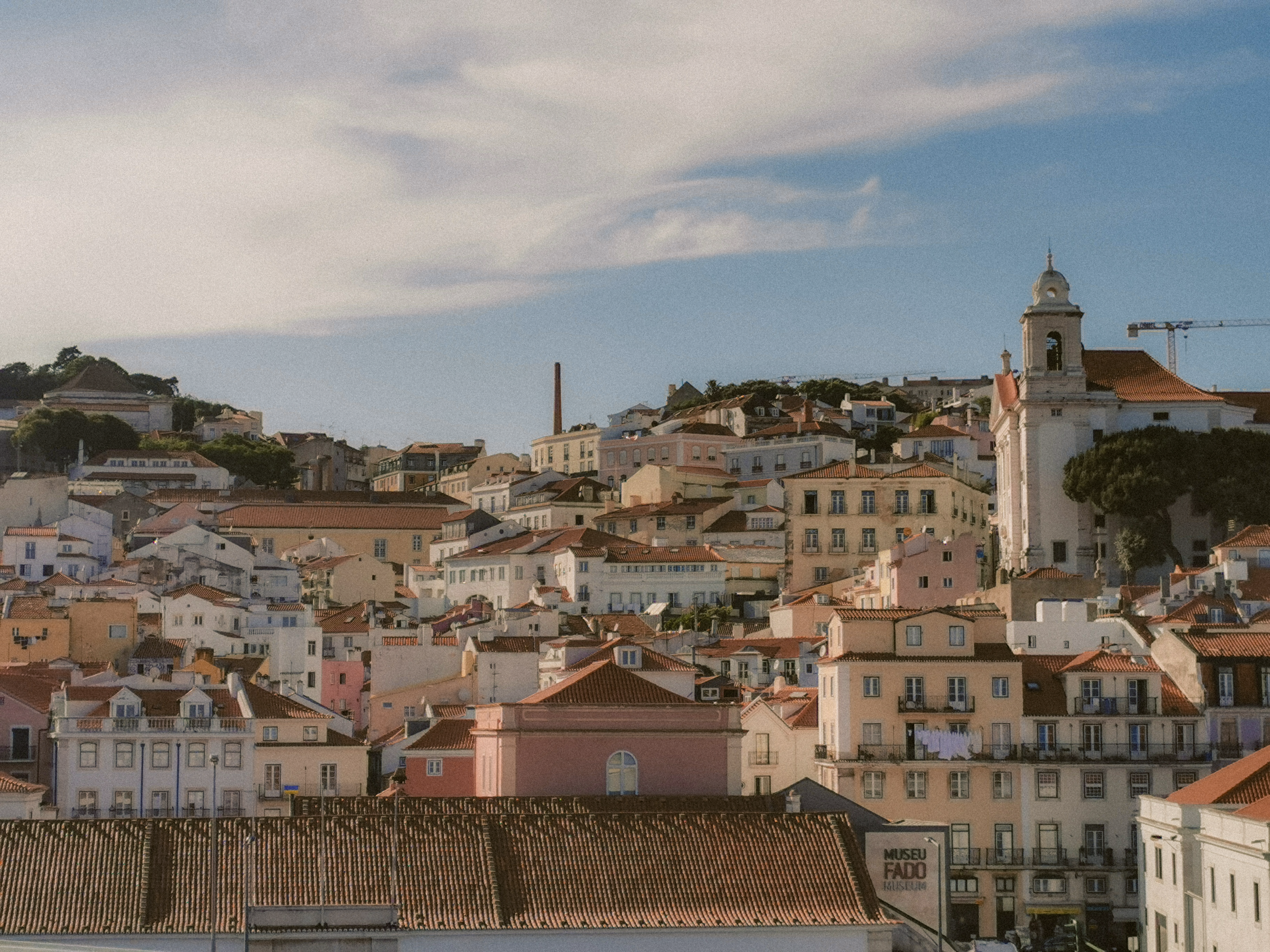
Midday — Alfama, all downhill. From the castle, wander down into Alfama, the city's oldest quarter and a tumbling maze of tiled façades and fado bars. Aim for two viewpoints a short stroll apart: Miradouro das Portas do Sol, arguably Lisbon's most famous panorama over the terracotta roofs, and just beside it the calmer Miradouro de Santa Luzia, set in a little azulejo-tiled garden under a bougainvillea pergola (Lisbon Portugal Tourism). Keep dropping toward the river and you'll hit the Sé Cathedral, Lisbon's oldest, dating from 1147, open daily roughly 7am–7pm and free to enter (Lisbon Lisboa Portugal). The whole descent is the best part of the day — narrow, unplanned, and entirely on foot.
Afternoon — the flat core. From the cathedral it's about an eight-minute walk down to Praça do Comércio, the vast riverfront square, then back up the pedestrian Rua Augusta through the heart of Baixa. If your legs are willing, the Santa Justa Lift is the one bit of vertical worth paying for — but skip the always-long street-level queue and reach the upper platform from the top, via the Carmo square, then ride down. End the day with dinner up in Chiado or Bairro Alto, a short climb (or the Bica/Glória funicular) from Baixa.
Skip-the-queue — Day 1. The Santa Justa Lift's ground-level queue can eat 30–45 minutes; the walkway from Largo do Carmo at the top reaches the platform with no line. And Tram 28 is only miserable midday — ride it first thing or after 7pm. A single Carris/Metro ticket is just €1.90, valid for an hour across tram, bus and metro, so one tap covers the tram up and a hop later (Carris).
Day 2 — Belém: monastery, tower, and the original custard tart
Day 2 heads west to Belém, the riverside district of Age-of-Discovery monuments — and it's the flattest sightseeing of the trip, almost all on level riverside paths. The one thing to get right is timing the monastery, your first pre-booked sight.
Getting there. From central Lisbon, the fastest route is the train from Cais do Sodré toward Cascais, which reaches Belém in about 7 minutes and runs every 20 (Lisbon Portugal Tourism). The scenic alternative is Tram 15E, roughly 25–40 minutes but more of an experience. Go early either way.
Morning — pastéis first, then the monastery. Start at Pastéis de Belém, baking the original custard tart since 1837 from a recipe handed down from the Jerónimos monks — it's the only shop legally allowed to use the "Belém" name; everywhere else sells pastéis de nata (Santos de Lisboa). It opens at 8:00, and here's the local trick: the enormous queue snaking outside is the takeaway line — walk in the main door for a table and you're usually seated in under 10 minutes, even at peak, among 1,000-odd seats in the back rooms (Santos de Lisboa). A tart runs about €1.50. Then walk two minutes to the Jerónimos Monastery, the Manueline masterpiece that's the headline sight out here. This is your first must-book. It's open Tuesday–Sunday (9:30am–6:30pm May–Sep, to 5:30pm Oct–Apr), closed Mondays, with an €18 adult ticket — and crucially, the walk-up queue can run up to two hours in high season, so reserve a timed slot online before you go (Jerónimos Monastery; Essencial Portugal). The adjoining church is free.
Midday — riverside monuments. It's a flat 10–12 minute walk along the water from the monastery to the Monument of the Discoveries and then the Belém Tower, the 16th-century fortress on the Tagus that is Lisbon's signature image. One current caveat worth planning around: the tower reopened on 27 May 2026 after conservation work, and entry now runs on timed half-hour slots with a reduced daily cap (around 900 visitors) — and at the time of writing the usual third-party online sellers are not yet listing it, so tickets are via the official monument channels and the on-site office only (Tourism Attractions; The Better Vacation). If you only want the photo, the exterior from the riverside is free and arguably the better view anyway. The tower is also closed Mondays.
Afternoon — LX Factory. A short tram ride (15E) or a 25–30 minute walk back toward the city brings you to LX Factory in Alcântara, a former industrial complex turned creative warren of independent shops, cafés and street art under the 25 de Abril bridge — free to wander, open daily (Mon–Fri from 10:30am, weekends from 9am) (LX Factory). It's the perfect low-key, flat counterpoint to a monument-heavy morning. Head back to the center for the evening.
Skip-the-queue — Day 2. The two big time-sinks in Belém are both beatable. At Pastéis de Belém, ignore the outdoor queue and go straight in for a table. At the monastery, a pre-booked timed ticket walks past the worst of the line — do not arrive on spec in summer. And don't plan Belém for a Monday: the monastery and the tower are both closed.
Day 3 — Choose your ending: Sintra, or a slower Lisbon
Day 3 forks, and the honest answer is it depends on your legs and your appetite for a big day out. Most first-timers should do Sintra; if you'd rather not spend a full day on a day trip, Option B is a relaxed central Lisbon you'll have only skimmed so far.
Option A — Sintra (the classic, but commit to it)
Sintra — a hilltop town of fairy-tale palaces 40 minutes from the city — is the day trip nearly everyone takes, and it's worth it, but it eats the whole day, so treat it as Day 3 entire, not an add-on. Take the train from Rossio station (two minutes from your Baixa base), about 40 minutes straight there (Sintra Portugal). The headline sight is the technicolor Pena Palace — your second must-book: it runs on timed entry and reliably sells out in spring and summer, so buy the slot in advance (Piña Colada Passport). From Sintra station, the 434 tourist bus loops up to the palace and castle (about €7.60 round-trip, ~20 minutes up) — don't try to walk it. Realistically you'll fit two or three sights — pair Pena with the romantic gardens and tunnels of Quinta da Regaleira and you've had a full, magical day. Then train back for a final dinner.
Option B — A slower central Lisbon
Prefer to stay put? Day 3 is your chance to do the central Lisbon you rushed past — at half the pace and zero train logistics. A loose, mostly-flat plan: a morning museum (the dazzling National Tile Museum or the Calouste Gulbenkian), then lunch at the Time Out Market in Cais do Sodré — 26 of the city's best kitchens under one roof, open from 10am daily (to midnight Sun–Wed, 2am Thu–Sat) and a three-minute walk from Chiado (Time Out Market). Afterward, wander Chiado's literary cafés and the world's-oldest-bookshop on Rua Garrett, ride the photogenic Bica funicular, and finish with sunset drinks at a miradouro before a last dinner in Bairro Alto. It's the trip's exhale.
Skip-the-queue — Day 3. If you choose Sintra, the Pena Palace timed ticket is non-negotiable in season — turning up without one risks a sold-out day. Take the first morning train from Rossio you can manage; Sintra's crowds and bus queues build fast by late morning. If you stay in town, you've already dodged the day's biggest line by skipping the day trip entirely.
Your 3 days in Lisbon itinerary at a glance
One grid for the whole trip — what each day covers, what to pre-book versus walk up, and the day's queue-beating move.
| Day | Area covered | Highlights (morning · afternoon · evening) | Pre-book or walk-up | Skip-the-queue move |
|---|---|---|---|---|
| Day 1 | Castelo · Alfama · Baixa (downhill) | Tram 28 + Castelo de São Jorge · Alfama miradouros & Sé · Praça do Comércio + Chiado dinner | Mostly walk-up (castle tickets via BOL) | Ride Tram 28 before 9am; reach Santa Justa platform from the top |
| Day 2 | Belém + Alcântara | Pastéis de Belém + Jerónimos Monastery · Belém Tower & riverside · LX Factory | Pre-book the Monastery (€18); tower is timed-slot, official channels only | Go inside Pastéis de Belém for a table; never visit on a Monday (both closed) |
| Day 3 (A) | Sintra day trip | Train from Rossio · Pena Palace · Quinta da Regaleira | Pre-book Pena Palace (sells out); 434 bus ~€7.60 | Take the first morning train; don't walk up the hill |
| Day 3 (B) | Central Lisbon, slow | Tile or Gulbenkian museum · Time Out Market lunch · Chiado, Bica & Bairro Alto | Mostly walk-up | You've skipped the day's biggest queue by staying in town |
Practical notes: tickets, the Lisboa Card, and getting around
Do you need the Lisboa Card? For this plan it's a close call worth the quick math. The card is €31/24h, €51/48h, €62/72h, and bundles free entry to the Jerónimos Monastery, Belém Tower and Castelo de São Jorge plus unlimited public transport, including the airport metro and the CP trains to Sintra and Cascais (Lisboa Card). Add up the paid hits — monastery (€18), castle (€15), the tower, your Belém train and Tram 28, and the Sintra return — and a 48- or 72-hour card can pay for itself, especially if you do Sintra. The trap: even with the card you still reserve timed slots for the busy sights (monastery, Pena Palace) — it covers admission, not the reservation. Skip Sintra and the tower and individual tickets may edge it; do the full plan and the card usually wins.
The two things to pre-book, again: the Jerónimos Monastery (timed slot, to dodge a two-hour line) and, if you do Sintra, Pena Palace (it sells out). Buy the castle ticket from BOL, not a reseller. Everything else is free or walk-up.
Getting around. No car — central Lisbon is walkable and parking is a headache. A single Carris/Metro ticket is €1.90, valid for an hour across tram, bus, metro and funiculars; or load Zapping credit (from €3) onto a €0.50 Navegante card and tap as you go (Carris). The metro reaches Baixa, Chiado and Cais do Sodré; trams and funiculars handle the hills. Base yourself flat and central and you'll walk far more than you ride.
On pace. Three days done this way is plenty for the headline Lisbon — resist a fourth area. The plan front-loads the hilly day (gravity on your side), puts the one essential reservation on a flat day in Belém, and leaves Day 3 flexible. Don't bolt a second day trip onto a three-day first visit; you'll shortchange the city itself.
FAQ
Is 3 days enough for Lisbon? For the headline sights — the old hills and Alfama, Belém, and either Sintra or a slower central day — yes, comfortably, if you base yourself flat and central and group each day by area so you're not crossing the city repeatedly. It's not enough to add a second day trip or go deep on lesser museums; save those for a return.
What should I pre-book for a 3-day Lisbon trip? Just two things: a timed slot for the Jerónimos Monastery in Belém (to skip a queue that hits two hours in summer), and — if you visit Sintra — Pena Palace, which sells out its timed entries in season. Buy the Castelo de São Jorge ticket from the official BOL platform. Almost everything else is free or walk-up (Essencial Portugal; Piña Colada Passport).
Where should I stay for a walkable 3 days in Lisbon? In Baixa — the flat valley floor at the center of the old town. It's walkable to Day 1, two minutes from the Sintra trains at Rossio for Day 3, and the easiest base to navigate with luggage in a hilly city. See our best areas to stay in Lisbon guide.
Should I do Sintra as a day trip on a 3-day Lisbon visit? Most first-timers should, but commit to it as a full day, not a half-day add-on — the train is 40 minutes each way and Pena Palace plus one more sight fills the day. If a big day out doesn't appeal, spend Day 3 on the slower central Lisbon you skimmed (museums, Time Out Market, Chiado). Either is a good ending; just don't try to half-do both.
Is the Lisboa Card worth it for this itinerary? Often yes, especially if you do Sintra. Tally the monastery, castle, Belém Tower and all your transport (including the Sintra train), and a 48- or 72-hour card can beat buying separately. Remember it covers admission but not the timed reservations for the monastery and Pena Palace — you still book those (Lisboa Card).
Lock your base, then walk Lisbon downhill
The hard part of a three-day Lisbon trip isn't the sightseeing — it's the hills and the queues, and both are solved by planning. Book a flat, central base, reserve your two timed tickets, take the trams up and walk down, and the days run themselves in the loops above. Use the map to compare live rates for your dates, lean toward the most central, flattest room your budget allows, and Lisbon stops being a logistics puzzle and starts being the view-around-every-corner city it's meant to be.
Planning the wider trip? Our Lisbon first-timer's travel guide ties the neighborhoods, sights and budgets together, and our first-timer where-to-stay guide goes deeper on the base.
Sources
- Santorini Dave — Where to Stay in Lisbon (best areas & terrain): santorinidave.com
- Lisbon Portugal Tourism — Lisbon Metro map, stations & 2026 guide: lisbonportugaltourism.com
- Lisbon Lisboa Portugal — The cost of hotels in Lisbon (price guide 2026): lisbonlisboaportugal.com
- Castelo de São Jorge — Schedules and plan your visit: castelodesaojorge.pt
- Tourism Attractions — Lisbon Castle ticket prices 2026: tourismattractions.net
- Lisbon Lisboa Portugal — The number 28 tram: a local's guide for 2026: lisbonlisboaportugal.com
- Time Travel Turtle — Beat the queues for Tram 28 in Lisbon: timetravelturtle.com
- Lisbon Portugal Tourism — Miradouro das Portas do Sol viewpoint guide: lisbonportugaltourism.com
- Lisbon Lisboa Portugal — The Alfama district of Lisbon (Sé Cathedral, viewpoints): lisbonlisboaportugal.com
- Lisbon Portugal Tourism — How to go to Belém by train, bus and tram: lisbonportugaltourism.com
- Santos de Lisboa — Pastéis de Belém: opening hours, price & queue tips (2026): santosdelisboa.pt
- Jerónimos Monastery — Tickets, tours & visitor information: jeronimos-monastery.pt
- Essencial Portugal — Jerónimos Monastery Lisbon: tickets and hours 2026: essencial-portugal.com
- Tourism Attractions — Belém Tower visiting hours 2026 (reopening, timed entry): tourismattractions.net
- The Better Vacation — Belém Tower Lisbon 2026 (tickets, hours, reopening): thebettervacation.com
- LX Factory — official site (what it is, opening hours): lxfactory.com
- Sintra Portugal — Lisbon to Sintra by train: the complete 2026 guide: sintra-portugal.com
- Piña Colada Passport — Easiest way to do a day trip to Pena Palace (timed entry, sells out): pinacoladapassport.com
- Time Out Market Lisboa — official (hours, chefs, location): timeout.com
- Lisboa Card — official prices 2026 (24/48/72h, inclusions): lisboacard.org
- Carris — Prices table 2026 (single ticket, Zapping, Navegante): carris.pt