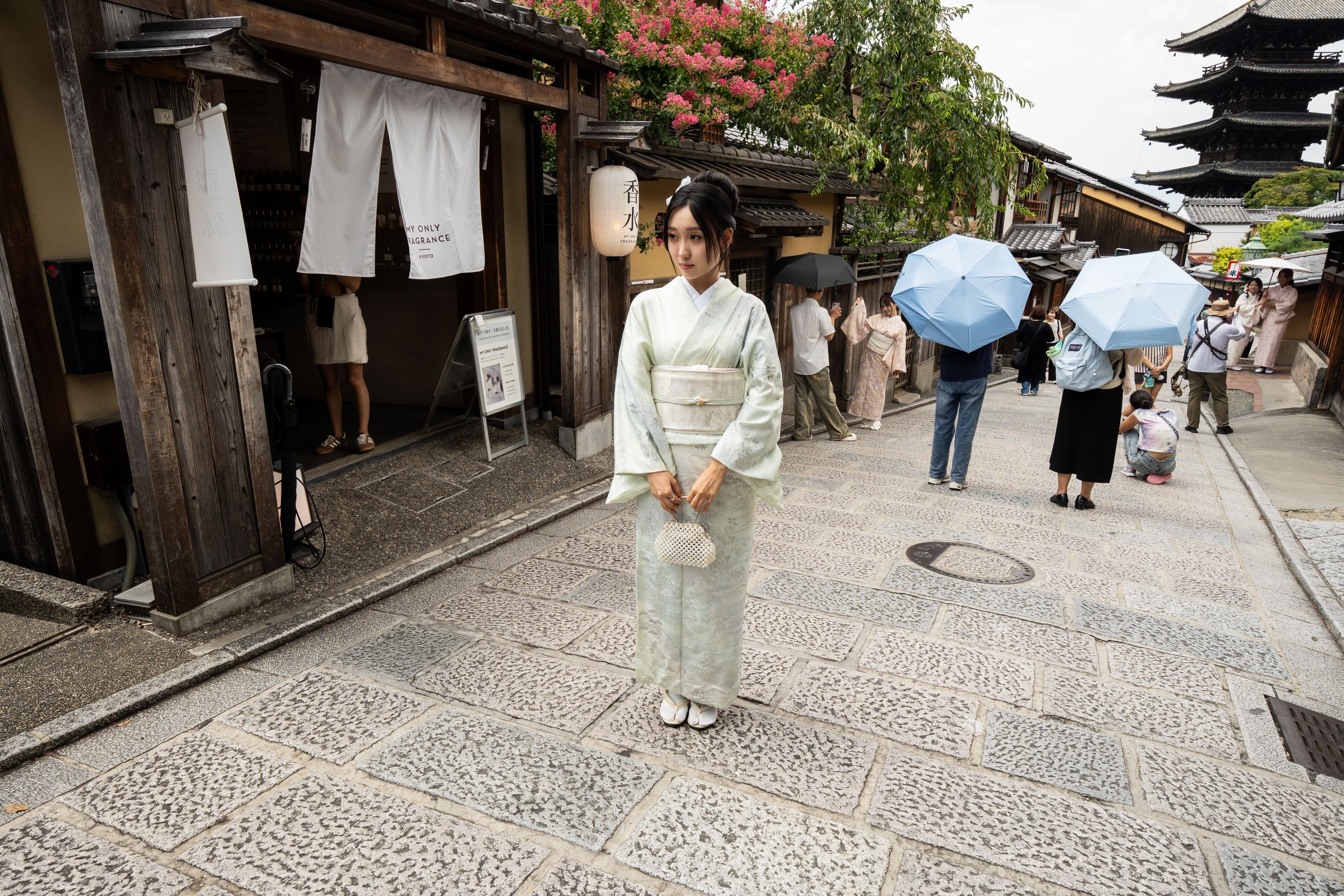
Kyoto on a Mid-Range Budget: The Comfortable-Value Travel Guide
- Kyoto
- Japan
- Travel Guide
- Mid-Range
- Where to Stay
A Kyoto travel guide for mid-range trips: which area to base in for value, hotel vs ryokan vs machiya, season and budget bands, and how to plan it well.
A great-value Kyoto trip is decided before you ever filter a hotel by price. This Kyoto travel guide for mid-range travelers is built around the one call that actually shapes a comfortable trip in a city whose temples are scattered across its whole sprawl: where you base, and what type of stay you book. Get those two right — a central, walkable 3-4 star at a fair rate — and Kyoto feels generous on a mid budget. Get them wrong and you'll pay peak-season money to commute by crowded bus into the city you came to see.
Here's the short version for the default traveler — couples, friends, a first proper trip, no hostel bunk and no five-figure ryokan splurge: base yourself Downtown around Kawaramachi, book a modern 3-4 star hotel for most of your nights, and treat a ryokan as a one- or two-night experience rather than the whole trip. The real value sweet spot is a roughly ¥15,000-28,000 downtown or station hotel — not the prettiest room in Gion, which is the city's most expensive and most transit-awkward base despite the postcard appeal. The rest of this page is the honest, opinionated version of all of that, then it points you to the right deep-dive to close each decision.
The one idea that makes a mid-range Kyoto trip cheaper and better
Before anything else, the fact that drives every booking decision below: Kyoto's sights are spread out, and its public transport is thinner than the city's size suggests. As one local guide puts it, "Kyoto's main sights are spread out all over the city and often on its edges… there's no one area from where you can easily do all of your sightseeing" (Go Ask A Local). Japan Guide is blunter, calling the transport "rather inadequately developed… for a city of its size" — two subway lines plus a bus network whose connections can be awkward (Japan Guide).
So the value question isn't "what's the cheapest room?" It's "what's the best location per yen?" A bargain hotel 25 minutes out by bus stops being one the moment you've blown your evenings on transfers. On a mid budget, the move is a comfortable 3-4 star inside — or one quick train hop from — the walkable downtown core, then spending any extra on location rather than a larger room two wards out.
Two facts about getting around make the where matter even more:
- The subway is just two lines. The Karasuma Line runs north-south (it serves Kyoto Station); the Tozai Line runs east-west; they cross at Karasuma-Oike, where you can transfer between them (Kyoto Travel). Most temples aren't near either, so you'll lean on buses to the famous shrines — and those buses get badly crowded in peak season (Japan Guide; Go Ask A Local).
- One IC card covers it. A Kansai One Pass, ICOCA or any Suica/PASMO-type card works across Kyoto's railways and buses — tap on, tap off, forget about tickets (Kyoto Travel).
The upshot for the whole trip: pick one central base, stick to it, and don't scatter your nights across the city. Everything below assumes that one rule.
The honest mid-band orientation (the part most guides skip)
Neutral guides quote an average nightly rate and move on. Here's the opinionated framing that actually saves a mid-range traveler money and regret.
The value sweet spot is a ¥15,000-28,000 downtown or station hotel. Kyoto runs expensive — limited room stock keeps rates high year-round, and a "mid-range" room here is roughly ¥10,000-20,000 (about US$65-130) a night, with rates climbing hard in peak season (Inside Kyoto; Budget Your Trip). The comfortable-value band most travelers should aim for sits a notch up from the bottom: a modern 3-4 star with a decent-sized room, often a public bath, in or beside the walkable core. Throughout this guide, bands are relative within Kyoto's mid-range: $ = lower mid-range, $$ = typical mid-range, $$$ = top of mid-range / boutique.
Gion looks best and costs most — and has the worst transit. First-timers reflexively want to sleep in Gion/Southern Higashiyama, the lantern-lit historic quarter. It's a wonderful place to be and a poor place to base: accommodation there is among the priciest in the city and books out fast, there's no subway in the historic core (you're on the Keihan line and crowded buses, on hilly streets), and the quarter winds down early because dining skews to high-end kaiseki and exclusive teahouses (Go Ask A Local; Japan Guide). You can visit Gion on a ten-minute walk from Downtown; you don't need to pay to sleep in it. We weigh it head-to-head in our Gion vs Downtown comparison.
A car is a liability, not a convenience. Skip the rental entirely. Driving in Kyoto means heavy traffic and a constant scramble for parking, with central day-parking running roughly ¥1,200-2,000 — and the consensus is that the city's trains, subways and buses make a car "quite unnecessary" inside Kyoto (Japan Guide – car rental). The Japan Rail Pass is for intercity travel and does little for daily Kyoto sightseeing, so don't let it push you toward an inconvenient base either (Japan Guide).
The season you pick swings cost and availability more than the hotel does. Kyoto's two peak windows are spring cherry blossom — first blooms around late March, with full bloom forecast around April 1-2, 2026 (Snow Monkey Resorts) — and autumn foliage (koyo), which peaks from mid-November into early December (Japan Highlights). In those windows the same 3-4 star can cost far more and sell out months ahead; summer is hotter, quieter and cheaper. Choosing the month is the single biggest lever on your budget — more than which hotel you pick.
Budget the new accommodation tax — it changed this year. From March 1, 2026, Kyoto's lodging tax rose to a tiered, per-person, per-night charge: ¥200 for rooms under ¥6,000, ¥400 for ¥6,000-19,999, ¥1,000 for ¥20,000-49,999, and up to ¥10,000 at the luxury top end (Kyoto Travel – tax change). Reputable coverage calls the new top rate the highest hotel tax in Japan (Travel Tomorrow). For a typical mid-range room it's a modest ¥400 a head per night added at checkout — small against the room bill, but worth knowing it's coming so your budget is honest.
Where to base yourself on a mid budget
Four bases cover almost every sensible mid-range Kyoto stay. Here's what each one's value actually feels like — and the one honest trade-off that comes with it.
Downtown Kawaramachi — walkable value, the default base
This is the answer for most mid-range travelers. Downtown — the Kawaramachi/Shijo grid straddling Nakagyo and Shimogyo wards — is Kyoto's commercial heart, "always bustling… packed with shops, big department stores, restaurants, bars" (Go Ask A Local). For a mid budget it nails the two things that matter — it's central and walkable — and it has by far the deepest bench of comfortable 3-4 star hotels, so you're buying in a competitive market, not paying a scarcity premium. Nishiki Market and the covered arcades are on foot; the Karasuma and Tozai subways plus the Hankyu and Keihan railways all run through here; and Gion's lanes are a flat ten-minute walk across the Kamo River (Go Ask A Local).
The value is about: walkability and the densest mid-range hotel stock in the city. Who it suits: almost everyone — first-timers, couples, foodies, value-maximizers who want to step out into food and transit and not solve logistics. The honest trade-off: it's modern and busy, "not 'Old Japan'," and the central blocks can be noisy — pick a room set back from Kawaramachi-dori if you're a light sleeper. Stay types that fit: modern business and boutique hotels (e.g. Cross Hotel Kyoto and Hotel Resol Kyoto Kawaramachi Sanjo, both central downtown picks (Inside Kyoto; Hotel Resol)); a central machiya rental for groups.
The full first-trip breakdown with specific hotels is in our best areas to stay in Kyoto for first-timers, and the wider area-by-area in where to stay in Kyoto (mid-range).
Kyoto Station — transit, Shinkansen and luggage ease
The one base that can out-argue Downtown — not on charm, but on pure practicality. The Kyoto Station district (southern Shimogyo) is the city's transport hub: the shinkansen, every JR line, the Karasuma subway, the airport trains and the main bus terminals all converge here, so "getting around town (and beyond) is easy" (Go Ask A Local) — and it has more business hotels and better-value rooms than the prettier districts.
The value is about: transit, easy day trips (Osaka/Nara in under an hour), and not dragging luggage across a bus-dependent city. Who it suits: transit-first travelers, day-trippers, anyone arriving or leaving with big bags or on an early train, and short-stay visitors who'll be out all day. The honest trade-off: it's a modern transport district — "not very pretty… not historic," busy by day and quiet at night, roughly a 30-minute walk (or a quick hop) from the downtown action (Go Ask A Local). Stay types that fit: modern business hotels — Daiwa Roynet Hotel Kyoto-Ekimae Premier, underground-connected to the station (Daiwa Roynet), and Sakura Terrace, a sociable courtyard-and-public-bath value pick a short walk south (Inside Kyoto). Worth flagging the ceiling: The Thousand Kyoto, two minutes from the station, is a polished 4.5-star — lovely, but a luxury splurge, not a mid-range pick (The Thousand Kyoto).
The station picks, matched by traveler need, are in our best mid-range hotels near Kyoto Station.
Higashiyama & the Gion edge — atmosphere, at a premium
The area most first-timers want and most should visit rather than base in. Gion and Southern Higashiyama are "by far the prettiest, most historic, and traditional part of Kyoto" — pedestrian lanes, machiya, Yasaka Shrine, the climb to Kiyomizu-dera, lantern glow at dusk (Go Ask A Local). On a mid budget it's the weakest of the central options for the reasons above: priciest rooms, no subway in the core, and an early-closing evening. Since April 2024, Kyoto has even banned tourists from Gion's private alleys after overtourism complaints (Japan Guide).
The value is about: waking up inside the old-Kyoto postcard — and walking the temple lanes empty at dawn before the day-trippers arrive. Who it suits: atmosphere-first couples and repeat visitors who'll pay the premium, plan around early mornings, and don't need late dinners or quick transit. The honest trade-off: the prettiest base in Kyoto, and the most expensive, least connected, and earliest to quiet down. Stay types that fit: ryokan-style boutiques and mid-price ryokan on the quieter edges (e.g. Ryokan Yachiyo, a long-running garden ryokan near Nanzen-ji (Inside Kyoto)); anchor near the Keihan line so you're not fully bus-dependent after dark.
Central Karasuma — the quiet-local gem
If Downtown sounds right but you want calmer evenings, shift one notch west to the Karasuma corridor, around Karasuma-Oike, where the two subway lines cross. It's the smart middle ground: "much calmer than busier parts like Shijo or Gion" while staying "within walking distance of the bustle," because the blocks here are more offices and mixed-use than tourist crush (Vocal Media). That subway interchange is the quiet superpower — both the north-south and east-west lines under one station, so you can reach almost any direction without the bus lottery.
The value is about: the best transit-to-quiet ratio in the city, five minutes' walk from Downtown. Who it suits: families, couples, light sleepers, and anyone who wants central-and-connected but a quieter street to come home to. The honest trade-off: fewer restaurants and less atmosphere on the immediate blocks — you'll walk five minutes east to Downtown for the densest dining. Stay types that fit: dependable mid-range hotels around Karasuma-Oike (e.g. Mitsui Garden Hotel Kyoto Kawaramachi Jokyoji, a quiet 4-star built into a 500-year-old temple's grounds in the central core (Expedia – Mitsui Garden Kawaramachi Jokyoji)); apartment-style stays for self-caterers.
Travelling as a family? We lay out the calmest, most practical picks in the best areas to stay in Kyoto for families.
Then pick your stay TYPE: hotel vs ryokan vs machiya
Where you base is half the decision; what you book is the other half. On a mid budget you're choosing between three types, and the smart play is rarely "all one." Here's how to spend the budget well.
Modern business / boutique hotel — your default for most nights. This is where the comfortable-value band lives: a clean, well-located 3-4 star with a decent room, reliable Wi-Fi and often a public bath, for roughly ¥15,000-28,000. Kyoto's downtown and station chains (Cross Hotel, Mitsui Garden, Daiwa Roynet, Resol, Sakura Terrace and the like) deliver this without a luxury markup, and there are enough of them that you can shop on price and dates (Inside Kyoto). Book this for the bulk of your nights and put the saved money toward location.
Mid-price ryokan — pay up for one or two nights, not the whole trip. A ryokan is a genuine Kyoto experience worth having: tatami rooms, futon bedding, often a kaiseki dinner and a soak. The mid-price tier exists — Nishiyama Ryokan, a modern-building ryokan just north of downtown, and Ryokan Yachiyo, a garden ryokan in Higashiyama, let you try it without the five-figure splurge (Inside Kyoto). But ryokan nights cost more than an equivalent hotel, and the rituals (set meal times, earlier evenings) suit a special night more than a week. The value move: one or two ryokan nights, hotel the rest. We pick the best options in our best mid-range ryokan in Kyoto.
Machiya townhouse — best for small groups and longer stays. A restored machiya (traditional wooden townhouse) is the dark-horse value play: you rent the whole house, usually with a kitchen and tatami rooms, so for a family or group the per-person cost can undercut several hotel rooms — and the kitchen and space pay off on a longer stay. It's less convenient for a quick two-night dash (check-in is often self-service), but for the right traveler it's the most characterful mid-range option in Kyoto. The picks and trade-offs are in our best mid-range machiya stays in Kyoto.
The mid-range Kyoto base decision, at a glance
| Base area | What the value is about | Typical mid-range band | Stay types that fit | Best for |
|---|---|---|---|---|
| Downtown Kawaramachi | Walkability + densest mid-range stock | $$–$$$ | Business/boutique hotels; central machiya | Most travelers; first-timers, foodies, value-maximizers |
| Kyoto Station | Transit, Shinkansen, luggage ease | $–$$ | Modern business hotels | Day-trippers, luggage-heavy, early trains, short stays |
| Higashiyama / Gion edge | Atmosphere (priciest, poorest transit) | $$–$$$ | Ryokan-style boutiques, mid-price ryokan | Atmosphere-first couples, repeat visitors who'll pay up |
| Central Karasuma | Best transit-to-quiet ratio | $$–$$$ | Dependable hotels; apartment-style stays | Families, light sleepers wanting central-but-calm |
Bands are relative within Kyoto's mid-range and swing hard by season — always check live rates for your exact dates before you commit.
Find the right deep-dive for your decision
This guide is the map; each link below is the close. Start with the area, then narrow to the stay.
- Choosing your area first: Where to stay in Kyoto (mid-range) for the full area-by-area, and the best areas for first-timers for the safe default picks.
- Booking a specific stay type: best mid-range hotels near Kyoto Station, best mid-range ryokan in Kyoto, and best mid-range machiya stays in Kyoto.
- Stuck between two options: Gion vs Downtown Kyoto for the base question, and Kyoto vs Osaka: where to base if you're weighing a regional base.
- Traveling as a family: the best areas to stay in Kyoto for families.
- Planning around the season: cherry blossom season and autumn foliage season — both swing price and availability hard.
- Turning a base into a plan: our 3-day Kyoto itinerary.
Mid-range practicalities, in one line each
The recap that makes the comfortable-value version of Kyoto run smoothly: buy one IC card and skip the rental car; book the season months ahead (it swings cost more than the hotel does); add roughly ¥400 per person per night for the new accommodation tax at checkout; and, above all, stay central and spend on location — the most central, best-connected room your budget allows beats the prettiest or cheapest one further out.
FAQ
Where should most mid-range travelers stay in Kyoto? Downtown Kawaramachi, for the majority. It's the most central and walkable part of the city, has the deepest run of comfortable 3-4 star hotels, puts Nishiki Market and hundreds of restaurants on the doorstep, and sits on both subway lines plus the Hankyu and Keihan railways — with Gion a ten-minute walk away when you want it. Choose Kyoto Station instead if transport, day trips and luggage ease matter more than atmosphere.
Should I stay in a ryokan or a hotel in Kyoto? On a mid budget, do both: book a modern hotel (roughly ¥15,000-28,000 a night) for most nights and a mid-price ryokan for one or two as the experience. A ryokan gives you tatami rooms, futons and often a kaiseki dinner, but it costs more per night than an equivalent hotel and the set meal times suit a special night more than a whole week. For a family or group on a longer stay, a machiya townhouse rental can beat both on value.
When is the most expensive time to visit Kyoto? The two peak windows are spring cherry blossom (full bloom forecast around April 1-2, 2026) and autumn foliage (mid-November into early December). In both, hotel prices rise sharply and the best-value rooms sell out months ahead. The season you choose swings your budget more than which hotel you book — summer is the hotter, quieter, cheaper shoulder.
Start here, then book
Plan a mid-range Kyoto trip in this order and it stops being a logistics puzzle: pick your season, then your base, then your stay type — and only then your room. Use the map above to see what's free on your dates, lean toward the most central room your budget allows, and book early for blossom or autumn. Then follow the deep-dive that matches your decision to choose exactly where to book.
Sources
- Go Ask A Local — Where to Stay in Kyoto (a local's neighborhood guide): goaskalocal.com
- Japan Guide — Kyoto: Getting there and around: japan-guide.com
- Japan Guide — Gion (Kyoto's geisha district): japan-guide.com
- Japan Guide — Renting a car in Japan: japan-guide.com
- Kyoto Travel (official) — Getting Around Kyoto by Subway & Train: kyoto.travel
- Kyoto Travel (official) — Accommodation Tax to Change Starting March 2026: kyoto.travel
- Travel Tomorrow — Kyoto to introduce Japan's highest hotel tax for tourists in 2026: traveltomorrow.com
- Inside Kyoto — Best Mid-Range Hotels in Kyoto 2026: insidekyoto.com
- Inside Kyoto — Cross Hotel Kyoto: insidekyoto.com
- Inside Kyoto — Sakura Terrace Kyoto: insidekyoto.com
- Inside Kyoto — Best Mid-Price Ryokan in Kyoto 2026: insidekyoto.com
- Budget Your Trip — Hotel prices for Kyoto, Japan: budgetyourtrip.com
- Hotel Resol Kyoto Kawaramachi Sanjo (official): resol-hotel.jp
- Daiwa Roynet Hotel Kyoto-Ekimae Premier (official): daiwaroynet.jp
- The Thousand Kyoto (official): keihanhotels-resorts.co.jp
- Expedia — Mitsui Garden Hotel Kyoto Kawaramachi Jokyoji: expedia.com
- Vocal Media — Why Karasuma Oike Is the Perfect Base for Exploring Kyoto: vocal.media
- Snow Monkey Resorts — Cherry Blossoms in Kyoto 2026: snowmonkeyresorts.com
- Japan Highlights — Kyoto Fall Foliage 2026: japanhighlights.com