
3 Days in Kyoto: A Mid-Range Itinerary (Where to Base & What to See)
- Kyoto
- Japan
- Itinerary
- Mid-Range
- 3 Days
A 3 days in Kyoto itinerary for mid-range travelers: where to base, a crowd-beating day-by-day plan grouped by area, with honest timings and budget tips.
The thing most 3 days in Kyoto itinerary posts skip is the decision that makes or breaks the whole trip: where you sleep. Kyoto is wide. The famous sights are scattered from the southern hills to the western edge to the northwest, and the one-day bus pass that used to glue them together no longer exists — the city pulled it to fight overtourism (Japan Truly). So with only three days and no car, you win by doing two things: picking one central base and never moving, then grouping each day by geography so you're not crossing the city twice before lunch.
Base yourself in Downtown Kyoto (Kawaramachi), and don't hotel-hop. It sits on the Hankyu and Keihan lines and the Karasuma/Tozai subways, puts Nishiki Market and Pontocho on your doorstep, and is a 10-15 minute walk from Gion (Where Are Those Morgans). One unpacking, one set of left-luggage worries, three days that radiate out and fold back to the same neighborhood for dinner. The rest of this guide is the plan that base unlocks — and you'll book the room later, so I'll show you how at the end.
The two rules that make a Kyoto itinerary actually flow
Before the day-by-day, internalize the two facts that should drive every choice below.
One: go early, or fight crowds all day. Kyoto's headline spots are calm at dawn and mobbed by mid-morning. Fushimi Inari is essentially empty before 8am and packed by lunchtime; Kiyomizu-dera is at its quietest in the 6-8am window before the Higashiyama lanes fill (Agoda — Fushimi Inari; The Japan Rail Pass — Kiyomizu-dera). Arashiyama's bamboo grove is the same — peaceful before about 8:30am, a slow river of people after (Arashiyama Bamboo Grove). Every day below front-loads the crowd-prone stop and saves the flexible, indoor, or less-photographed things for the afternoon.
Two: ride the subway and trains, walk the rest, skip the bus where you can. With the bus day pass gone, the city actively steers visitors onto the subway and rail (Japan Truly). Two of your three days here are train-and-walk days that barely touch a bus. Buy an ICOCA (the rechargeable Kansai IC card — tap on, tap off, ~¥230 a city-bus ride) the moment you land; only on Day 2, when Kinkaku-ji forces a bus, does the ¥1,100 Subway & Bus 1-Day Pass earn its keep (MATCHA — Kyoto transport; Kyoto City — Subway & Bus 1-Day Pass). All prices below are indicative bands — verify on the day, as fares and hours shift.
For the wider trip — best season, getting in from Osaka or the airport, day-trip ideas — see our full mid-range Kyoto travel guide. Now, the three days.
Day 1 — Higashiyama & Gion: the classic, done before the crowds
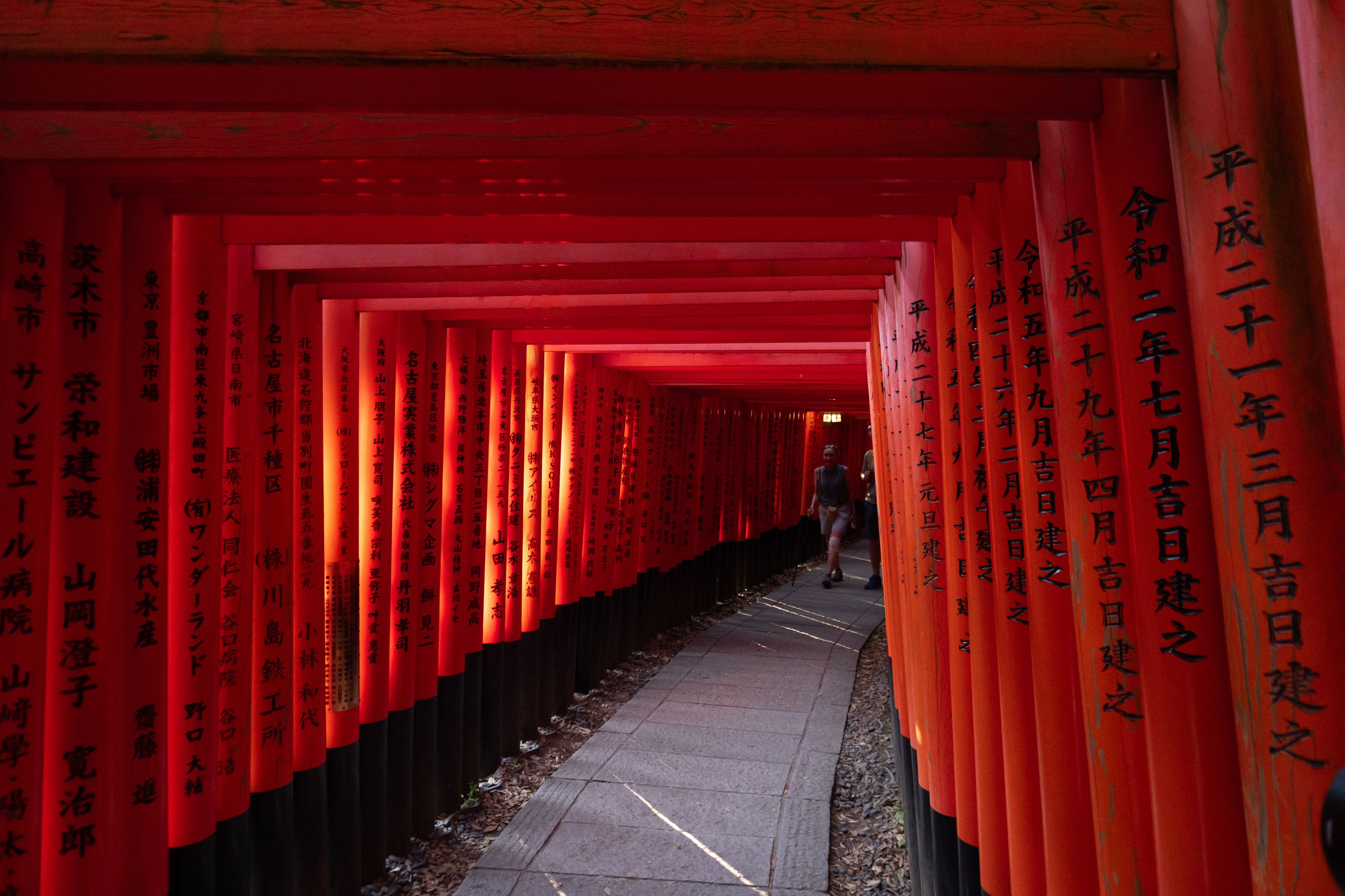
Day 1 is the Kyoto of the postcards, and the only way to enjoy it is to beat the buses. Start at Fushimi Inari Taisha at or near opening light. It's free, open 24/7, and just two stops from Kyoto Station on the JR Nara Line to JR Inari (about 5 minutes, ~¥150) (Japan Guide — Fushimi Inari). From Downtown, hop the Keihan line south to Fushimi-Inari Station instead. Walk the famous vermilion torii tunnels up the mountain for an hour; turn around at the Yotsutsuji viewpoint if you don't want the full 2-3 hour summit loop. Get here by 7-7:30am and you'll have the lower gates nearly to yourself (Agoda — Fushimi Inari).
Backtrack north by train to Kiyomizu-dera (opens 6am, closes 6pm, ~¥500, cash only) (The Japan Rail Pass — Kiyomizu-dera). From the temple's great wooden veranda, you walk downhill through the best-preserved streets in the city — Sannenzaka and Ninenzaka, past the Yasaka Pagoda, on to Yasaka Shrine, and out into Gion. It's about a 2km route, 2-3 hours with stops and snacks, and starting it around 8am means you're descending the stone lanes while they're still quiet and the light is soft (Kyoto City — Higashiyama at Dawn).
Getting around: train-and-walk all day; no bus needed. ICOCA covers the two short train hops.
Mid-range food: graze the snack stalls on Sannenzaka midday (matcha soft-serve, yatsuhashi). Come back to Gion in the evening for an affordable, atmospheric dinner along Pontocho — the lantern-lit alley by the Kamo River runs the full price range, from cheap yakitori counters to kaiseki, so you pick your level (Japan Experience — Pontocho). From May to September, riverside restaurants build kawayuka platforms out over the water — worth booking one if your dates land in summer.
Day 2 — Arashiyama & the northwest: bamboo at dawn, gold by afternoon
Day 2 swings west, and again the trick is timing. Take the train out to Arashiyama early and walk straight into the bamboo grove — it's free and open around the clock, but it only feels magical before roughly 8:30am; after that it's shoulder-to-shoulder (Arashiyama Bamboo Grove). Right beside it, Tenryu-ji (opens 8:30am) is a UNESCO-listed Zen temple whose north gate opens directly into the grove, so you can flow from one into the other (Kyoto City — Higashiyama at Dawn). Add the Iwatayama Monkey Park if you've got the legs for the hillside climb and the river views.
In the afternoon, head northeast to Kinkaku-ji, the Golden Pavilion (9:00-17:00, ~¥500) (Japan Guide — Kinkaku-ji). This is the one segment that needs a bus — the most direct link from the city is bus 205, about 40 minutes for ~¥230, or take the Karasuma subway to Kitaoji and a short bus or taxi from there (Japan Guide — Kinkaku-ji). It's a 20-30 minute walk-around (the pavilion is the show; there's no interior), so it pairs neatly as a late-afternoon cap. Because today is the day you'll bus, this is where the ¥1,100 Subway & Bus 1-Day Pass pays off over single fares (Kyoto City — Subway & Bus 1-Day Pass).
Getting around: train out to Arashiyama and back; subway + one bus for Kinkaku-ji. This is your bus day — the day pass is worth it.
Mid-range food: eat in Arashiyama near the main street (soba, yudofu tofu sets, river-view cafés) before you leave the area, then keep the evening cheap and central back Downtown — a Nishiki-side izakaya or the Pontocho counters again.
Day 3 — Downtown, Nishiki & a temple of your choice
Day 3 stays close to home, which is exactly why basing Downtown pays off — you can sleep in a little. Start at Nijo Castle, the Tokugawa shogun's Kyoto seat, famous for its "nightingale floors" that chirp underfoot to foil intruders (8:45-17:00, last entry 4pm, ~¥1,300; the Ninomaru Palace closes some Tuesdays, so check your date) (Nijo-jo Castle — official; The Japan Rail Pass — Nijo Castle). It's a quick Tozai subway hop or a flat walk from Downtown.
Then choose your closer based on energy and weather. Option A (calm, scenic): ride east and walk the Philosopher's Path up to Ginkaku-ji, the Silver Pavilion (Mar-Nov 8:30-17:00, Dec-Feb 9:00-16:30, ~¥500). The path is a ~2km canal-side stroll lined with little cafés and shrines, gorgeous and shaded (Japan Experience — Ginkaku-ji). Option B (rain or tired feet): skip the trek and spend the afternoon Downtown — Nishiki Market is the move.
Either way, end at Nishiki Market, Kyoto's covered "kitchen," a few minutes from any Downtown hotel. Aim for late morning to early afternoon — most stalls are open by 10am and the lane gets tight after that (by Food — Nishiki Market). It's a five-block grazing hall: dashimaki tamago (rolled omelet on a stick), pickles, soy-milk doughnuts, tako tamago, matcha sweets.
Getting around: subway and walking; no bus needed. ICOCA covers the hops.
Mid-range food: make lunch a graze through Nishiki itself, then for the last dinner go back to Pontocho or hit a department-store depachika (the basement food halls under Takashimaya or Daimaru on Shijo) — superb prepared food, and discounted near closing.
Your 3 days in Kyoto at a glance
| Day | Area / route | Key sights (go-early flags) | Getting around | Mid-range food idea |
|---|---|---|---|---|
| Day 1 | Higashiyama & Gion (south-east) | Fushimi Inari ⏰ dawn → Kiyomizu-dera ⏰ ~8am → Sannenzaka/Ninenzaka → Yasaka → Gion | JR/Keihan train + walk; no bus | Sannenzaka snacks; Pontocho dinner |
| Day 2 | Arashiyama + northwest | Bamboo grove ⏰ before 8:30 → Tenryu-ji → monkey park → Kinkaku-ji (PM) | Train to Arashiyama; subway + 1 bus for Kinkaku-ji → 1-day pass | Arashiyama soba/yudofu; izakaya Downtown |
| Day 3 | Downtown + your pick | Nijo Castle (check Tue closures) → Philosopher's Path + Ginkaku-ji or stay Downtown → Nishiki Market | Subway + walk; no bus | Nishiki graze; depachika or Pontocho |
The pattern is deliberate: two train-and-walk days bookending one bus day, each anchored by an early start, each looping back Downtown for the evening.
Where to base for these 3 days
You've seen the logic in action — every day above starts and ends in or near Downtown Kyoto (Kawaramachi). It's the most connected non-station address in the city: the Hankyu and Keihan lines, the Karasuma and Tozai subways, Nishiki and Pontocho underfoot, and a short walk to Gion (Where Are Those Morgans). For a tight three-day trip, that connectivity-plus-atmosphere combo beats both the prettier-but-thinly-served Gion (few hotels, weak transit) and the purely practical Kyoto Station, where you sleep above a transit hub but walk to nothing at night.
Mid-range here lands in roughly the ¥15,000-25,000 / ~$120-170 a night band, with the median around $120 and a steep climb in autumn — book early if you're traveling in October (Budget Your Trip — Kyoto hotels). Three Downtown picks that fit the routing:
- Cross Hotel Kyoto — modern rooms at Kawaramachi-Sanjo, about 6 minutes from Hankyu Kawaramachi and 4 from the Keihan/Tozai stations, with Nishiki, Pontocho and Gion all walkable (Inside Kyoto — Cross Hotel).
- Hotel Forza Kyoto Shijo Kawaramachi — a dependable 3-star right by Nishiki Market and a short walk from Shijo subway, squarely in the shopping-and-transit heart (Japan Travel by NAVITIME — Hotel Forza).
- Mitsui Garden Hotel Kyoto Kawaramachi Jokyoji — built into a 500-year-old temple's grounds, about a minute from Shijo subway and Hankyu Kawaramachi, with a public onsen-style bath to soak tired feet after the Higashiyama hills (Mitsui Garden Hotels — official).
Compare what's actually free on your dates across the area on the map below:
The pick for most three-day visitors: anything central in Kawaramachi within a few minutes of a subway or the Hankyu/Keihan lines. You're optimizing for one base you never leave, not for the fanciest room — the walk home from Pontocho at the end of each day is the whole point.
Because you're planning now and will likely book later, compare live rates with a wider booking window rather than a same-session deal:
Check live rates for central Downtown Kyoto stays on Expedia →To go deeper on the trade-offs between neighborhoods, see our full where-to-stay-in-Kyoto mid-range guide, and if it's your first trip, the best areas to stay in Kyoto for first-timers.
Tweaks for a slower pace, families, or rain
Slower pace? Drop one bookend per day. Do Fushimi Inari or Arashiyama as a half-day and let the afternoon breathe; Kyoto rewards sitting in a temple garden far more than ticking a tenth shrine.
With kids? The Iwatayama Monkey Park and the open lanes of Nishiki are easy wins; the Sagano Scenic Railway from Arashiyama is a gentle, scenic ride that breaks up the walking. Keep early starts — tired children and midday crowds don't mix.
Rain? Reshuffle toward cover: Nijo Castle's palace interior, Nishiki Market, and a depachika lunch are all indoor-friendly, and the Higashiyama lanes are still atmospheric (and emptier) in light rain. Save the bamboo grove and Philosopher's Path for the clearer day.
FAQ
Where should I stay for a 3-day Kyoto trip? Downtown Kyoto (Kawaramachi). It's the best-connected central neighborhood — Hankyu and Keihan lines, two subway lines, Nishiki Market and Pontocho on your doorstep, Gion a 10-15 minute walk. For three days you want one central base you never leave, not the prettiest room two transfers out (Where Are Those Morgans).
Is 3 days enough for Kyoto? Yes for the essentials. Grouped by area, three days comfortably cover Fushimi Inari, Higashiyama and Gion, Arashiyama, Kinkaku-ji, Nijo Castle and Nishiki. You won't exhaust Kyoto, but you'll see its best with room to breathe if you start early.
Do I need a transport pass in Kyoto, now the bus pass is gone? The old one-day bus pass was discontinued and the city steers visitors onto the subway and rail (Japan Truly). For most days an ICOCA IC card is all you need; on the Kinkaku-ji day — your one real bus day — the ¥1,100 Subway & Bus 1-Day Pass is worth it (Kyoto City).
Ready to lock in your base?
Pick the neighborhood first, then the room — in that order. Settle on Downtown Kawaramachi, compare what's actually free on your dates with a booking window that lets you decide later, and lean toward the most central room near a subway or the Hankyu/Keihan lines. Do that, and these three days stop being a transit puzzle and start being the walk-everywhere, temple-at-dawn Kyoto you came for.
Planning the rest of the trip? Our mid-range Kyoto travel guide ties the base, the sights and the budget together.
Sources
- Japan Truly — Kyoto's one-day bus passes canceled: japantruly.com
- MATCHA — Kyoto Transportation Guide: Subway, Bus, and Discount Passes: matcha-jp.com
- Kyoto City — Subway & Bus 1-Day Pass (official): oneday-pass.kyoto
- Japan Guide — Fushimi Inari Taisha: japan-guide.com
- Agoda Travel Guides — Fushimi Inari opening hours & best times: agoda.com
- The Japan Rail Pass — Visiting Kiyomizu-dera Temple: jrailpass.com
- Kyoto City Official Travel Guide — Higashiyama at Dawn itinerary: kyoto.travel
- Arashiyama Bamboo Grove — Opening Hours & Fees: arashiyamabamboogrove.org
- Japan Guide — Kinkaku-ji (Golden Pavilion): japan-guide.com
- Japan Experience — Ginkaku-ji, the Silver Pavilion: japan-experience.com
- Nijo-jo Castle — Opening hours and days closed (official): nijo-jocastle.city.kyoto.lg.jp
- The Japan Rail Pass — Exploring Nijo Castle: jrailpass.com
- by Food — What to Eat at Nishiki Market: byfood.com
- Japan Experience — Pontocho Alley: japan-experience.com
- Where Are Those Morgans — Where To Stay In Kyoto: wherearethosemorgans.com
- Budget Your Trip — Hotel prices for Kyoto, Japan: budgetyourtrip.com
- Inside Kyoto — Cross Hotel Kyoto: insidekyoto.com
- Japan Travel by NAVITIME — Hotel Forza Kyoto Shijo Kawaramachi: japantravel.navitime.com
- Mitsui Garden Hotels — Kyoto Kawaramachi Jokyoji (official): gardenhotels.co.jp