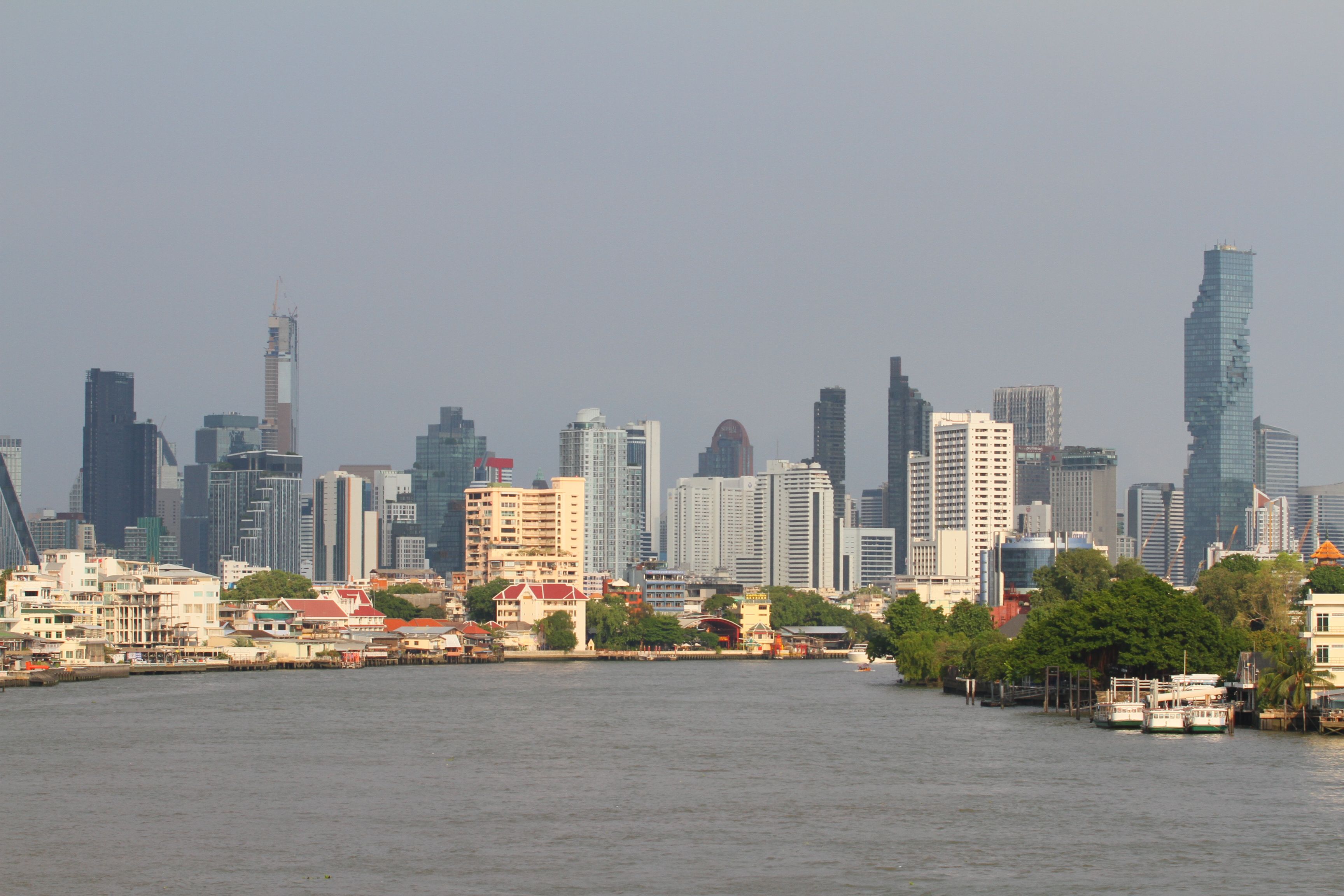
Backpacking Bangkok: The Budget Travel Guide (Where to Base & How to Do It Cheap)
- Bangkok
- Thailand
- Backpackers
- Budget
- Where to Stay
A backpacking Bangkok budget travel guide: where to base (Khao San vs Chinatown vs a BTS pocket), dorm vs cheap private, daily-spend bands and when to go.
Backpacking Bangkok is one of the cheapest, easiest first stops in Southeast Asia — and almost everyone gets the same thing slightly wrong. They fixate on the nightly price of a dorm bed, when the real cost of a Bangkok trip is decided by two things: where you base, and how you get around from it. The cheapest, most social base in the city — Khao San Road and the wider Banglamphu district — is also the one with no Skytrain and no metro, so the money you save on the bed you can quietly hand back in taxi fares and lost hours in traffic.
Short version: pick your base around the Skytrain trade-off, then pick your bed. Want the social scene and the temples on foot? Base in Banglamphu and lean on the river boat. Want cheap-and-authentic with a train? Base in Chinatown by the MRT. Want to get around fast above all? Base in a BTS pocket like Ratchathewi or near Saladaeng on Silom's edge. A dorm sits in a low band and a private room is only a little more, so the bigger decisions are area and transit, not the room rate. This guide frames all of that, then points you to the right deep-dive.
The one trade-off that shapes a cheap Bangkok trip
Before any neighborhood, the single fact that should drive your booking: in Bangkok, transit access is worth paying a little for — and the cheapest base doesn't have it.
Bangkok's traffic is genuinely bad, and the things that beat it are the two Skytrain lines (BTS), the metro (MRT), and the Chao Phraya river boats. Stay near one of those and you almost never need a taxi. The catch is geographic: the backpacker heart of the city, Khao San Road in Banglamphu, has "no BTS station, no MRT station, and no immediate prospect of one" (Khao San Road). It leans on the river instead — the nearest pier, Phra Athit (N13), is about a five-minute walk from Khao San Road and the Chao Phraya boats run from there past the Grand Palace, Wat Pho, Wat Arun and on down to a BTS interchange at Saphan Taksin.
So the honest filter is simple:
- Want the social scene and the Old Town temples on foot, and you'll use the river? Banglamphu / Khao San is the cheapest, most fun base — just go in knowing the Skytrain isn't next door.
- Want cheap and authentic with a train? Chinatown has its own MRT stop (Wat Mangkon), street food on tap, and a quieter night than Khao San.
- Want to skip the traffic above all? A BTS-connected pocket — Ratchathewi, Victory Monument, or the Saladaeng edge of Silom — costs a touch more but buys you speed across the whole city.
Hold that trade-off in your head and every area below sorts itself.
For dorm prices, note one honest thing about how this site makes money: hostel commissions are a percentage of the OTA's revenue, not of the price you pay (Travelpayouts), so there's no incentive here to push you toward a pricier bed. The advice is just the advice.
The base areas: Banglamphu, Chinatown, and a BTS pocket
Three bases cover almost every backpacker in Bangkok. Here's what each one actually feels like, who it suits, and the trade-off you're signing up for.
Khao San Road & Banglamphu — cheapest, most social, worst-connected
This is the default backpacker base, and for good reason. Khao San Road is "old Bangkok at its most unfiltered: cheap, loud, walkable to temples, and crawling with backpackers from every corner of the world" (Khao San Road). The Grand Palace is about a 15-minute walk and Wat Pho around 20, with Wat Arun a short ferry across the river — close enough that for the Old Town sights you genuinely never open a taxi app. The barrier to meeting people is near zero; you'll have travel companions within hours.
The wider Banglamphu district softens the edges. One street over, Soi Rambuttri keeps the bars and food but without the bucket-sellers every thirty seconds, and the Samsen Road stretch north is calmer and more local again — the move for anyone who wants the area's convenience without sleeping over a bass speaker.
Who it suits: first-time backpackers, solo travelers who want to meet people fast, party people, and anyone whose Bangkok is mostly temples and Old Town. The trade-off: the real one is transit — no BTS or MRT, so beyond the Old Town you're on a river boat, a bus, or a Grab. And if your room faces the strip, the noise runs "relentless" until 2 or 3 a.m. (Khao San Road). Book a room set back off the main drag, or sleep on Soi Rambuttri / Samsen. Transit: no BTS/MRT; Phra Athit pier (N13) about five minutes' walk for Chao Phraya boats; buses and Grab for the rest. Backpacker nightly band: $ for dorms, $–$$ for cheap privates (this is the cheapest central base in the city).
Chinatown / Yaowarat — cheap and authentic, with its own metro
When Khao San got too loud, a lot of travelers drifted to Chinatown — and it's quietly become the smartest budget base in Bangkok. It's arguably the best area in the city for food, it keeps a genuine, lived-in feel, and — crucially for this list — it has a metro. The MRT Wat Mangkon station sits about two minutes' walk from Yaowarat Road, Chinatown's 1.5 km main artery (Speck Bangkok). Temples like Wat Traimit and Wat Mangkon Kamalawat are an easy walk, and the night-market street-food scene on Yaowarat is one of the best cheap eats in Asia.
It also draws a slightly different crowd than Khao San — travelers "more interested in a quiet beer and a good plate of noodles than an all-night rave" (Southeast Asia Backpacker). Nights on the back lanes are calmer; the trade-off is that the area is busy, traffic-heavy and a bit polluted by day.
Who it suits: food-obsessed backpackers, second-time visitors, anyone who wants cheap-and-real plus a train, and travelers who'd rather noodle-crawl than bar-crawl. The trade-off: Yaowarat itself is loud and exhaust-heavy in daytime, and the lanes are narrow (Passport & Stamps) — pick a room on a side soi off the main road if you're noise-sensitive. Transit: MRT Wat Mangkon (about two minutes from Yaowarat Road); walkable to the Old Town's eastern temples. Backpacker nightly band: $ for dorms, $$ for privates — similar to Banglamphu but with the metro thrown in.
A BTS pocket: Ratchathewi, Victory Monument & the Silom edge — pay a touch more, skip the traffic
If beating Bangkok's traffic is your priority, base on the Skytrain. A cluster of budget-friendly, very local pockets sit right on the BTS a few stops from the action: Ratchathewi and Victory Monument on the Sukhumvit line (a couple of stops from Siam's malls and Jim Thompson House), and the Saladaeng / Silom edge, where the BTS and MRT actually cross. From any of them you're on the rail network in minutes, bypassing the gridlock entirely — and the street food around Victory Monument is cheap and excellent (Hostelz).
You pay a little more than Banglamphu for the privilege, and you're not in a postcard — these are working neighborhoods, not the Old Town. But for getting around fast, especially on a longer trip or one that ranges across the modern city, the Skytrain access pays for itself.
Who it suits: backpackers who value speed over atmosphere, longer-stay travelers, anyone arriving on a night bus who wants an easy onward hop, and repeat visitors who've "done" Khao San. The trade-off: less backpacker buzz and no Old Town on your doorstep — you trade a pretty front door for a fast one. (Silom proper is business-by-day, lively-by-night, with solid BTS + MRT access and great street food.) Transit: on the BTS (Ratchathewi, Victory Monument, Sanam Pao) or BTS+MRT (Saladaeng/Si Lom) — the whole point of the pocket. Backpacker nightly band: $–$$ for dorms, $$ for privates (a small premium over Banglamphu for the train).
For the full street-by-street breakdown of these and the rest of the budget areas, see our Bangkok backpacker areas guide. Torn between the two classic choices? We weigh Khao San Road vs Sukhumvit and Khao San Road vs Chinatown in full.
The bed: social dorm vs cheap private vs budget guesthouse
Once you've picked an area, the bed type is the next call — and in Bangkok it's a low-stakes one, because everything is cheap. Three options, three clear use-cases:
- Social dorm. The default for solo travelers who want to meet people. Dorm beds run a low band of roughly ฿400–700 a night — around $6–12 — and the social hostels (pod-style bunks with curtains, reading lights and a bar or rooftop) are built for it. The catch is sleep: a party hostel is a 9.5 for someone and a 4.0 for a light sleeper.
- Cheap private room. The move after a night bus, for couples, or for anyone who values a door that locks. Budget-guesthouse and hostel privates sit around ฿800–1,200 — roughly $22–31 — so for not much more than two dorm beds, two people get their own room. In Bangkok the private-room premium is small enough that couples almost always take it.
- Budget guesthouse. The old-school Banglamphu staple — a simple private room in a family-run place, often with a café downstairs. Frequently cheaper than a hostel private, less social, and the most "real Bangkok" of the three.
The rule of thumb: solo and want friends → dorm; couples or post-night-bus → private; quiet-and-cheap with a local feel → guesthouse. We go deeper on the maths in dorm vs private room in Bangkok.
How to do Bangkok on $25–40 a day
Bangkok rewards the budget traveler more than almost any capital. Plenty of backpackers run the city on roughly $25–40 a day all-in, and the levers are the same every time — here they are as bands, not invented exact figures.
- Eat the street food. This is the single biggest lever and it's no hardship — it's some of the best food on earth. Dishes run about ฿40–80 (roughly $1–2.25); a pad thai or a plate of fried rice is ฿50–70. Three street meals a day is a few dollars total.
- Ride the BTS, MRT and boats, not taxis. BTS/MRT fares run about ฿16–52 by distance and the Chao Phraya express boat is around ฿10–40 a trip — a fraction of a metered taxi (฿35 to start, then ฿5–6.50/km), and far faster than a cab stuck in traffic. If you base near a station or a pier, your daily transport is pocket change.
- Lean on free and cheap sights. Many temples are free or a few baht; the markets (Chatuchak, the flower market, Yaowarat at night) cost nothing to wander. Budget the splurges — Wat Pho is about ฿200, the Grand Palace more — and the rest of the day can be free.
- Where it's worth paying up. Two honest exceptions to the cheap-everything rule: a room near a BTS/MRT or the river (the transit time and taxi money you save outweigh the few extra dollars), and a private room after a night bus, when sleep matters more than the saving. For late-night moves, budget a Grab over a random taxi — it's tracked and fixed-price.
The mistake to avoid is the false economy: booking the rock-bottom dorm in a transit-poor corner, then spending more on taxis and an hour a day in traffic than the pricier-but-connected bed would have cost. In Bangkok, location and transit are the budget. Planning the wider trip on a shoestring? Our budget hotels (not hostels) in Bangkok guide covers the cheap-private-room end in detail.
When to go: seasons and the two festivals that move everything
Season changes the feel and the crowds of a Bangkok trip far more than the nightly price. Three seasons, plus two festivals worth planning around:
- Cool & peak (Nov–Feb). The best weather — clear skies, comfortable temperatures for temple-walking and markets (Thailand Highlights). It's also the busiest and the time hostels fill fastest, so book your dorm or private a bit earlier for these months.
- Hot (Mar–May). Genuinely hot — April highs regularly hit 36–39°C and can spike past 40°C. Manageable if you pace yourself around the heat (temples in the morning, air-con or a mall mid-afternoon), and quieter than peak.
- Wet / monsoon (May–Oct). Frequent heavy showers, usually late afternoon or evening, rather than all-day rain — and the lowest crowds and best value of the year. A solid bet for budget travelers who don't mind ducking the odd downpour.
Two festivals reshape the city, and both land on the backpacker map:
- Songkran (April 13–15) — Thailand's New Year water festival, and the biggest street party of the year (Thailand Highlights). The water fights are centered on Khao San Road and Silom, so if you want to be in the middle of it, base there — and book well ahead, because everyone else wants the same.
- Loy Krathong (mid-November) — the festival of floating lanterns and decorated baskets on the river, date set by the lunar calendar (around Nov 14–15 in 2026). Beautiful, riverside, and a lovely time to be based near the Chao Phraya. Confirm the exact dates closer to the time, as they shift each year.
Backpacking Bangkok bases compared at a glance
| Base area | What the value is about | Backpacker nightly band (dorm / cheap private) | Transit access | Best for |
|---|---|---|---|---|
| Khao San Road / Banglamphu (incl. Soi Rambuttri, Samsen) | Cheapest + most social + walk to the Old Town temples | $ / $–$$ | No BTS/MRT — Chao Phraya boat (Phra Athit pier ~5 min), buses, Grab | First-timers, solo social travelers, party people, temple-focused trips |
| Chinatown / Yaowarat | Cheap + authentic + the best street food, with its own metro | $ / $$ | MRT Wat Mangkon (~2 min from Yaowarat); walk to eastern Old Town | Foodies, repeat visitors, cheap-and-real with a train, calmer nights |
| BTS pocket (Ratchathewi / Victory Monument / Saladaeng-Silom edge) | Pay a touch more to skip Bangkok's traffic | $–$$ / $$ | On the BTS (or BTS+MRT at Saladaeng) — fast across the whole city | Speed-over-atmosphere, longer stays, night-bus arrivals, repeat visitors |
Band key: $ = the genuine low end (dorms from roughly ฿400 / ~$6) · $$ = cheap privates and budget guesthouses (roughly ฿800–1,200 / ~$22–31). Prices climb in the Nov–Feb peak and around Songkran, so always check live rates for your dates.
Find your stay: the budget Bangkok guides
This page is the map; these are the deep dives. Pick your base and your bed type above, then dive into the matching guide to find the actual stay:
- Hostels, sorted properly: Best budget hostels in Bangkok — the full list, by backpacker type.
- The areas, street by street: Where to stay in Bangkok: best backpacker areas.
- Want a party: Best budget party hostels in Bangkok.
- Want the Skytrain at your door: Best budget hostels on the BTS Skytrain.
- Dorm or private? Dorm vs private room in Bangkok.
- A cheap room, not a bunk: Best budget hotels in Bangkok (not hostels).
- The classic base debates: Khao San Road vs Sukhumvit and Khao San Road vs Chinatown.
- Short on time: 3 days in Bangkok: a backpacker itinerary.
- Solo female travelers: Where to stay in Bangkok for solo female travelers.
FAQ
How much does it cost to backpack Bangkok per day? Plan on roughly $25–40 a day all-in. Dorm beds run about ฿400–700 (~$6–12), street food is ฿40–80 a dish, and the BTS/MRT and river boats cost a fraction of taxis. Eat street food, use public transport, and the city stays very cheap.
Is a dorm or a private room better in Bangkok? Dorms win on price and meeting people — they start around ฿400 and the social hostels are built around them. But Bangkok is one of those places where a private room barely costs more: budget privates run ฿800–1,200, so couples or anyone who values sleep often pay the small premium, especially after a night bus.
When is the best time to go backpacking in Bangkok? The cool season (Nov–Feb) has the best weather but the biggest crowds. The hot season (Mar–May) is quieter but genuinely hot — April tops 36–39°C. The wet season (May–Oct) has the lowest crowds and best value, with showers mostly in the late afternoon. Plan around Songkran (April 13–15, water fights centered on Khao San and Silom) and Loy Krathong (mid-November) if you want to catch them — and book ahead.
Is Bangkok safe for solo female backpackers? Generally yes — Bangkok rates highly for solo safety, violent crime is rare, and tourist areas like Silom and Sukhumvit feel safe to walk at night. The usual sensible habits apply: choose a female-only dorm in a social hostel, use Grab rather than random taxis after dark, and pick a base near a BTS/MRT. See our solo female guide for specifics.
Ready to plan?
Pick your base first — around the Skytrain trade-off — then your bed, in that order, because in Bangkok the area and your transit decide your daily rhythm and your real spend far more than the room rate does. For most first-timers that's social, cheap Banglamphu with the river boat; for cheap-and-real with a train it's Chinatown; for beating the traffic it's a BTS pocket. Use the map above to see what's live on your dates, then dive into the matching guide below to find your stay.
Heading deeper into Thailand or the wider region after Bangkok? Start with the Bangkok hostel guide to lock in your first few nights.
Sources
- Khao San Road — Khao San Road vs Sukhumvit (transit, vibe, walkability): khaosanroad.com
- Southeast Asia Backpacker — Best Bangkok Neighbourhoods: southeastasiabackpacker.com
- The Broke Backpacker — Backpacking Bangkok travel guide: thebrokebackpacker.com
- Machu Picchu — Bangkok Budget Guide 2026 (cost breakdown): machupicchu.org
- Machu Picchu — Best Time to Visit Bangkok 2026 (seasons & festivals): machupicchu.org
- Thailand Highlights — Best (and Worst) Times to Visit Bangkok 2026: thailandhighlights.com
- Speck Bangkok — How to Get to Bangkok Chinatown (MRT Wat Mangkon): speckbangkok.com
- Passport & Stamps — Where to Stay in Chinatown, Bangkok: passportandstamps.com
- Thailand Boat — Phra Arthit Pier (boat routes, walk to Khao San): thailandboat.com
- Hostelz — Backpacker hostels near Victory Monument, Bangkok: hostelz.com
- Solo Female Voyage — Bangkok Solo Female Travel Guide (safety, areas): solofemalevoyage.com
- Travelpayouts — How accommodation commissions work (% of OTA revenue): support.travelpayouts.com