Khao San Road vs Chinatown: Which Budget Base Is Better in Bangkok?
- Bangkok
- Thailand
- Budget
- Backpackers
- Where to Stay
Khao San Road vs Chinatown for budget travelers in Bangkok: a criteria-by-criteria verdict on price, food, transit, nightlife and sleep — and which base wins.
The Khao San Road vs Chinatown call is the budget traveler's hardest base decision in Bangkok, and most guides duck it with "both are great, just pick a vibe." Useless when you've got one booking to make. So here's the version with a verdict: Khao San Road for the backpacker party and the people; Chinatown (Yaowarat) for cheap-and-real with a metro and a night's sleep — and Chinatown is quietly winning the argument for travelers who want the second thing. The reason this question is even close is that Chinatown keeps everything Khao San gets right — central, cheap, walkable, gloriously alive — while fixing its two big flaws: the all-night noise and the total absence of a train. The catch is that Chinatown trades away the social scene almost entirely. This guide scores both on the criteria that actually decide it for a shoestring traveler, calls a winner per row, and tells you which base is right for your trip.
The one-line version, since you've probably got a flight to book: if you came to meet people, party and tick off the backpacker rite of passage, base around Khao San. If you want world-class cheap food, an MRT stop, a quieter night and a more local Bangkok at the same money, base in Chinatown. And if you want both, there's a "combine them" play at the end that most people miss. Everything below is the receipts.
Where each one actually is
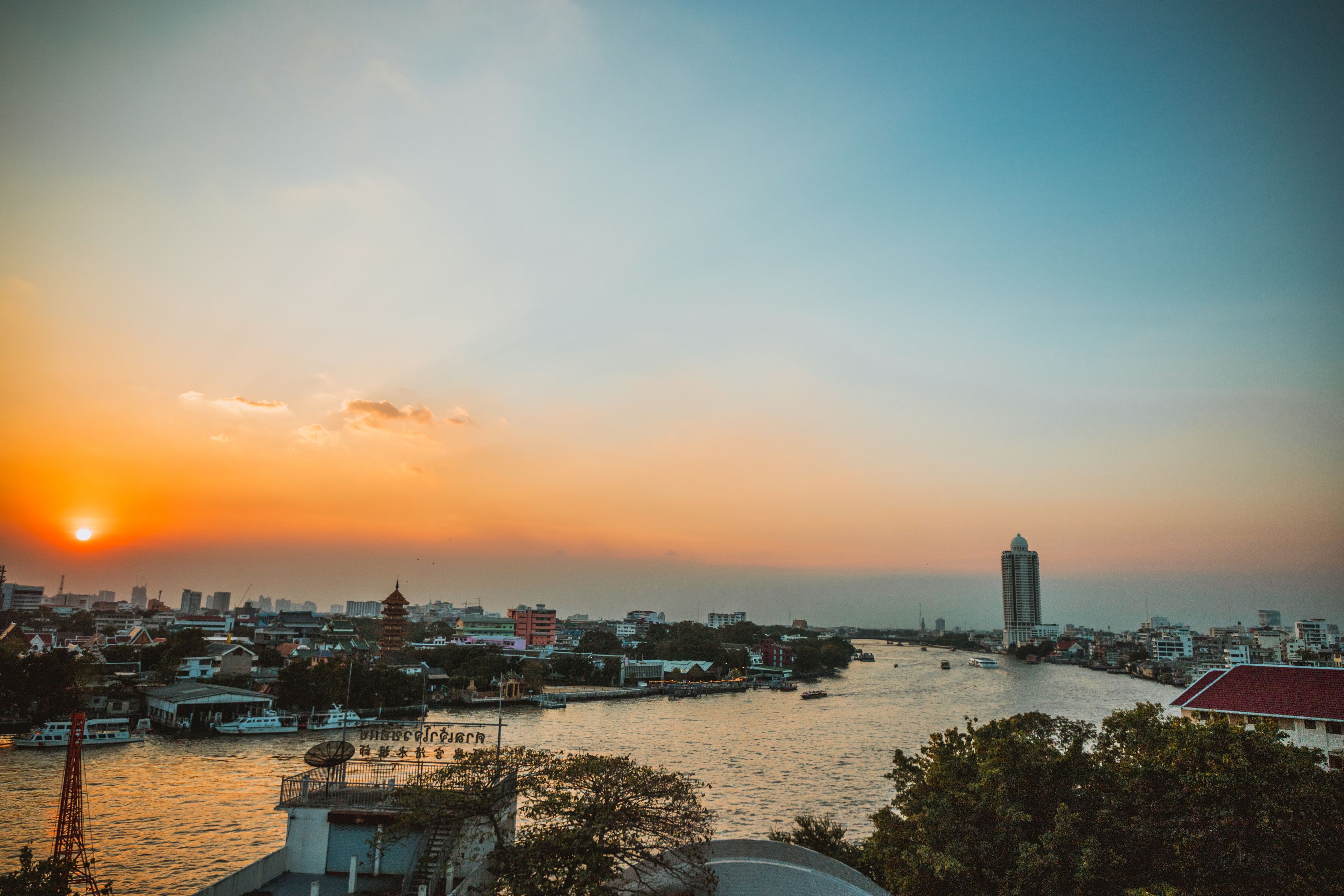
Quick orientation, because the geography is half the decision. Khao San Road sits in Banglamphu, the Old Town, a ten-minute walk through Soi Rambuttri to the Chao Phraya River at Phra Athit pier (Going to Bangkok). It's walkable to the Grand Palace and Wat Pho, ringed by guesthouses, and — this is the load-bearing fact — it has no BTS or MRT station of its own, so you move by river boat, taxi, tuk-tuk or foot (Where to Stay First Time).
Chinatown is Yaowarat, about 4 km southeast (That Bangkok Life), a dense lattice of gold shops, shophouses and food stalls built around Yaowarat Road — and, crucially, it has its own MRT stop, Wat Mangkon, on the Blue Line (Thailand With Tereza). The quieter, more design-led pockets — Talat Noi and Song Wat by the river — sit a few minutes south of the main strip and feel "much more relaxed" (Thailand With Tereza). That single metro stop reshapes the whole comparison, so let's score it properly.
The budget criteria I'm scoring on
A head-to-head is only honest if you say what you're measuring before you crown anything. Six things decide it for a budget traveler in Bangkok:
- Price — what dorm beds and cheap privates actually run on each side.
- Social scene — meeting other travelers, nightlife, the backpacker buzz.
- Street food — the cheap-eats quality and density.
- Transit — getting to the rest of the city without a fight.
- Authenticity — how much it feels like the real Bangkok, not a tourist set.
- Sleep — whether you can actually rest at night.
Here's how each shakes out.
Price — edge: Khao San (at the rock-bottom end), but it's close
This is where Chinatown's "cheaper alternative" reputation needs a sense-check, because it's only half true. At the absolute floor, Khao San's Old Town shophouses are cheaper: Banglamphu dorm beds run roughly ฿250–450 and basic privates ฿700–1,200, often fan-cooled at the low end (Khaosan Road). Chinatown runs a notch higher — dorms about ฿350–600, privates ฿1,000–1,800 — and there are honestly "fewer true budget options" there, because the stock skews to design-led boutique-hostels rather than rock-bottom bunks (Khaosan Road).
So the popular line that "Chinatown is cheaper" isn't quite right. What is true: both sit comfortably in budget territory — accommodations on both sides come in "under $30," from "ultra-budget hostels to surprisingly comfortable boutique hotels" (Where to Stay First Time) — and the gap is small enough that it shouldn't decide your trip. For the absolute cheapest bunk, Khao San's Old Town edges it. Edge: Khao San — but barely, and it's the least important row.
The honest caveat that keeps this fair: Chinatown's pricier privates buy you a meaningfully nicer room — disproportionately the stylish, well-reviewed pod-and-boutique kind near the MRT, not the dated fan rooms cheapest around Khao San. As a pure price contest it's near-even; on value-per-baht it arguably flips to Chinatown.
Social scene — edge: Khao San (it's a knockout)
If meeting people is the point, Khao San doesn't just win, it laps the field. It has "more hostels per square kilometer than anywhere else in the world," and it's the place you "meet travelers from every continent and make friends over bucket drinks" (Thailand Starts Here). After dark the bars "spill onto the street, DJs compete for attention," and the crowd is "young, international" (Where to Stay First Time). The hostel scene is built for it — places like NapPark, "a backpacker's dream for a party-centric stay," and Mad Monkey, tucked just off the strip on the canal with pub crawls, pool parties and walking tours daily (Hostelgeeks; Mad Monkey).
Chinatown is the opposite. There's "no social hostel scene here" — it's "not great for nightlife or meeting other travelers," but draws "the young traveller more interested in a quiet beer and a good plate of noodles than an all night rave" (Nerd Nomads). So if "scene" means a crowd to meet and a night out, Khao San, decisively. If it means a craft beer and a noodle stall, Chinatown does that instead — which is the next two rows.
Street food — edge: Chinatown (and it's not close)
Here's where Chinatown takes its biggest win. Yaowarat Road at night is, flatly, "one of the greatest street food locations in the world" — hundreds of stalls turning the street into "a massive open-air restaurant," with some run by the same families for decades cooking one or two dishes perfectly: guay jub, grilled squid, oyster omelettes, prawn pad thai, mango sticky rice (Thailand Routes). It has "one of the highest concentrations of street food and local eateries in the city," the kind with "no English menu and plastic chairs" (Where to Stay First Time). Sleeping there means rolling downstairs into that every night.
Khao San eats are the reverse: "cheap, filling, and safe… but rarely memorable," with "menus designed to please everyone" — pad thai tuned for Western palates and banana pancakes (Where to Stay First Time). Perfectly fine, occasionally great, but engineered for tourists rather than locals. For a budget traveler, food is one of the cheapest pleasures of the whole trip, and on that count Chinatown wins outright. Edge: Chinatown, by a mile.
Transit — edge: Chinatown (the MRT decides it)
This is the criterion the brief flagged as load-bearing, and it earns the billing. Chinatown has MRT Wat Mangkon, a Blue Line stop in the heart of Yaowarat that makes it "easy to get to places like the Grand Palace, Thonburi, or Sukhumvit" without wrestling traffic (Thailand With Tereza). For a budget traveler that's huge: the MRT is cheap, fast, air-conditioned and immune to Bangkok's gridlock, so day-tripping to Sukhumvit, Chatuchak or the airport line is a turn-up-and-go affair.
Khao San has none of that. With "no direct access to the BTS or MRT," you're on taxis, tuk-tuks, the river boat from Phra Athit pier, or your feet (Where to Stay First Time). The river boat is genuinely scenic and useful — the Chao Phraya tourist boat links the Khao San area to the Grand Palace, Wat Pho, Wat Arun, Chinatown and ICONSIAM (Going to Bangkok) — but it's a ten-minute walk to the pier, runs limited hours, and only goes where the river goes. Anywhere off the water means a taxi crawl through traffic. Edge: Chinatown — a turnstile beats a tuk-tuk negotiation every time.
Authenticity — edge: Chinatown (by design)
If you want to feel like you're in Bangkok rather than a backpacker theme park, Chinatown wins easily. Walking Yaowarat "feels like stepping into the engine room of Bangkok… loud, crowded, messy, and gloriously alive," with "real neighborhood energy with residents, not just tourists" (Where to Stay First Time). It's a working district that happens to be photogenic, not a strip built for visitors.
Khao San is honest about being the opposite — it "barely feels like Thailand," more "Bangkok simplified and repackaged for mass tourism," and notably "not where Bangkok locals go" (Where to Stay First Time). That's not automatically a knock; the backpacker bubble is the appeal for a lot of first-timers. But measured purely on "is this the real city," Chinatown wins.
Sleep — edge: Chinatown (with one asterisk)
The last row, and a decisive one if you value rest. Khao San is "loud, boozy and crowded," and "staying directly on the street means earplugs" — a few hundred metres can be "the difference between a decent night's sleep and vibrating pillow syndrome" (ThaiGuys). Almost every property on the strip "may experience noise disturbances"; the standard advice is to request a room at the back or stay one street over on Rambuttri or Phra Athit, where "the noise usually drops off earlier" (Khaosan Road).
Chinatown is quieter where you sleep, with one asterisk. The main Yaowarat strip is "busy, bright, and full of energy" but "doesn't stay active all night," and the side streets and the Talat Noi / Song Wat pockets go genuinely calm (Thailand With Tereza). The asterisk: book on the food strip and the chaos "is constant and unapologetic," not recommended "unless you're a very heavy sleeper" (Where to Stay First Time). The fix is the same on both sides — sleep a block off the loudest street — but Chinatown's quiet streets are genuinely quiet, where Khao San's "quiet" is relative. Edge: Chinatown, provided you book a side soi, not the strip.
Khao San Road vs Chinatown: the head-to-head table
| Criterion | Khao San Road | Chinatown (Yaowarat) | Winner |
|---|---|---|---|
| Price | Dorms ฿250–450; privates ฿700–1,200 (cheapest floor) | Dorms ฿350–600; privates ฿1,000–1,800 (nicer rooms) | Khao San (barely) |
| Social scene | World's densest hostel strip; party central | No social hostel scene; quiet-beer crowd | Khao San |
| Street food | Cheap, safe, tourist-tuned, "rarely memorable" | Yaowarat — among the world's great food streets | Chinatown |
| Transit | No BTS/MRT; river boat, taxi, tuk-tuk | Own MRT stop (Wat Mangkon, Blue Line) | Chinatown |
| Authenticity | Backpacker bubble; "barely feels like Thailand" | Working local district; "real neighborhood energy" | Chinatown |
| Sleep | Loud on the strip; sleep one street over | Quiet on side sois; chaotic only on the strip | Chinatown |
Tally: Chinatown takes four rows (food, transit, authenticity, sleep), Khao San takes two (price at the floor, social scene). Which tells you the real story — this isn't "backpacker hub vs second-best." It's a genuine fork: do you want the party and the people, or the authentic, restful, well-connected version of cheap-central? Chinatown wins on the page; Khao San wins if its two rows are the two you came for.
So which should YOU base in?
The table crowns Chinatown on points, but "best on the scorecard" isn't "best for you." Here's the call by trip style.
Base around Khao San if you came for the party and the people
If the brief is meet people, go out, and live the backpacker rite of passage, Chinatown will feel sleepy and you'll resent it — base around Khao San and lean in. The densest traveler crowd in Southeast Asia, social hostels engineered to throw you together (NapPark, Mad Monkey and the rest), cheap buckets, and the cheapest dorm floor in the city. It's especially right for first-time solo travelers nervous about the trip: the tourist density means "you are rarely alone on the street," and solo women report it as "one of the less hassle-heavy backpacker strips in Southeast Asia" (ThaiGuys). The move that protects your sleep: book one street back on Rambuttri or Phra Athit, two minutes from the action but quiet enough to rest (Khaosan Road). For the property-level shortlist, see the best budget hostels in Bangkok.
Base in Chinatown if you want cheap-and-real with a metro and a good night's sleep
If you want the world's best cheap food downstairs, an MRT stop, a quieter night and a Bangkok that feels real, this is the pick — and it's why more travelers now choose it. You trade the social scene for genuine value: a metro that beats the traffic, Yaowarat's stalls, and quiet side sois to sleep on. It suits second-time visitors, couples, light sleepers, food obsessives, and anyone who found Khao San exhausting last time. The smart booking play here is to pick a side street or the Talat Noi / Song Wat pockets, not the main Yaowarat strip, so you get the food on your doorstep and the quiet at night (Thailand With Tereza). To weigh the wider neighborhood map, see where to stay in Bangkok for backpackers, and for the classic alt-comparison, Khao San Road vs Sukhumvit.
Can't choose? Combine them — party night out, sleep in Chinatown
Here's the play most posts miss: you don't actually have to pick. The two are only about 4 km apart, an MRT-plus-short-walk or a ฿60–120 tuk-tuk hop (That Bangkok Life). So base in Chinatown for the food, the metro and the sleep, and take a night out on Khao San when you want the party — a tuk-tuk home at 2am costs the price of one bucket. Or split your stay: a couple of social nights around Khao San at the start of the trip (the classic "soft landing" first-timers use before moving somewhere calmer), then decamp to Chinatown to eat well and rest. You get both Bangkoks without committing your whole trip to either.
Because this is a consideration call — you're weighing it now and booking the bed later — there's no need to lock anything in tonight. But the best-rated cheap stays on both sides fill up fast in the November–February peak, so it's worth scanning live rates across both for your actual dates before you decide:
Compare live Khao San and Chinatown stays on Expedia for your dates →A couple of budget stays on each side
Whichever way you lean, compare what's actually free on your dates before committing — area first, property last. Here's a map and a verified pick or two for each base.
Khao San / Banglamphu — the social, cheapest-floor base (book one street back to sleep):
The two that anchor the social scene: NapPark Hostel @ Khao San, an award-winner with a "natural social vibe" and an excellent location steps from the strip, and Mad Monkey Bangkok, tucked just off Khao San on the canal — gym, pool, and a relentless daily roster of pub crawls, beer pong and walking tours, with a 15th-birthday blowout planned for late June 2026 (Hostelgeeks; Mad Monkey). Both are dorm-led and built for meeting people, not for early nights.
Chinatown / Yaowarat — the cheap-and-real base with a metro (book a side soi, not the strip):
Two verified picks: Lub d Bangkok Chinatown, a modern social hotel-hostel with mixed and female-only 8-bed dorms and "comfy private rooms," walking distance to Yaowarat and steps from the MRT (Sam Yot, with Wat Mangkon nearby) — the closest thing Chinatown has to a sociable hostel without the Khao San chaos (Lub d). And Lhong Yaowarat Hostel, a tiny family-run heritage place in an 80-year-old house on a quiet side alley in the middle of Chinatown, rated 9.1 by recent guests and a 3-minute walk to the MRT — the antithesis of a party hostel, and the better choice if a calm, characterful base is the point (Booking.com). If Chinatown's your winner, this routes you to the higher-value cheap-private and boutique-hostel inventory there:
Check live Chinatown budget-stay prices on Agoda →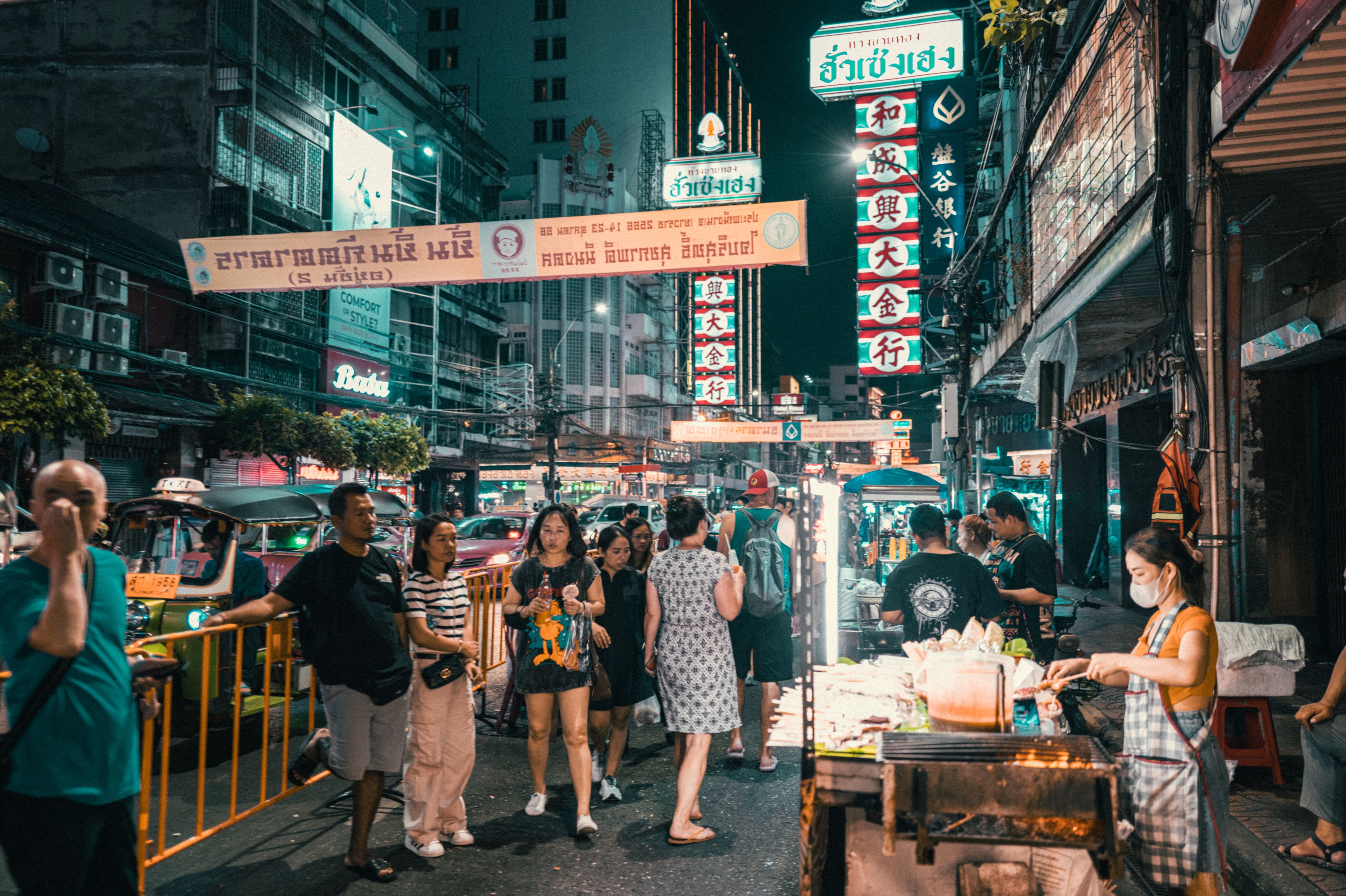
FAQ
Should I stay in Khao San or Chinatown in Bangkok? Khao San for the backpacker party, the densest traveler crowd and the cheapest dorm floor; Chinatown for world-class street food, an MRT stop, a quieter night and a more local feel at similar money (Where to Stay First Time; Nerd Nomads). If meeting people is the goal, base around Khao San. If food, transit and sleep matter more, base in Chinatown — and you can always combine the two.
Is Chinatown cheaper than Khao San Road? Not quite — at the rock-bottom end Khao San's Old Town shophouses are cheaper (dorms ฿250–450, privates ฿700–1,200) versus Chinatown's ฿350–600 dorms and ฿1,000–1,800 privates (Khaosan Road). But Chinatown's slightly higher privates buy nicer, design-led rooms near the MRT, so on value-per-baht it's near-even. Both sit well under $30 a night (Where to Stay First Time).
Does Khao San Road have a BTS or MRT station? No — Khao San has no BTS or MRT of its own; you rely on the Chao Phraya river boat from Phra Athit pier, taxis or tuk-tuks (Where to Stay First Time; Going to Bangkok). Chinatown, by contrast, has its own MRT stop at Wat Mangkon on the Blue Line, which is a real day-to-day advantage for getting around the city (Thailand With Tereza).
Is Chinatown too noisy to sleep in? Only if you book on the main Yaowarat strip, where the market and food-stall energy runs hard and the chaos is "constant" — fine if you're a heavy sleeper (Where to Stay First Time). Book a side soi or the Talat Noi / Song Wat pockets and it's genuinely quiet, since the strip "doesn't stay active all night" (Thailand With Tereza). The same rule applies to Khao San: sleep one street over on Rambuttri or Phra Athit.
Is Khao San Road safe for solo travelers? Generally yes. It's heavily touristed and patrolled, with the real risks being petty theft, overcharging and scams rather than violence; solo women report it as "one of the less hassle-heavy backpacker strips in Southeast Asia" because the crowd means you're rarely alone (ThaiGuys). Chinatown is also safe and feels more local; standard big-city precautions apply on both sides.
The bottom line
Pick Khao San if you came to party and meet people — it's the densest traveler scene on earth and the cheapest dorm floor in Bangkok, just book one street back on Rambuttri so you can sleep. Pick Chinatown if you want the world's best cheap food, an MRT stop, a quieter night and a real Bangkok — it wins four of the six criteria, and it's the rising backpacker pick precisely because it fixes Khao San's noise and transit problems while staying cheap. And if you can't choose, base in Chinatown and tuk-tuk over to Khao San for a night out — they're 4 km apart, and you can have both Bangkoks for the price of one bucket. Work out which traveler you are, then use the maps above to compare real prices for your dates — area first, property last.
Planning the whole shoestring trip? Our backpacking Bangkok budget travel guide ties the areas, costs and route together.
Sources
- Where to Stay First Time — Khao San Road or Chinatown? (verdict, no-MRT, food contrast, authenticity, noise, under-$30 bands): wheretostayfirsttime.com
- Khaosan Road — Bangkok Backpacker Guide (Old Town dorm ฿250–450 / private ฿700–1,200; Chinatown ฿350–600 / ฿1,000–1,800; "fewer true budget options"): khaosanroad.com
- Khaosan Road — Is Khao San Road Safe? (noise on the strip, room-at-the-back, Rambuttri/Phra Athit advice): khaosanroad.com
- Thailand With Tereza — Where to Stay in Bangkok Chinatown (MRT Wat Mangkon, Talat Noi/Song Wat quieter, strip "doesn't stay active all night," named stays): thailandwithtereza.com
- Thailand Starts Here — The Truth About Khao San Road (densest hostel strip, "make friends over bucket drinks"): thailandstartshere.com
- Nerd Nomads — Where to Stay in Bangkok 2026 (no social hostel scene in Chinatown, "quiet beer and a good plate of noodles"): nerdnomads.com
- Thailand Routes — Bangkok Chinatown Night Guide (Yaowarat among the world's greatest street-food streets): thailandroutes.com
- ThaiGuys — Khao San Road Guide (noise/"vibrating pillow," solo-female safety, less hassle-heavy): thaiguys.link
- Going to Bangkok — Khaosan Road to Phra Arthit Pier (10-min walk to pier, tourist-boat connections): goingtobangkok.com
- That Bangkok Life — How to Get to Khao San Road (Chinatown ~4 km away, MRT + walk, tuk-tuk ฿60–120): thatbangkoklife.com
- Hostelgeeks — Best Party Hostels in Bangkok 2026 (NapPark "party-centric," Mad Monkey on the canal): hostelgeeks.com
- Mad Monkey — Mad Monkey Bangkok (Rambuttri/canal location, daily pub crawls/pool parties, June 2026 birthday): madmonkeyhostels.com
- Lub d — Lub d Bangkok Chinatown (social hotel-hostel, mixed & female 8-bed dorms, comfy privates, near MRT/Yaowarat): lubd.com
- Booking.com — Lhong Yaowarat Hostel (80-year-old heritage house, quiet side alley, 9.1 rating, 3-min to MRT): booking.com