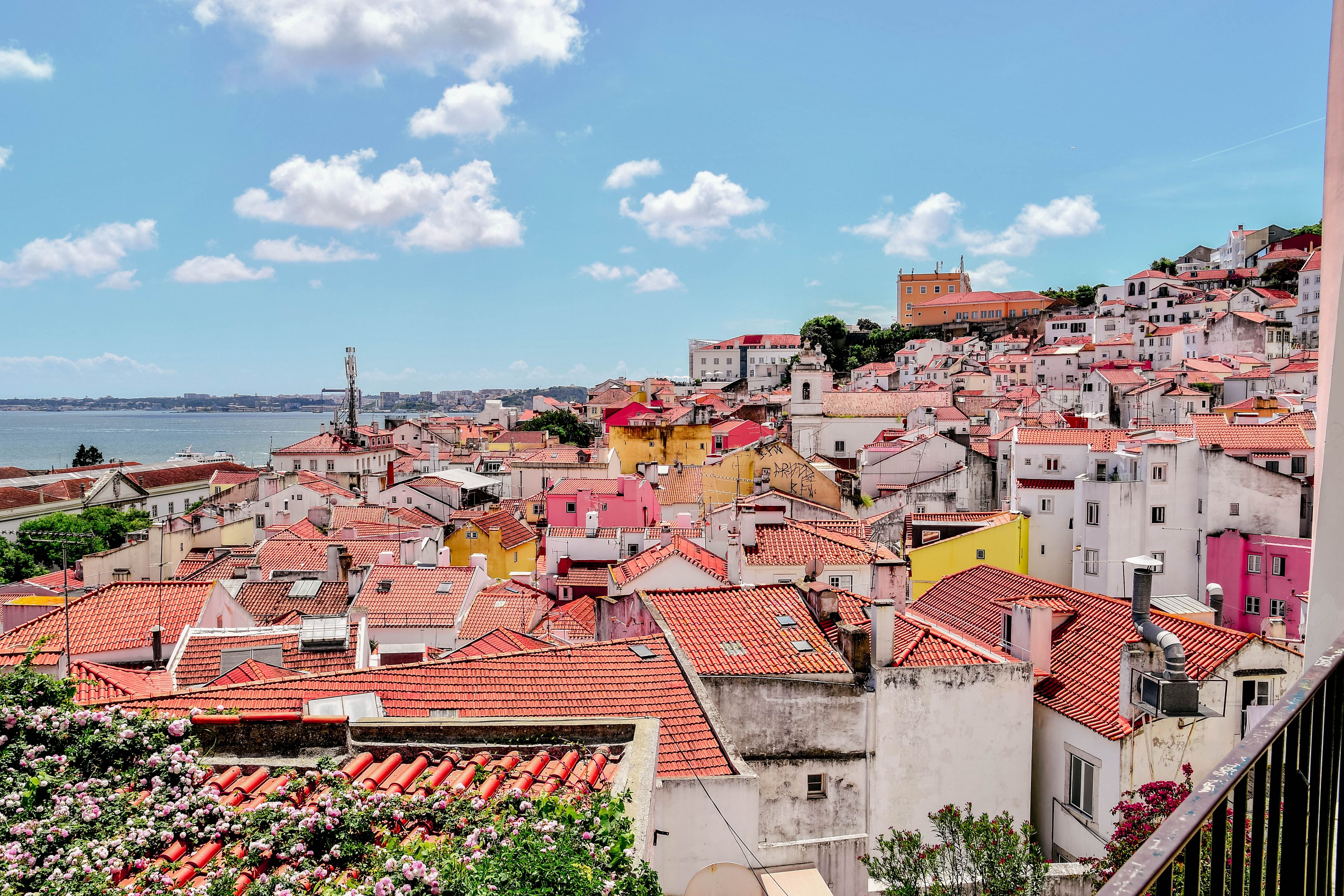
Lisbon for Digital Nomads: Where to Stay, Work & Live Long-Term (2026)
- Lisbon
- Portugal
- Digital Nomad
- Cost of Living
- Long-Stay
A 2026 guide to Lisbon for digital nomads: best neighborhoods to work from, honest monthly costs, the wifi and coworking reality, and the D8 visa basics.
The decision that shapes a month in Lisbon for digital nomads isn't which apartment you book — it's whether you size up the place honestly before you commit. Lisbon is Europe's default nomad hub for good reasons: genuinely fast fibre, a deep coworking scene, a workable D8 visa, sunshine most of the year, and a surf beach a train ride away. It's also no longer cheap, the hills will quietly punish a bad address, and August turns the centre into a tourist crush. Go in clear-eyed and it's one of the best remote-work bases on the continent. Go in on the Instagram version and you'll overpay for a room on a noisy hill you can't take a call in.
This is the hub for the whole long-stay cluster — the orientation page built around the 30-plus-day decision, not a weekend. It makes the calls that matter (which neighborhood actually suits a workday, what a month really costs, how the coliving-to-monthly-rental ladder works) and then routes you to the deep-dive for whatever you're deciding next. If you're here to vacation rather than work, our mid-range Lisbon travel guide is the better starting point; this one is for people moving in.
The short version. Base in Santos if you want the nomad core with the most coworking within walking distance; in Príncipe Real if you want leafy, upscale and quiet-for-calls and you'll pay for it; in Cais do Sodré if you want riverside and social and don't mind nightlife noise; in Arroios or Intendente if you're optimizing rent over postcode; and in Campo de Ourique if you're staying six months and want a calm, local, residential life. Then read the right spoke below and build the month from there.
The honest Lisbon reality, before you sign a lease
Most "living in Lisbon as a digital nomad" pieces sell the pastel-tiles-and-pastéis version. Four things matter far more once you're actually trying to close a workday here.
The wifi is genuinely excellent — that part lives up to the hype. Lisbon's average measured wifi runs around 189 Mbps down and 57 Mbps up as of mid-2026 (My Nomad Space), fibre-to-the-home with 200-500 Mbps is widely available, and the three carriers — MEO, Vodafone and NOS — all run strong nationwide networks (My Nomad Space). Apartment connections typically sit around 50-100 Mbps and coworking spaces run 100-500 Mbps, with LACS advertising 500 Mbps-plus (Backpacking Is Life). The infrastructure is stable by European standards — a rare nationwide blackout in April 2025 was the exception, not the rule (My Nomad Space). Still, run a backup: a local SIM (MEO, NOS or Vodafone, roughly €10-20/month for 10-20GB) or an eSIM from around €4 means a dropped apartment line never costs you a call (Backpacking Is Life). Worth knowing when you sign a lease: home fibre installation usually takes one to two weeks, so don't count on day-one apartment wifi.
Lisbon stopped being cheap — price it as a mid-tier European city. Rents have climbed roughly 15-25% a year since 2023, and the bargain-capital reputation is now half out of date (Midlife Nomads; SearchSpot). A realistic single-nomad monthly budget now lands around €1,950-2,550 on the lean end and €2,700-3,400 for a comfortable central setup with coworking and regular meals out (Midlife Nomads). It's still the most affordable major capital in Western Europe — cheaper than Paris, London or Amsterdam — but "affordable for Western Europe" is the right frame, not "cheap."
The hills decide your daily comfort more than the listing photos do. Lisbon is built on seven hills, and the gradient is not evenly spread. Several of the most charming nomad neighborhoods — Príncipe Real, Graça, parts of Alfama — sit up real climbs, and "hills affect daily life more than people admit" (Nomadic Days). For a month-plus stay where you'll haul groceries home and walk to a café daily, a flat or gently-sloped base (Santos, the Cais do Sodré riverfront, Arroios, Campo de Ourique's plateau) is a quality-of-life decision, not a detail.
Where you sleep decides whether you can actually work. Cais do Sodré is the nightlife strip, so a room over Pink Street is a poor place to take morning calls; Bairro Alto is "loud after dark" and rough for early risers (Outsite). The nomad neighborhoods split cleanly into social-and-noisy versus quiet-and-heads-down, and which one suits you depends entirely on how you work. That's the first call to make — so let's make it.
Pick your neighborhood by how you work
Here's the nomad-friendly cluster on one map. Coliving rooms and direct landlord rentals won't all show here — many are booked off-platform — but this is the right way to scan monthly-friendly aparthotels and serviced apartments across the core areas before you narrow down:
Santos — the nomad core, most coworking within walking distance
If you want to land in the densest concentration of other remote workers with the most coworking on your doorstep, Santos is the call. It's become "nomad central," with the highest concentration of remote workers and five-plus coworking spaces within walking distance, riverside walks, and an easy train to the surf beaches (Backpacking Is Life). The vibe is gyms, yoga studios, third-wave coffee and vintage shops — a "very specific lifestyle zone" that's walkable and well-connected (Nomadic Days).
Who it suits: first-month nomads, social-but-focused workers, the fitness-and-surf crowd, anyone who wants to walk to coworking rather than ride. The honest trade-off: it's the most nomad-saturated area, which can feel like an "English bubble" if you came for Portugal (Backpacking Is Life) — and being in demand, it's not the cheapest. Work-life logistics: flat-to-gentle, highly walkable, packed with work-friendly cafés. Rough monthly bands: private room ~€500-700, studio ~€700-900, 1BR ~€900-1,200 (Backpacking Is Life).
Príncipe Real — upscale, leafy, quiet-for-calls
If deep focus and a calm street matter more than a built-in scene, Príncipe Real is the premium pick. It's "central, leafy, safe, and social," close to everything without being swallowed by tourists (Nomadic Days) — design-forward, with high-end cafés good for laptop work and a quieter feel suited to focused days (Outsite). It's the neighborhood locals quietly name when asked where they'd live.
Who it suits: heads-down workers, founders and creatives, couples, anyone optimizing for quiet calls and a genuine neighborhood over a nomad crowd. The honest trade-off: it's the most expensive central neighborhood, and it sits on a hill — the climb home is the price of admission (Nomadic Days). Work-life logistics: hilly but walkable, with the best café-for-work density in the centre. Rough monthly bands: private room ~€600-800, studio ~€850-1,100, 1BR ~€1,100-1,500 (Backpacking Is Life).
Cais do Sodré — riverside, social, the startup strip
Cais do Sodré has gone from rough docks to Lisbon's trendiest riverside strip — the Time Out Market, Pink Street, a real startup-and-remote-worker community, and excellent transport including the train to Cascais (Outsite). It's flat, central and highly walkable, and several of the city's best coworking spaces sit right here.
Who it suits: social nomads, first-timers who want to plug into the scene fast, anyone who values flat ground and the river on the doorstep. The honest trade-off: the nightlife is the catch. It's a club-and-bar district — "LOUD," best for party-focused nomads rather than heads-down focus (Backpacking Is Life). Book a room set back from Pink Street, not on it. Work-life logistics: flat, central, coworking-dense; just mind the weekend noise. Rough monthly band: roughly €1,400-1,800 for a studio-to-1BR in the central core (Outsite).
Arroios & Intendente — the value play, authentic Lisbon
Just north and east of the tourist centre, Arroios is the rent-conscious move: the most affordable of the nomad neighborhoods, multicultural and authentically Portuguese, with Green-line metro access, cheap local restaurants and a growing nomad scene (Backpacking Is Life). Neighbouring Intendente has gentrified from a once-rough patch into an emerging creative pocket that's still cheaper than the centre (Outsite). Central areas like Chiado and Príncipe Real command premium prices while Intendente and similar offer 40-50% savings (Outsite).
Who it suits: budget-aware longer-stayers, nomads who want to live in real Lisbon rather than a remote-worker enclave, anyone happy to work from cafés. The honest trade-off: fewer dedicated coworking spaces than Santos (cafés cover it fine), a grittier, working-class look, and — as with any city — a couple of blocks around Intendente still feel rough after dark; check the specific street. Work-life logistics: good metro, plenty of cafés, flatter than the hill neighborhoods. Rough monthly bands in Arroios: private room ~€400-600, studio ~€600-800, 1BR ~€750-1,000 (Backpacking Is Life).
Campo de Ourique — calm, residential, for the long-haul stayer
If you're committing to six months and want to actually live somewhere rather than camp, Campo de Ourique is the quiet winner. It's residential, family-friendly and safe, with parks, a great local market and little nightlife — a small nomad community and a base built for long stays (Backpacking Is Life). It sits on a flat-topped plateau, so the daily walking is kinder than the name "Lisbon hills" implies.
Who it suits: six-month-plus stayers, light sleepers, couples and quiet-loving solo workers who want groceries, parks and calm over a scene. The honest trade-off: no metro — you're on trams and buses — and the nomad community is thin, so it's lonelier if a built-in social circle is what you want (Backpacking Is Life). Work-life logistics: flat plateau, quiet streets for calls, tram/bus dependent. Rough monthly bands: private room ~€500-700, studio ~€700-900, 1BR ~€900-1,200 (Backpacking Is Life).
Want the full area-by-area breakdown with the actual stays? Our best areas in Lisbon for digital nomads deep-dive picks the specific buildings, and the head-to-head most nomads agonize over is covered in Príncipe Real vs Cais do Sodré.
Lisbon for digital nomads: the neighborhood-for-work cheat sheet
This is the table the brief promised — the workday read on each nomad neighborhood, so you can match the area to how you actually work before you spend an hour on listings.
| Neighborhood | Monthly rent band (room / studio) | Wifi & coworking density | Quiet for calls | Vibe | Best for which nomad |
|---|---|---|---|---|---|
| Santos | ~€500-700 / €700-900 | High — 5+ coworking walkable | Moderate | Fitness, coffee, nomad core | First-timers, social-but-focused, surfers |
| Príncipe Real | ~€600-800 / €850-1,100 | Medium — boutique cafés, quiet | High | Upscale, leafy, design-led | Heads-down workers, founders, couples |
| Cais do Sodré | ~€700-900 / €1,400-1,800 (1BR) | High — startup strip, coworking-dense | Low (nightlife) | Riverside, social, buzzy | Social nomads, first-timers, night owls |
| Arroios / Intendente | ~€400-600 / €600-800 | Medium — café-led, fewer coworking | Moderate-high | Authentic, multicultural, value | Budget longer-stayers, real-Lisbon seekers |
| Campo de Ourique | ~€500-700 / €700-900 | Lower — café-led, small scene | High | Calm, residential, local | Six-month stayers, light sleepers, quiet workers |
Bands are 2026 ranges from current nomad sources and move with season and demand — always check live prices for your dates. Rents have climbed ~15-25% a year since 2023 (Midlife Nomads), and central Chiado/Príncipe Real run a clear premium over Arroios and Intendente (Outsite).
What a Lisbon month actually costs
Lisbon isn't a $1,000-a-month destination anymore, but it remains the best-value major capital in Western Europe. Built up from current 2026 line items for a solo nomad, the picture looks roughly like this:
| Monthly line item | Lean | Comfortable | Notes |
|---|---|---|---|
| Housing | Private room ~€400-700 | Studio / 1BR ~€900-1,500 | Cheapest in Arroios/Intendente; priciest in Príncipe Real/Chiado (Backpacking Is Life; Outsite) |
| Coworking | €0 (café-based) | ~€100-220 hot desk | Dedicated desks run higher; see the coworking section (Midlife Nomads) |
| Food | ~€200-300 groceries-led | ~€350-500 mixed | Lunch menu do dia ~€6-12; dinner ~€12-20 (Backpacking Is Life) |
| Transport | Navegante pass ~€40/month | Same + occasional rideshare | Unlimited city transit; Uber 5km ~€5-8 (Midlife Nomads; Backpacking Is Life) |
| SIM / data | ~€10-20 | Same | MEO/NOS/Vodafone 10-20GB; eSIM from ~€4 (Backpacking Is Life) |
| Realistic monthly total | ~€1,950-2,550 | ~€2,700-3,400 | High-comfort expat (central 1BR, dining out, dedicated desk) runs ~€3,700-4,800 (Midlife Nomads) |
For a sanity check, Nomad List's running cost-of-living estimate for Lisbon sits in the same comfortable band (Nomad List). The biggest swing factor by far is housing: the gap between a room in Arroios and a central studio in Príncipe Real is most of your budget, which is exactly why the neighborhood call drives everything else. Our best monthly aparthotels in Lisbon and best serviced apartments for long stays price the comfortable end in detail.
Where to stay long-term: the accommodation ladder
Most nomads work their way down a four-rung ladder over a stay. Knowing which rung suits week one versus month three saves you both money and a bad lease.
Rung 1 — Coliving (best for week one and the solo-and-social). A coliving room bundles a furnished private room, fast wifi, cleaning, linens and a built-in community into one monthly price, with zero deposit hassle and a soft landing if you don't know the city. Outsite's Cais do Sodré house, for instance, runs a private-room model with a ground-floor coworking café, professional cleaning and laundry included, and around 99 Mbps wifi (Outsite). The trade-off is price-per-square-metre (you pay a premium for the convenience and community) and less privacy than your own place. One caution: vet the operator's current status before you wire anything — the big chain Selina collapsed into insolvency in 2024, with locations closing in several countries (Skift), so book living, currently-operating spaces. Our best coliving spaces in Lisbon covers the live options, community-vs-heads-down, and what's actually included.
Rung 2 — Aparthotel (best for the 1-3 month stay with hotel-grade ease). An aparthotel gives you a private studio with a kitchenette, weekly cleaning and reception, bookable by the month with no Portuguese paperwork — the sweet spot for a one-to-three-month stay where you want privacy without committing to a local lease. These show on the OTAs, so they're easy to compare and lock in. See our monthly-aparthotel picks.
Rung 3 — Serviced apartment (best for comfort over months). A step up in space and finish from an aparthotel — full kitchen, more room, hotel-style services — pitched at longer corporate-and-nomad stays. The pick for a comfort-first nomad settling in for several months. Our serviced-apartment guide ranks them.
Rung 4 — Local rental via Idealista/Flatio (best for month three onward, cheapest per night). Once you know your neighborhood, a direct monthly rental is far cheaper per night than any of the above. The platforms nomads actually use: Idealista (the local market leader, cheapest for genuine long-term lets), Flatio (mid-term, often deposit-free and remote-work-vetted), Uniplaces and Spotahome for furnished mid-term, plus Facebook groups for direct-landlord deals (Flatio; Backpacking Is Life). The reality to budget for: deposits typically run one to two months' rent, a long lease wants a Portuguese NIF (tax number) plus passport, and fibre installation can take a week or two (Backpacking Is Life).
The play most experienced nomads run: book a coliving or aparthotel for the first two to four weeks, use that time to scout your actual neighborhood in person and test café wifi, then negotiate a direct monthly rental — landlords commonly give a 10-20% discount for three-plus-month commitments (Backpacking Is Life). Don't sign a year-long lease off a listing photo before you've slept in the area.
Because nomads research long and book later, the smart move for that two-to-four-week landing pad is to scan live rates now and lock dates when your plans firm up. Browse monthly-friendly aparthotels and serviced apartments in Lisbon and check live rates — these are the OTA-listed rungs of the ladder, ideal for the soft landing before you go direct.
Coworking and getting set up
You don't need to commit to a coworking space before you arrive, but it helps to know the lay of the land — and Lisbon's scene is deep, with 50-plus spaces across the city.
- Second Home Lisboa (Cais do Sodré, inside the Mercado da Ribeira) — the showpiece, a plant-filled greenhouse of a space; hot desks from around €250/month, dedicated desks ~€350, day pass ~€25 (Career Gappers).
- Heden (Chiado and Graça) — design-led and central; hot desk ~€250+VAT/month, fixed desk ~€300+VAT, day pass ~€20+VAT (Coworking Spaces).
- Outsite Cowork Café (Cais do Sodré) — relaxed café-coworking attached to the coliving; ~€150/month, day pass ~€17 (Career Gappers).
- Cowork Central (Saldanha and others) — a value, 24/7 option; flex from around €99/month (Backpacking Is Life).
- LACS (two locations) — a creative-tech hub advertising 500 Mbps-plus, well-rated by remote workers (Backpacking Is Life).
- Village Underground (Alcântara, by LX Factory) — shipping containers and a double-decker bus turned into desks; the quirky creative pick out west (Career Gappers).
The pattern worth noticing: the densest coworking sits in the Santos / Cais do Sodré belt, with options thinning in the quieter residential areas — another reason neighborhood comes first, since your workspace choice is partly made by where you sleep. Our best coworking spaces in Lisbon by neighborhood ranks them on wifi, quiet and community.
First-week setup, in order: grab a SIM at the airport or a carrier store day one (it's your wifi backup, not a nice-to-have); load a Navegante card (~€40/month unlimited covers metro, trams, funiculars, buses and the Cascais/Sintra trains); if you'll rent long-term, get a NIF early, since the lease, a bank account and even some utilities want it; and keep your first stay flexible so you can scout in person before committing.
The D8 visa and tax basics (verify before you rely on these)
This is the YMYL section — visa and tax rules change, getting them wrong is costly, and the numbers below vary even across reputable sources, so treat them as a 2026 starting point and confirm current figures with an official source or an immigration lawyer for your own situation.
Portugal's D8 digital nomad visa is the main legal route for non-EU remote workers, and it comes in two flavours: a temporary-stay visa valid up to 12 months (good for a long stretch, but it doesn't lead to permanent residency), and a residence visa that starts as a short entry visa, converts to a two-year residence permit, renews for three more years, and opens a path to permanent residency or citizenship after five years (Get Golden Visa; idealista).
The headline requirements, stated as ranges because sources differ:
- Income: roughly €3,280-3,700 a month in stable remote income — about four times the Portuguese minimum wage — from clients or an employer outside Portugal, with the threshold rising for a spouse and dependents (idealista; Global Citizen Solutions).
- Savings: proof of around €11,000-plus (roughly twelve months of minimum wage), higher with family (idealista).
- Who qualifies: both remote employees and freelancers/independent contractors earning foreign income (idealista).
On tax, the famous Non-Habitual Resident (NHR) regime has been reshaped — the old version closed and 2026 eligibility now hinges on transitional rules and your professional category (the successor scheme is sometimes called IFICI / "NHR 2.0") (idealista). Critically, spending 183-plus days a year in Portugal makes you a tax resident, potentially on worldwide income (idealista). The visa figures and the tax treatment are exactly the details to verify against official sources before you plan around them — do not treat the numbers here as final.
Budget-sensitive and not wedded to the capital? Porto runs noticeably cheaper for a similar nomad lifestyle — our Lisbon vs Porto for digital nomads weighs the two head-to-head.
Where to go deeper: the rest of this Lisbon nomad cluster
This page is the hub — the orientation. Once you've made the neighborhood call, here's the right next read for whatever you're deciding:
- Picking the area in detail: best areas in Lisbon for digital nomads — the long-stay neighborhoods with the actual stays.
- Aparthotels by the month: best monthly aparthotels in Lisbon — private, hotel-easy, OTA-bookable.
- Coliving vs going solo: best coliving spaces in Lisbon — community vs heads-down, what's included.
- Serviced apartments for longer stays: best serviced apartments for long-stay nomads.
- Where to work: best coworking spaces by neighborhood — ranked on wifi, quiet and community.
- Príncipe Real or Cais do Sodré: the head-to-head — the two areas most nomads choose between.
- Lisbon or Porto: Lisbon vs Porto — if the capital's prices give you pause.
The bottom line
Lisbon earns its status as Europe's default nomad hub — the fibre is genuinely fast, the coworking is deep, the D8 visa is workable, and the everyday life is good. But it rewards nomads who choose deliberately. Base in Santos to land in the coworking-dense core, Príncipe Real for quiet upscale focus, Cais do Sodré for riverside and social, Arroios or Intendente for value, or Campo de Ourique for a calm long-haul life. Book a coliving or aparthotel for the first few weeks, scout in person, then go direct on a monthly rental. Run a SIM as wifi backup. And price the place honestly — it's affordable for Western Europe, not cheap.
So make the neighborhood call first — then click into the matching long-stay guide above and build the month from there.
Sources
- My Nomad Space — Internet in Lisbon: Speed, Reliability & Wi-Fi for Remote Work (wifi Mbps, providers, blackout): mynomadspace.com
- Backpacking Is Life — Digital Nomad Lisbon: Complete 2026 Guide (neighborhoods, rents, coworking, costs, rentals): backpackingislife.com
- Midlife Nomads — Cost of Living in Lisbon for Digital Nomads (2026) (monthly bands, line items): midlifenomads.com
- Outsite — Best Neighborhood to Stay in Lisbon as a Digital Nomad (2026) (area vibe, rents, savings): outsite.co
- Nomadic Days — Best Neighborhoods in Lisbon for Digital Nomads (honest take, hills): nomadicdays.org
- SearchSpot — Lisbon Cost of Living for Digital Nomads in 2026 (rent rises): searchspot.ai
- Career Gappers — 9 Top Coworking Spaces in Lisbon (2026 guide) (Second Home, Outsite, Village Underground prices): careergappers.com
- Coworking Spaces — Top Coworking Spaces in Lisbon 2026 (Heden, Second Home pricing): coworkingspaces.me
- Outsite — Lisbon Cais do Sodré coliving (what's included, wifi): outsite.co
- Skift — Selina Collapses in Liquidity Crisis (operator insolvency, closures): skift.com
- Flatio — Long-term apartments for rent in Lisbon (deposit-free, mid/long-term): flatio.com
- idealista — Portugal D8 Digital Nomad Visa 2026: income, tax & residency rules: idealista.pt
- Get Golden Visa — Portugal D8 Digital Nomad Visa 2026 Guide (visa types, durations): getgoldenvisa.com
- Global Citizen Solutions — Portugal Digital Nomad Visa (D8) 2026 (income threshold): globalcitizensolutions.com
- Nomad List — Cost of Living in Lisbon (running estimate): nomads.com