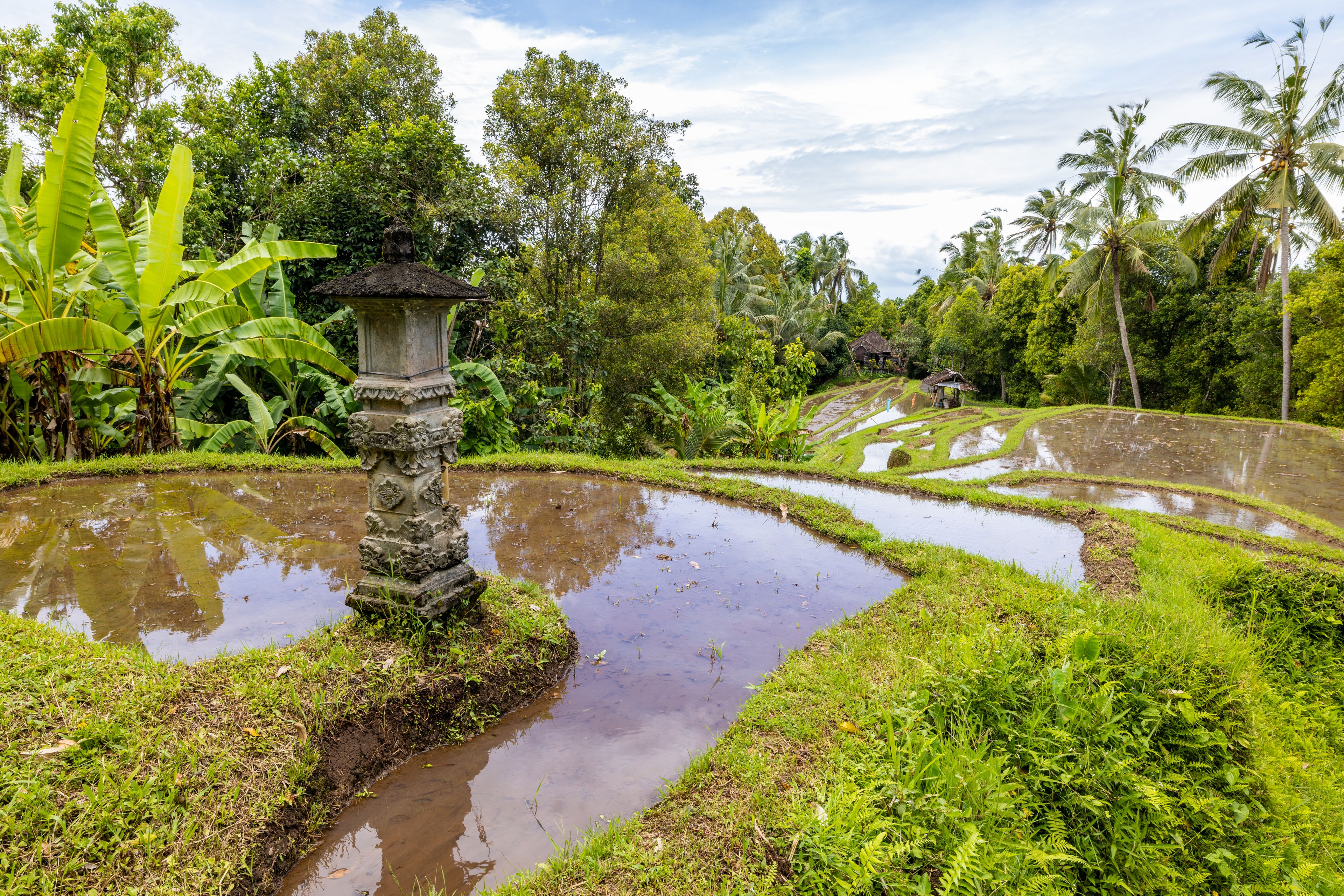
Bali for Digital Nomads: Where to Stay, Work & Live in 2026
- Bali
- Indonesia
- Digital Nomad
- Cost of Living
- Remote Work
A practical 2026 guide to Bali for digital nomads: the best areas (Canggu, Ubud, Sanur, Uluwatu), the wifi reality, visas, monthly costs, and where to base long-term.
Most guides to Bali for digital nomads sell you the reel: a laptop on a beanbag, a smoothie bowl, sunset surf. The reality that actually decides your month is duller and more useful — which of Bali's four nomad bases you pick, whether the wifi holds during a client call, which visa keeps you legal, and what the whole thing really costs once the café habit kicks in. Get those four right and Bali is one of the best remote-work setups on the planet. Get them wrong and you'll spend your first three weeks scootering between villas you should have vetted before you signed.
Here's the honest version up front, then the detail. Bali isn't one nomad town — it's four, each with a different daily rhythm: Canggu (social, surf, the biggest scene), Ubud (quiet, green, built for focus), Sanur (calm, local, the long-stayer's base), and Uluwatu (cliffs and surf, thin on infrastructure). Most working nomads should start in Canggu for the community and the coworking density, then decide whether the calm of Ubud or Sanur suits how they actually work. This guide makes that call with you, lays out the costs in honest bands, and flags the visa rules you must verify for your own situation before you book a one-way flight.

The honest Bali reality, before you commit a month
Four things matter far more than the beanbag-and-smoothie version of nomad Bali. Sort these and the rest is detail.
The wifi is fast at the right spots — with a backup, never without one. Bali's average wifi sits around 48 Mbps down and 26 Mbps up, but the spread is huge. Fibre-equipped villas and coliving run 100-300 Mbps, serious coworking spaces clock 50-150 Mbps, and Canggu's best work cafés average around 70 Mbps down — but hotel wifi averages a weak 34 Mbps, roughly half. The catch nobody films: the island "relies heavily on undersea cables for its main internet connection, so brief interruptions do happen" (My Nomad Space), and power cuts are common enough that the good coworking spaces run backup generators. The fix every working nomad lands on: a local Telkomsel or XL eSIM topped up with data, so when the villa drops mid-call you tether and keep going (My Nomad Space). Never run a Bali month on one connection.
Traffic and "no public transport" shape your day more than you expect. There is effectively no usable public transit, so a scooter is the only fast way around — and Canggu's main road in particular "becomes gridlocked from 4-7 PM daily" (Nomads in Asia). Practically: book your coworking, gym and a couple of work cafés within scooter-light reach of where you sleep, and don't schedule a 5pm call that needs you to cross town first.
The café scene is the hidden cost, not the rent. Bali food is cheap; Bali café culture isn't. A warung plate runs 20,000-30,000 IDR (around $1.50-2), but a Western brunch-and-flat-white day costs many times that. The gap between a warung-led month and a café-led one is most of the difference between a $1,200 budget and a $2,400 one — and it repeats every single day. More on this in the cost section, but flag it now: where you eat moves your budget more than which area you pick.
The visa is the one thing you cannot wing. Working in Bali on a tourist visa or visa-on-arrival is technically illegal regardless of where your clients are (EmploySome), and the rules shift. There's now a dedicated remote-worker visa, but it's strict — full detail (and the honest caveats) in the visa section below. Treat every figure here as a 2026 starting point and confirm current rules against official sources before you rely on them.
Think of this as the realistic Bali digital nomad guide — what living in Bali as a digital nomad is actually like, not the postcard. New to the island entirely? Start with our Bali travel guide for first-timers for the wider orientation, then come back here for the work-and-live version.
Pick your Bali base by how you actually work
This is the load-bearing decision, so make it first. Here's the whole nomad belt on one map — the right way to scan monthly-friendly stays across the areas before you narrow down (note that coliving rooms are often booked direct and won't all appear, so use this for the area, then approach a specific coliving directly):
Canggu — the social, coworking-dense core
Canggu is where most nomads land, and for good reason: it's "social, busy, surf" — "the densest mix of coworking, cafes, events, and other remote workers" anywhere in Bali (Nomads in Asia; SearchSpot), and "one of the easiest places in the world to make friends as a digital nomad" (Digital Nomad Lifestyle). If you're new to Bali and want to land, plug into a network within a week, and surf out the door, nothing else competes.
Who it suits: first-timers, social and extroverted nomads, beginner-to-intermediate surfers, and anyone who wants the scene to come to them. The honest trade-off: the same density is a tax. The 4-7pm gridlock is real (Nomads in Asia), it's the priciest of the bases, and the social pull is relentless — the honest 2026 guide warns Canggu "can eat attention" and brings "more distraction, more traffic, and more pressure to confuse motion with progress" (SearchSpot). Plenty of people arrive to work and leave having mostly socialised about work. Work-life logistics: 5-plus coworking spaces and the fastest café wifi on the island; rough monthly 1BR band $400-800, running roughly 20-30% above the other areas.
Canggu is deep enough to deserve its own breakdown — it's really three or four sub-areas (Batu Bolong, Berawa, Pererenan) with different rhythms. Our Canggu digital nomad guide picks the sub-area by your work style, and for the cheaper end of Canggu specifically, our best budget stays in Canggu covers the value rooms and colivings.
Ubud — quiet, green, built for deep work
Forty-five minutes inland and uphill, Ubud is the opposite of Canggu by design: "quiet, spiritual, green," with rice terraces, cooler air, waterfalls and a deep yoga-and-wellness culture (Nomads in Asia). It's the base for the nomad who came to build something — the honest guide frames it as "better if you actually want to write, build, reset, or work without feeling like every coffee run is a networking event" (SearchSpot). If your work is deep and your calendar has real client calls, Ubud removes the friction Canggu adds.
Who it suits: founders, writers, developers, heads-down workers, light sleepers, wellness-led nomads, and anyone who knows they do better with structure than stimulation. The honest trade-off: there's no beach and the scene is thinner — "less surf culture, fewer spontaneous social options" (SearchSpot) — and if you're an extrovert it can tip from "focused" into "isolated." The other catch is distance: a scooter run to Canggu or the beach takes 45-90 minutes, so don't pick Ubud expecting easy beach days. Work-life logistics: 3-4 coworking spaces (Outpost is the anchor) and fibre coworking around 50-100-plus Mbps, though café and public wifi is more variable; rough monthly 1BR band $300-600 — a clear notch below Canggu.
Torn between the two? The decision is common enough that we wrote it up in full: our Canggu vs Ubud for digital nomads comparison gives a verdict by nomad type.
Sanur — the calm, local, long-stayer's base
Sanur is Bali's most underrated nomad base, and the one that rewards a longer stay. It's "calm, local, beach," with a quiet morning promenade, residential lanes and a mature expat infrastructure — international schools, reliable clinics, English-speaking services — that makes an extended stay feel like a proper base rather than a holiday (Nomads in Asia; Bhatara Villa). The honest guide pegs it perfectly: "calmer, easier to move through, and more compatible with routines that last longer than a month" (SearchSpot). If you want your life to feel "normal enough to sustain for more than a few weeks," Sanur is the strongest pick in Bali.
Who it suits: long-stay nomads (1-3 months-plus), nomad families, couples, older or returning nomads, and anyone who values output and a sustainable routine over scene points. The honest trade-off: it's quiet — fewer events, less nightlife, "fewer scene points," and "not automatically the best place to stay" if momentum and a fast network matter more to you than stability (SearchSpot). The coworking scene is small. Work-life logistics: 1-2 coworking spaces but genuinely good ones — Livit Hub and FLOW Workspace (the latter at up to 150 Mbps), "not overcrowded" (Bhatara Villa); rough monthly 1BR band $300-550, among the cheapest on the island.
Uluwatu / the Bukit — cliffs, surf, and thin infrastructure
Down on the Bukit Peninsula, Uluwatu is "surf, cliffs, remote" — dramatic clifftop scenery, world-class surf breaks, and a slower, more spread-out scene (Nomads in Asia). It's grown as a base for serious surfers and couples who want quiet with occasional social access. But be clear-eyed: it's the thinnest of the four for working infrastructure.
Who it suits: intermediate-to-advanced surfers who organise their day around the waves, couples wanting clifftop calm, and self-sufficient nomads who don't need a coworking community. The honest trade-off: "very limited coworking" — effectively one option — and "internet is less reliable" than the northern hubs (Nomads in Asia). Everything is spread out and scooter-dependent, and you're a long way from the Canggu/Ubud scene. Only pick it if the surf, not the work setup, is the priority. Work-life logistics: essentially 1 coworking option and the least reliable connectivity of the four — vet your villa's fibre carefully and lean hard on your eSIM backup; rough monthly 1BR band $350-700.
How a Bali month actually works (the setup play)
The mistake first-timers make is booking a month in one villa, sight-unseen, off a listing photo. Here's the play experienced nomads run instead.
Book 7-10 nights first, then rent monthly on the ground. A villa that looks perfect online can sit next to a 5am construction site you'd never see in the photos. Use the first week to scout your area, test the wifi at a few cafés, and view places in person before you sign a lease.
Decide in this order: area → stay → coworking. Lock your base first, because it sets everything downstream — commute, rent, noise, scene. Then the stay, then the coworking nearest it, so your daily loop is short and dodges the worst afternoon traffic.
Mind the deposit. Monthly rentals are far cheaper per night than nightly bookings, but most landlords now want two months upfront — deposit plus first month — often in cash, and the cheapest deals come through local agents and Facebook groups, not booking sites. Land with that cash liquid.
What a Bali month actually costs
Bali isn't a $600-a-month destination anymore, but it's still excellent value for what you get. The two levers that decide your number are where you sleep and where you eat — everything else is a few hundred dollars combined and barely moves. Built from real 2026 line items (converting at roughly 15,800 IDR to the dollar, which drifts, so treat the USD as a ballpark):
| Monthly line item | Lean (~$1,200) | Comfortable (~$2,000) | Notes |
|---|---|---|---|
| Housing | Shared room / coliving ~$300-550 | Private 1BR villa w/ pool ~$760-1,140 | 12-18M IDR for a Canggu 1BR+pool; deposits now ~2 months (Asia Lifestyle Magazine) |
| Coworking | Café + day passes | Unlimited membership ~$115-130 | 1.8-2M IDR/mo unlimited (Asia Lifestyle Magazine) |
| Food | Warung-led ~$300-350 | Mixed warung + café ~$320-450 | warung meal ~$1.50; café-led eating runs far higher (Asia Lifestyle Magazine) |
| Scooter | Basic rental ~$47-63 | Same | 750k-1M IDR/mo (Asia Lifestyle Magazine) |
| SIM / data | ~$9-15 | ~$9-15 | ~150,000 IDR for 50GB; your wifi backup (Asia Lifestyle Magazine) |
| Insurance | SafetyWing ~$40-55 | ~$50-80 | ~1.5M IDR/mo; do not skip on a scooter (Asia Lifestyle Magazine) |
| Gym / yoga / fun | ~$80-150 | ~$150-300 | 1.2-1.8M IDR/mo for the popular studios (Asia Lifestyle Magazine) |
| Realistic monthly total | ~$1,170-1,390 | ~$1,900-2,400 | Premium (pool villa, Western dining, dedicated desk, car) runs $3,165-4,430+ (Asia Lifestyle Magazine) |
Two caveats that apply to every line. Canggu rents climbed about 18% year-on-year into 2026 and everything spikes in the July-August and December peaks, so price your own dates. And Canggu runs noticeably pricier than Ubud or Sanur for the same lifestyle (Nomads in Asia) — choosing a calmer base is the single easiest way to cut the total. For a full line-by-line model across lean, comfortable and lifestyle tiers, our Canggu monthly cost-of-living breakdown goes deep.
Bali's nomad areas compared
The whole decision on one screen — area by monthly cost, work setup, vibe, and the nomad each one suits:
| Area | Monthly cost (1BR band) | Wifi / coworking | Vibe | Best for which nomad |
|---|---|---|---|---|
| Canggu | ~$400-800 (priciest) | High — 5+ spaces, fastest café wifi | Social, surf, busy | First-timers, extroverts, social/surf nomads who want the scene |
| Ubud | ~$300-600 | Medium — 3-4 spaces (Outpost), fibre fine, cafés variable | Quiet, green, wellness | Deep-focus workers, writers, founders, light sleepers |
| Sanur | ~$300-550 (cheapest) | Small but good — 1-2 spaces (Livit, FLOW up to 150 Mbps) | Calm, local, family | Long-stayers, families, couples, output-over-nightlife nomads |
| Uluwatu / Bukit | ~$350-700 | Thin — ~1 option, least reliable | Cliffs, surf, remote | Serious surfers, self-sufficient couples wanting quiet |
Band note: all areas spike in the July-August and December peaks and Canggu rose ~18% year-on-year (Asia Lifestyle Magazine); Canggu runs ~20-30% above the others for the same lifestyle (Nomads in Asia). Always check live prices for your dates.
The visa reality — verify this for your own situation
This is the YMYL part of the guide, so read it as a starting point and confirm current rules against official Indonesian immigration sources or a reputable visa agent before you rely on anything here. The rules change, and getting them wrong is costly. As of 2026 there are three routes nomads actually use:
- e-VOA (visa on arrival) — the short stay. 30 days, around 500,000 IDR (~$35), extendable once for another 30 (60 days total). Fine for a scouting trip or a short stint.
- B211A visit visa — the common nomad workaround. A single-entry visa valid for 60 days, extendable twice for 60 days each, to a 180-day maximum, costing roughly 2-3M IDR ($130-200) depending on nationality and agent, with each in-country extension around 600,000-800,000 IDR. Leaving Indonesia terminates it (it's single-entry). Note the important legal caveat below.
- E33G Remote Worker KITAS — the dedicated remote-work visa. Gives up to a year's stay, but it's strict: it requires an employment contract with a company registered outside Indonesia, proof of about USD 60,000/year in income and a bank balance of at least USD 2,000 over three months of statements. Critically, "self-employed, registered as sole traders, or who receive income from Indonesian sources do not qualify" (IndoVisaGuide) — so most freelancers are excluded and lean on the B211A instead.
The honest caveat most nomad reels skip: working remotely in Indonesia on a tourist visa, VOA or B211A visit visa is "illegal, regardless of how the worker is paid or where the employer is based" (EmploySome). In practice many nomads work from these visas anyway, but you should understand the rule, not just the workaround — and the E33G is the only route that legally permits remote work for those who qualify. One more thing to know: spend more than 183 days in Indonesia in a rolling 12 months and you may become a tax resident liable on worldwide income. None of this is legal advice — verify your own case.
The best place in Bali for digital nomads, by how you work
The areas split clean by how you work, so match the place to your actual psychology, not the reel:
- Social, first time in Bali, want surf and a network out the door? Canggu. Accept the higher burn and the FOMO as the price of the densest scene — and sleep set back from the strip so you can still focus.
- Deep work, real client calls, want a calm nervous system and lower rent? Ubud. The trade is no beach and a quieter social life; for most heads-down workers that's a feature, not a bug.
- Staying one to three months-plus, or bringing a partner or kids, and want life to feel normal? Sanur. The cheapest, calmest, most sustainable base, with small-but-good coworking.
- Here mainly to surf, and self-sufficient about work? Uluwatu — but vet the wifi hard and don't expect a community.
- Genuinely can't choose? Start in Canggu (nearest the airport, easiest to land social), then move once to Ubud or Sanur to slow down and let the spend recover. They're different Balis an hour or two apart.
Whichever you pick, the rule holds: choose your area by how you work, book a week before you sign a month, and run a backup connection. Do that and Bali stops being a logistics gamble and starts being the base it's sold as.
FAQ
Where is the best place in Bali for digital nomads? It depends on how you work. Canggu is best for community, coworking density and surf — the biggest nomad scene and fastest café wifi. Ubud is best for deep focus, wellness and lower cost. Sanur is best for long stays and families — calm, cheap and sustainable. Uluwatu is best for surfers who don't need a coworking community. Most first-timers should start in Canggu and decide from there (Nomads in Asia).
How much does it cost to live in Bali as a digital nomad per month? Plan on roughly $1,200 for a lean month (shared room or coliving, warung food, café working), $1,900-2,400 for a comfortable one (private villa, coworking membership, mixed dining), and $3,000-plus for a lifestyle month (Asia Lifestyle Magazine). Canggu runs pricier than Ubud or Sanur for the same lifestyle, and the biggest swing factors are housing and how often you eat at cafés versus warungs.
Is the wifi in Bali good enough for remote work? At the right spots, yes — coworking spaces run 50-150 Mbps, fibre villas 100-300 Mbps, and Canggu's best work cafés around 70 Mbps. But the island relies on undersea cables, brief outages happen, and hotel wifi averages a weak 34 Mbps. Always carry a Telkomsel or XL eSIM as a tethering backup and never run a month on a single connection.
What visa do digital nomads use for Bali? Three routes: the e-VOA (30+30 days), the B211A visit visa (60 days, extendable to 180), and the E33G Remote Worker KITAS (up to a year, but requires a foreign employment contract and ~USD 60,000/year income, excluding most freelancers) (IndoVisaGuide; Bali.com). Working remotely on a tourist or visit visa is technically illegal and the rules change, so verify your own situation against official sources before relying on any of this. Torn between the top two bases? Our Canggu vs Ubud comparison gives the full verdict.
Find your monthly base
Bali earns its nomad reputation — for the community, the value, the genuinely fast wifi at the right spots — but it rewards the nomad who chooses deliberately. Pick your area by how you actually work (Canggu social, Ubud focused, Sanur sustainable, Uluwatu surf), book a week before you sign a month, run a backup connection, and verify your visa for your own case. Get those right and a Bali month is one of the best deals in remote work.
Because nomads research for weeks and book once dates firm up, the smart move now is to scan live monthly-friendly stays in your chosen area using the map above, then lock it when your plans settle. And since most working nomads start in Canggu, that's where to go deeper: our best budget stays in Canggu picks the value rooms and colivings, and our Canggu digital nomad guide breaks the area down sub-by-sub.
Planning the wider trip too? Our Bali travel guide for first-timers ties the island's areas, logistics and first-visit basics together.
Sources
- Nomads in Asia — Best Neighborhoods in Bali for Digital Nomads: Canggu vs Ubud vs Sanur vs Uluwatu (2026) (area bands, rents, coworking counts, traffic, cost premium, 183-day tax): nomadsinasia.com
- SearchSpot — Digital Nomad Bali: Canggu, Ubud or Sanur, the Honest 2026 Base Guide (honest character of each base, FOMO, focus, Sanur for routines): searchspot.ai
- Asia Lifestyle Magazine — Digital Nomad Cost of Living Bali 2026 (rent bands, deposits, rent rises, coworking, food, scooter, SIM, gym, insurance, tier totals): asialifestylemagazine.com
- Digital Nomad Lifestyle — Canggu Digital Nomad Guide 2026 (measured café vs hotel wifi, e-VOA cost/days, largest-hub framing): digitalnomadlifestyle.com
- Orasim — Is Bali's Internet Speed Ready for Remote Work in 2026? (coworking 50-150 Mbps, backup generators, broadband/mobile ranges): orasim.io
- My Nomad Space — Internet in Bali: Speed, Reliability & Wi-Fi for Remote Work (48/26 Mbps average, undersea cables, fibre 100-300 Mbps, eSIM backup): mynomadspace.com
- Bhatara Villa Sanur — Working Remotely from Sanur, Bali (2026 Guide) (Livit Hub, FLOW up to 150 Mbps, calm/family character, smaller coworking scene): bhataravillasanur.com
- IndoVisaGuide — Indonesia Remote Worker Visa E33G 2026 (up-to-1-year stay, USD 60,000 income, USD 2,000 balance, foreign employer, freelancers excluded): indovisaguide.com
- Bali.com — B211A Visit Visa (60 days, two 60-day extensions to 180, cost, single-entry): bali.com
- EmploySome — Work Visa Indonesia 2026: KITAS, RPTKA & E33G (working on a tourist/visit visa is illegal): employsome.com