
Where to Stay in Tokyo for a Luxury Trip: Best Districts
- Tokyo
- Japan
- Luxury
- Where to Stay
- 5-Star Hotels
Where to stay in Tokyo for luxury: the best upscale districts — Marunouchi, Ginza, Roppongi & more — what each is for, signature hotels, and a comparison table.
"Stay somewhere five-star in Tokyo" is useless advice, because Tokyo's luxury isn't spread evenly across the map — it concentrates, and the concentrations feel nothing alike. A washi-walled suite over the Imperial Palace gardens in Otemachi and a glass-walled room above the Tokyo Tower in Roppongi are both unmistakably top-band, and the traveler who'd adore one would quietly fidget in the other. So the real question for where to stay in Tokyo for luxury isn't which hotel has the deepest soaking tub. It's which kind of Tokyo luxury you actually want — hushed prestige with the bullet train at your feet, polished Ginza shopping, view-and-nightlife Roppongi, or serene-amid-the-buzz Shinjuku — and whether the address you're paying for delivers the trip you came for.
Short on deliberation? Base yourself in the Marunouchi/Otemachi prestige cluster. This compact wedge between Tokyo Station and the Imperial Palace holds the densest concentration of true five-star hotels in the city — Aman, the Four Seasons at Otemachi, the Palace, the Peninsula, the Shangri-La and the Mandarin Oriental are all here or a short walk apart — and it sits on top of Tokyo Station, so a Kyoto or Hakone day trip and a calm airport transfer are built into the address (Truly Tokyo; Santorini Dave). It's the safest "I want the grandest, most central, most onward-connected luxury" pick for most travelers. The rest of this guide is for working out whether a different version of Tokyo luxury — Ginza polish, Roppongi views, Shinjuku serenity, or a vertical onsen ryokan — fits your trip better, because for plenty of travelers, one of them genuinely does.
First, the one distinction that makes Tokyo's luxury areas make sense
Before the district verdicts, the single fact that should anchor your booking — and the one glossy lists skip: in luxury Tokyo, the district decides the texture of the trip, and the property comes second. Tokyo is enormous and stitched together by trains, so the most expensive mistake at this tier isn't picking the "wrong" hotel — it's picking the wrong part of town: booking a serene Imperial-Palace base for a nightlife-and-dining trip, or a Roppongi tower for a shopping-and-day-trips itinerary, then losing an hour a day to the train.
The good news is that Tokyo's luxury sorts cleanly into a handful of moods. The central Marunouchi/Otemachi cluster is the prestige-and-onward-travel choice; Ginza is shopping-and-dining refinement; Roppongi/Toranomon/Azabudai is views, art and after-dark energy; Shinjuku is grand calm above the buzz; and a vertical onsen ryokan is the once-in-a-trip cultural splurge. Decide the mood first and the shortlist of hotels almost writes itself.
One practical note on price. Tokyo's five-star rates are high but — by global-luxury standards — often gentler than Paris or the Maldives: a five-star room in Tokyo averages somewhere around US$500–650 a night, with the cheapest five-star doubles dipping near US$340 and the marquee suites running past US$1,700 (Japan Trip Cost; KAYAK). At the very top, Aman opens around ¥120,000 and the Ritz-Carlton, Mandarin Oriental and Peninsula sit roughly in the ¥60,000–120,000 band — on the order of US$400–800-plus at early-2026 exchange rates (Japan Trip Cost). Treat every band below as a guide, not a quote, and price your actual dates — rates spike around cherry-blossom season and autumn foliage and ease in the quieter winter weeks.
For the wider trip — when to go, how to sequence the days, which splurges earn their keep — start with our luxury Tokyo travel guide. And if you're weighing this against a station-convenience, value-led base, see our first-timer's where-to-stay guide for general transit orientation. Now, where to actually base yourself.
Marunouchi & Otemachi — the prestige cluster, with the bullet train at your feet
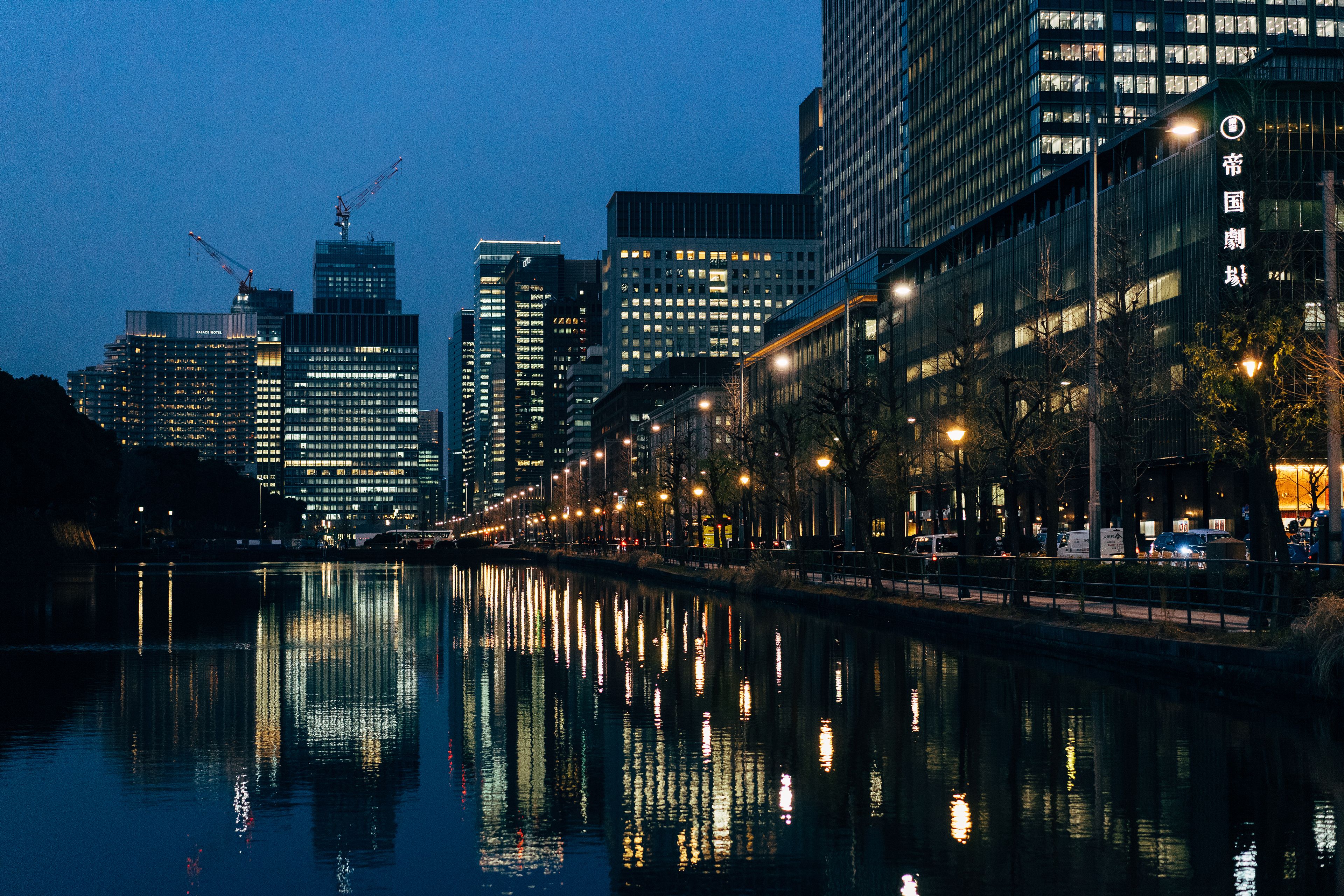
If you want one base that does almost everything a luxury traveler wants, it's the Marunouchi/Otemachi wedge — the revitalised financial heart between Tokyo Station and the Imperial Palace, where tree-lined avenues and designer boutiques sit beneath the city's densest stack of genuine five-stars (Santorini Dave). This is hushed, grown-up luxury — the Imperial Palace gardens on the doorstep, afternoon tea over the moat, and a calm that the neon districts can't match. And the clincher is logistics: Tokyo Station is the Tokaido Shinkansen terminus, so a day trip to Kyoto (about 2 hours 15 minutes), Hakone (Odawara in roughly 35 minutes) or the airport (the N'EX reaches Narita in about 53 minutes) starts from your own neighbourhood, not a cross-town haul (Japan Train; Japan Station).
Who it suits: first-time-to-Tokyo luxury travelers, anyone planning Shinkansen day trips or an onward Japan leg, couples who want grandeur and calm over scene, and guests who value a serene base they can walk into the Imperial gardens from. The luxury, examined: genuinely the real thing, and the deepest concentration in the city — you're paying a central premium and getting palace-grade hotels and walk-to-the-station access for it, the rare case where the location premium and the experience premium are the same money. Onward travel & access: the city's best — Tokyo Station's Shinkansen lines, the N'EX to Narita, the Marunouchi metro line, and Otemachi's web of subway connections, several reachable underground without stepping outside (Japan Train). The honest trade-off: it's a business-and-finance district, so it empties and quietens after the office crowd leaves, and the at-your-door nightlife and casual dining are thinner than in Roppongi or Shinjuku — this is a base you return to for calm, not one you spill out into at midnight.
Where the luxury money goes:
- Aman Tokyo crowns the top six floors of the 38-storey Otemachi Tower, facing the Imperial Palace gardens — 84 suites in wood, stone and washi paper around a soaring 30-metre atrium that reads like a "dry landscape" garden in the clouds (Aman). It's the city's benchmark for serene, minimalist luxury. Four Seasons Hotel Tokyo at Otemachi takes the top six floors of the Otemachi One complex — 190 contemporary rooms with sweeping views of the city, the Imperial Palace and, on clear days, Mount Fuji (Four Seasons).
- Palace Hotel Tokyo has the single best position in the cluster — moat-side in Marunouchi, directly across from the Imperial Palace gardens, with the much-loved Palace Lounge facing the water (Palace Hotel Tokyo). The Peninsula Tokyo, a 24-storey landmark on the Ginza/Hibiya edge of Marunouchi, faces Hibiya Park and the Imperial Palace and connects straight into the Hibiya subway station downstairs (Into Japan). Shangri-La Tokyo occupies the top 11 floors of the Marunouchi Trust Tower right beside Tokyo Station, and the Mandarin Oriental, Tokyo — high in the Nihonbashi Mitsui Tower a short walk north, with multiple Michelin-starred restaurants — is rated by some guides as "arguably the best hotel in Tokyo" (Wikipedia – Shangri-La Tokyo; Truly Tokyo).
Check live rates for the Palace Hotel Tokyo on Booking.com →Our best-base pick for most luxury travelers: the Marunouchi/Otemachi cluster — and for the median splurge, the Palace Hotel Tokyo: a moat-side address opposite the Imperial Palace gardens, a short walk to Tokyo Station's bullet trains, and a calm, genuinely grand five-star without the Aman ceiling. It's the prestige-and-onward-travel Tokyo this whole guide is built around.
Ginza — polished shopping-and-dining luxury
Ginza approaches luxury from the boutique-and-table angle. It's "Japan's swankiest and most famous shopping district," the rough equivalent of the Champs-Élysées or Fifth Avenue, lined with flagship stores, department-store food halls, art galleries and a staggering concentration of high-end and Michelin-starred restaurants (Santorini Dave). The luxury here is the day itself — the shopping, the kaiseki dinner, the late-afternoon gallery — with a hotel that's polished rather than view-led. It also has superb connectivity, served by seven subway lines and the JR Yamanote loop at Yurakucho, with Tokyo Station about a 15-minute walk away (Truly Tokyo).
Who it suits: dedicated shoppers and fine-diners, well-heeled travelers who want a refined, walkable base without the financial-district hush of Marunouchi, and anyone whose ideal Tokyo day is boutiques by afternoon and a counter dinner by night. The luxury, examined: real, and experience-led rather than view-led — you're buying the best shopping-and-dining quarter in Japan on your doorstep, not a panorama or a private beach. The standout hotel here is intimate and design-forward, not a sky-suite tower. Onward travel & access: excellent for the city — seven subway lines plus the Yamanote at Yurakucho — and Tokyo Station's Shinkansen is a 15-minute walk or one stop away, so day trips are easy without living on top of the station (Truly Tokyo). The honest trade-off: Ginza is quieter and more buttoned-up than Roppongi or Shinjuku once the shops close, the true sky-suite-and-spa tier is thinner here than in the central cluster, and at peak shopping hours the main avenues are genuinely thronged.
Where the luxury money goes:
- The Tokyo EDITION, Ginza (opened March 2024) is the district's design statement — an Ian Schrager and Kengo Kuma collaboration of just 86 rooms, including 11 suites, with understated, Japanese-inflected interiors, a rooftop bar, a modern brasserie and what the brand bills as Japan's first punch-focused cocktail bar (Marriott; The Points Guy). It's intimate-glamour luxury rather than grand-hotel scale — the right call if you want a stylish, walkable Ginza base and would rather spend on dinner than on a 50th-floor suite.
- On the Ginza/Hibiya seam, The Peninsula Tokyo (covered in the central cluster above) is the grand-hotel alternative for travelers who want palace-scale service while still being a short stroll from Ginza's flagships (Into Japan).
Roppongi, Toranomon & Azabudai — views, art and after-dark energy
This is the opposite mood to Marunouchi's hush: Roppongi and the gleaming new Toranomon and Azabudai Hills towers next door are "the sexiest and most cosmopolitan part of the city," where the big money eats and drinks, the Roppongi Art Triangle clusters three major museums, and the luxury comes with a glass wall framing the Tokyo Tower (Santorini Dave). The view-led sky-suite is the signature here — and the recent Azabudai Hills development (home to Japan's tallest tower) has made this the city's most exciting new luxury cluster (Bygs).
Who it suits: travelers who rate dining, nightlife and museums highly, view-chasers who want the Tokyo Tower or the skyline from a high floor, design-and-architecture buffs drawn to the new Toranomon/Azabudai towers, and anyone who finds the central cluster too quiet after dark. The luxury, examined: real and view-led — you're buying altitude, a buzzy dining-and-arts scene at street level, and some of the newest hotels in the city. What you're not buying is the Imperial-Palace serenity or the bullet-train-at-your-feet convenience of Marunouchi. Onward travel & access: the weak spot — Roppongi is not on the Yamanote loop, so you'll change subway trains to reach Tokyo Station and the Shinkansen, adding 10–15 minutes to onward-travel and west-side trips (Truly Tokyo). For a stay-in-Tokyo trip it barely matters; for heavy day-tripping it does. The honest trade-off: it's livelier and louder than the other luxury bases, the area's after-dark energy isn't to everyone's taste, and the off-Yamanote position means more train changes — book for the views and the scene, not for onward-travel efficiency.
Where the luxury money goes:
- The Ritz-Carlton, Tokyo occupies the top nine floors of the 53-storey Midtown Tower in Roppongi, from the 45th floor up — sweeping rooms with Tokyo Tower, Imperial Palace and clear-day Mount Fuji views, and a 45th-floor lobby bar over the Tower (Ritz-Carlton). Janu Tokyo, Aman's vibrant sister brand, opened in March 2024 in Azabudai Hills — 122 rooms and a vast 4,000-square-metre wellness centre with a 25-metre pool, one of the largest spa-and-fitness complexes in the city (The World's 50 Best Hotels).
- Andaz Tokyo sits on floors 47–51 of the Toranomon Hills tower, between the Tokyo Tower and the Imperial Palace, with enormous windows over the city (Tripexpert). The Tokyo EDITION, Toranomon (Schrager and Kuma, opened 2020) puts 206 rooms behind a green-walled lobby, with a specialty restaurant and terrace overlooking the Tokyo Tower (Marriott); the grande-dame Okura Tokyo, near Toranomon, is the modernist-Japanese classic for travelers who want heritage over height (Santorini Dave).
For the view question specifically — which Tokyo hotels frame the best skyline and Tower panoramas — see our pick of the best luxury hotels in Tokyo with views.
Shinjuku — grand calm above the buzz
Shinjuku is the connoisseur's contrarian pick. The eastern side is all neon, shopping and nightlife; the western side, by contrast, is "respectable and somewhat stodgy" — a quieter grid of skyscrapers where the luxury lives high above the world's busiest commuter station (Santorini Dave). The signature here is the serene, view-rich high-floor hotel that lets you dip into Tokyo's most frenetic district and then retreat far above it. It's also a Yamanote-line hub with comprehensive rail, subway and private-line connections, so the rest of the city is genuinely at hand.
Who it suits: repeat visitors who want calm and a skyline view but like nightlife, dining and shopping within reach, design-led travelers drawn to a single iconic hotel, and anyone who finds the central cluster too sleepy and Roppongi too loud — Shinjuku splits the difference. The luxury, examined: real, of the serene-above-the-chaos kind. The draw is one landmark hotel rather than a dense cluster, and the premium buys quiet, altitude and a famous view — not an Imperial-Palace address or Ginza's shopping on the doorstep. Onward travel & access: strong for the city — Shinjuku is a major Yamanote-loop and multi-line hub — though for the Tokaido Shinkansen you'll ride to Tokyo Station first, so it's a notch behind Marunouchi for bullet-train day trips (Santorini Dave). The honest trade-off: the station is colossal and briefly bewildering, and the eastern Kabukicho side is loud and seedy after dark — the fix is to book on the calmer west side, where the luxury hotels are, a few minutes off the busiest blocks.
Where the luxury money goes:
- Park Hyatt Tokyo is the icon — the Lost in Translation hotel, high in a west-Shinjuku tower, which reopened on 9 December 2025 after an 18-month-plus, top-to-toe renovation by Paris-based Studio Jouin Manku (Hospitality Net). The renovation kept the soul intact: the New York Grill & Bar on the 52nd floor was preserved in its original design, skyline pulled indoors through soaring windows, with the film-inspired "L.I.T." cocktail back on the menu (Wallpaper). For serene, view-led luxury with a buzzy district at the base of the tower, it's in a class of its own in Shinjuku.
The alternative: a vertical onsen ryokan in the heart of the city
If your once-in-a-trip splurge is a cultural one — tatami, futon, kaiseki and a hot-spring soak — you don't have to leave central Tokyo for it. Tucked into the Otemachi financial district, a short walk from Tokyo Station, Hoshinoya Tokyo reinvents the country ryokan as a 17-floor black tower: 84 rooms arranged six-to-a-floor around tatami-matted lounges, with a top-floor open-air onsen fed by amber, mineral-rich spring water drawn from 1,500 metres below the city (CNN; Hoshino Resorts).
Who it suits: travelers who want an authentic ryokan experience without a trip to Hakone or Kyoto, couples after something quietly memorable, and anyone for whom soaking in a rooftop hot spring under the Tokyo sky beats a city-view suite. The luxury, examined: real and one-of-a-kind — this is cultural, experiential luxury (the ryokan reinvented vertically) rather than grand-hotel or sky-suite luxury, and there's nothing else quite like it in the central districts. Onward travel & access: excellent — it's about a 10-minute walk from Tokyo Station's Marunouchi North exit, so the Shinkansen and the N'EX to Narita are as close as they are for the rest of the central cluster (Hoshino Resorts). The honest trade-off: ryokan style is an acquired taste at this price — floor-level futon, a slower, more ritualised rhythm, and a single property rather than a choice of hotels — so it suits the culturally curious more than travelers who want a conventional five-star room and a big-brand spa.
For the dedicated version of this brief — the city's best traditional stays with private hot-spring baths — see our guide to the best luxury ryokan in Tokyo with a private onsen.
Where to stay in Tokyo for luxury, compared at a glance
Indicative nightly bands below are seasonal guides for the genuine five-star tier, not quotes — Tokyo's rates climb around cherry-blossom and autumn-foliage peaks and ease in winter, and the marquee suites run far above the floor — so always price your actual dates (Japan Trip Cost; KAYAK).
| District | The luxury it offers | Best for | Signature five-star hotel(s) | Onward travel / access | Rough nightly band* |
|---|---|---|---|---|---|
| Marunouchi / Otemachi ⭐ | Prestige + Imperial-Palace calm | First-timers; Shinkansen day-trippers; grandeur over scene | Aman; Four Seasons Otemachi; Palace; Peninsula; Shangri-La; Mandarin Oriental | Best in the city — Tokyo Station Shinkansen + N'EX to Narita at your feet | ~US$500–1,800+ |
| Ginza | Shopping-and-dining refinement | Shoppers; fine-diners; polished walkable base | The Tokyo EDITION, Ginza (Peninsula on the edge) | Excellent — 7 subway lines + Yamanote; ~15 min walk to Tokyo Station | ~US$450–1,200+ |
| Roppongi / Toranomon / Azabudai | Views, art & after-dark energy | View-chasers; nightlife & dining; design buffs | Ritz-Carlton; Janu; Andaz; EDITION Toranomon; Okura | Off the Yamanote — change trains for Tokyo Station / Shinkansen | ~US$450–1,500+ |
| Shinjuku (west) | Grand calm above the buzz | Repeat visitors; view + nightlife within reach | Park Hyatt Tokyo | Strong — Yamanote hub; ride to Tokyo Station for the Shinkansen | ~US$500–1,400+ |
| Otemachi (vertical ryokan) | Cultural splurge — rooftop onsen | The ryokan experience without leaving the city | Hoshinoya Tokyo | Excellent — ~10 min walk to Tokyo Station | ~US$700–1,500+ |
*Indicative five-star bands, highly seasonal — confirm live rates on your dates (KAYAK).
How to choose, by what you care about most
- Want the grandest, most central luxury with the bullet train at your feet? Marunouchi/Otemachi — the prestige cluster is the one to beat, and the Imperial-Palace calm and onward-travel access are the same money as the five-star room.
- Here for the shopping and the dining above all? Ginza — accept that it's quieter after the shops close and the true sky-suite tier is thinner than in the central cluster.
- Want the Tokyo Tower from a high floor, plus nightlife and museums at the base? Roppongi/Toranomon/Azabudai — accept that you're off the Yamanote loop, so onward travel takes a train change.
- Want serene, view-rich calm but with the buzz within reach? West Shinjuku and the freshly reopened Park Hyatt — accept that it's one landmark hotel rather than a cluster, and book off the loud Kabukicho side.
- Want a cultural, once-in-a-trip splurge? Hoshinoya Tokyo's vertical onsen ryokan in Otemachi — accept that ryokan style is a particular taste at this price.
- Planning a honeymoon or pure romance? Start in the central cluster or at the Park Hyatt for views and calm — see the best luxury honeymoon hotels in Tokyo.
Whichever district wins, the luxury rule holds: decide the kind of Tokyo luxury you want — central prestige, Ginza polish, Roppongi views, Shinjuku calm, or a vertical ryokan — before you look at a single room photo, and check that the address you're paying for delivers the trip you came for. Do that and the hotel almost picks itself.
FAQ
Where should most luxury travelers stay in Tokyo? The Marunouchi/Otemachi cluster, for most. It holds the densest concentration of true five-star hotels in the city — Aman, the Four Seasons at Otemachi, the Palace, the Peninsula, the Shangri-La and the Mandarin Oriental — beside the Imperial Palace gardens, and it sits on top of Tokyo Station, so Shinkansen day trips and airport transfers are effortless. Choose Roppongi instead for views and nightlife, or Ginza for shopping and dining.
Which is the most upscale area to stay in Tokyo? For grand-hotel prestige, the central Marunouchi/Otemachi cluster — it has the most five-star hotels and the calmest, most prestigious address, opposite the Imperial Palace. For shopping prestige, Ginza is Tokyo's swankiest district, comparable to the Champs-Élysées. They're different flavours of upscale: Marunouchi is hushed and grand, Ginza is boutiques-and-dining refinement.
Is Roppongi or Marunouchi better for a luxury stay in Tokyo? They're opposite trips. Marunouchi is hushed, central prestige with the bullet train at your feet — best for first-timers, day-trippers and grandeur-seekers. Roppongi (with Toranomon and Azabudai next door) is view-led and lively, with the Tokyo Tower from a high floor and a buzzy dining-and-arts scene, but it's off the Yamanote loop, so onward travel takes a train change. Pick Marunouchi for calm and convenience, Roppongi for views and energy.
Has the Park Hyatt Tokyo reopened? Yes — the Park Hyatt Tokyo reopened on 9 December 2025 after an 18-month-plus, top-to-toe renovation by Studio Jouin Manku (Hospitality Net). The Lost in Translation New York Grill & Bar on the 52nd floor was preserved in its original design, and the film-inspired "L.I.T." cocktail is back on the menu.
Can you stay in a luxury onsen ryokan in central Tokyo? Yes. Hoshinoya Tokyo, in the Otemachi financial district about a 10-minute walk from Tokyo Station, is a 17-floor "tower ryokan" with tatami rooms and a top-floor open-air hot spring fed by mineral-rich water drawn from 1,500 metres below the city (CNN). It's a cultural splurge that gives you the ryokan experience without a trip to Hakone or Kyoto.
Ready to book your district?
Decide the kind of luxury first — central prestige (Marunouchi/Otemachi), shopping-and-dining polish (Ginza), views and energy (Roppongi/Toranomon/Azabudai), grand calm above the buzz (west Shinjuku), or a vertical onsen ryokan (Hoshinoya Tokyo) — and the hotel almost picks itself. If this is the trip and you want the grandest, most central, most onward-connected base, the Marunouchi/Otemachi cluster is the one to beat; if a different version of Tokyo luxury leads, the better-fit options are right here. Use the maps above to compare your shortlisted suites for your exact dates, check whether the address delivers the trip you came for, and confirm live rates for your chosen district before you commit.
Planning the wider trip? Our luxury Tokyo travel guide ties the districts, the timing and the splurges together, and for the view-first and honeymoon angles see the best luxury hotels in Tokyo with views and the best luxury honeymoon hotels in Tokyo.
Sources
- Truly Tokyo — Where to Stay in Tokyo 2026 (district characters, transit, "best place to stay"): trulytokyo.com
- Santorini Dave — 16 Best Hotels in Tokyo (luxury neighborhoods, hotel picks, Ginza "swankiest", Shinjuku west "stodgy"): santorinidave.com
- Aman — Aman Tokyo official site (top six floors of 38-storey Otemachi Tower, 84 suites, 30m atrium, Imperial Palace gardens): aman.com
- Four Seasons — Four Seasons Hotel Tokyo at Otemachi (top six floors of Otemachi One, 190 rooms, Imperial Palace and Mt Fuji views): fourseasons.com
- Palace Hotel Tokyo — official site (Marunouchi, moat-side, opposite the Imperial Palace gardens): en.palacehoteltokyo.com
- Into Japan — The Peninsula Tokyo (Marunouchi/Yurakucho, 24 storeys, faces Hibiya Park and Imperial Palace, Hibiya station connection): intojapan.co.uk
- Wikipedia — Shangri-La Hotel, Tokyo (top 11 floors of Marunouchi Trust Tower, adjacent to Tokyo Station): en.wikipedia.org
- Marriott — The Tokyo EDITION, Ginza (opened March 2024, Schrager + Kuma, 86 rooms / 11 suites, rooftop bar): marriott.com
- The Points Guy — review of the Tokyo EDITION, Ginza ("intimate glamour", punch-focused cocktail bar): thepointsguy.com
- Ritz-Carlton — The Ritz-Carlton, Tokyo (top nine floors of the 53-storey Midtown Tower, Roppongi, Tokyo Tower / Fuji views): ritzcarlton.com
- The World's 50 Best Hotels — Janu Tokyo (Aman's sister brand, Azabudai Hills, opened March 2024, 4,000 sqm wellness centre, 25m pool): theworlds50best.com
- Tripexpert — Andaz Tokyo vs Ritz-Carlton (Andaz on floors 47–51 of Toranomon Hills, between Tokyo Tower and Imperial Palace): tripexpert.com
- Marriott — The Tokyo EDITION, Toranomon (opened 2020, 206 rooms, terrace overlooking Tokyo Tower): marriott.com
- Bygs — Toranomon Hills and Azabudai Hills, Tokyo's new urban centres (new luxury cluster, Japan's tallest tower): bygs.site
- Hospitality Net — Park Hyatt Tokyo reopening on December 9, 2025 (property-wide renovation, Studio Jouin Manku): hospitalitynet.org
- Wallpaper — Park Hyatt Tokyo reopening review (New York Grill & Bar preserved, "L.I.T." cocktail): wallpaper.com
- CNN — Hoshinoya Tokyo, Japan's most luxurious urban ryokan (17-floor tower ryokan, Otemachi, rooftop onsen): cnn.com
- Hoshino Resorts — Hoshinoya Tokyo official site (Otemachi onsen from 1,500m below ground, 10-minute walk from Tokyo Station): hoshinoresorts.com
- Japan Train — Tokyo Station guide & map (Tokaido Shinkansen terminus, Marunouchi/Yaesu exits, Otemachi subway links): japantrain.net
- Japan Station — Traveling from Tokyo to Hakone (Shinkansen to Odawara ~35 min, then Hakone Yumoto): japanstation.com
- Japan Trip Cost — Average hotel prices in Tokyo 2026 (five-star averages, top-tier hotel bands at early-2026 rates): japantripcost.com
- KAYAK — Best 5-Star Hotels in Tokyo (price range, lowest and highest five-star rates): kayak.com