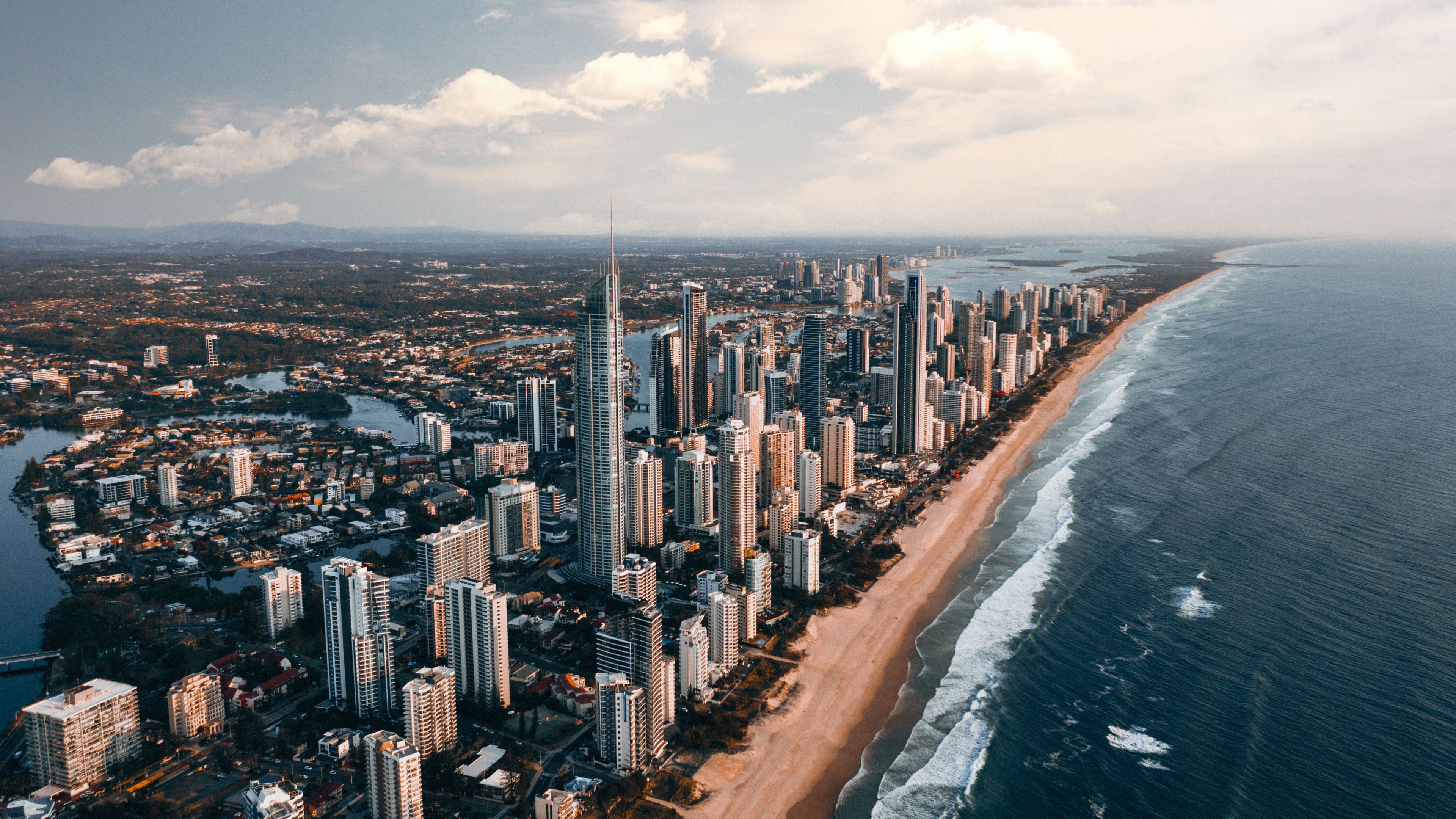
Gold Coast in the School Holidays: Best Time to Go With Kids & Where to Stay
- Gold Coast
- Australia
- Family Travel
- Best Time to Visit
- Theme Parks
Gold Coast school holidays with kids: which period is best on weather, crowds, theme parks and price — plus where to stay and how early to book for the peak.
Here's the premise no Gold Coast timing guide wants to start with, because it's inconvenient: if your kids are at school, you don't actually get to pick the best week to visit. You get to pick from four windows — the Easter break, the July break, the September break, and the long summer holidays — and the school calendar has already chosen them for you. So the real question for Gold Coast school holidays with kids isn't "when is the coast best?" It's "which of my four allowed windows suits my family, and how do I handle the peak it lands me in?"
Short version for the time-poor parent: if your kids are beach-and-waterslide kids, the summer holidays (mid-December to late January) are the obvious play — warm sea, long pool afternoons — but they're also the most expensive, most crowded, and stormiest window of the year, so you book early or you pay through the nose. If your kids are theme-park-ride kids, the July winter break is the quietly smart choice: dry, sunny, mild days, heated waterparks, a dedicated winter festival at Dreamworld, and noticeably better value than summer. The Easter and September breaks sit in between as the shoulder sweet spots. The rest of this guide is the detail behind that call — period by period, with a comparison table, a recommendation by family type, and the honest book-early reality for the peak.
First, your four windows (and why the dates matter)
Three forces move a Gold Coast family trip and rarely line up: weather (summer is hot, humid and stormy; winter is dry, sunny and mild), what's actually good to do (the beach and outdoor waterparks shine in summer; the dry theme parks and a heated indoor-ish day are more comfortable in winter), and price-and-crowds (every school holiday is a demand spike, but summer is the monster). Your job is to match the window you're allowed to the family you've got.
For 2026, the Queensland state-school holiday windows are: the autumn/Easter break, roughly 6–17 April; the winter break, roughly 29 June–10 July; the spring break, roughly 21 September–2 October; and the long summer break, 12 December 2026 to 26 January 2027. Two public holidays bunch demand further — Easter (3–6 April 2026) sits just before the autumn break, and the summer break swallows Christmas and New Year (Studiosity). Treat those as the public-school spine and confirm your own school's exact dates: Catholic and independent schools often run a few days either side, and other states' breaks (which also flood the coast) differ again.
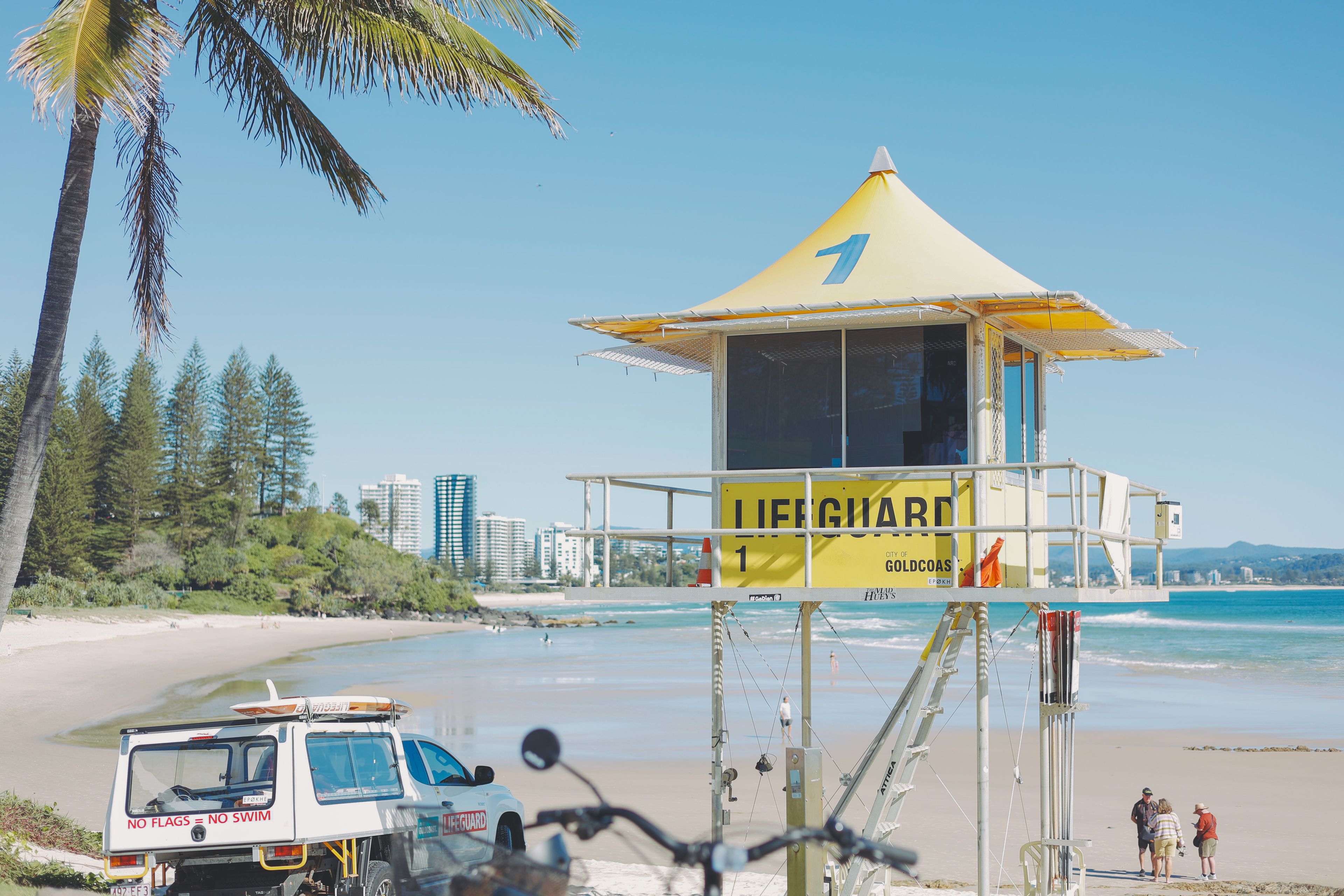
One more thing the glossy guides skip: on the Gold Coast, the dangerous tropical stingers people fear simply aren't a southern-Queensland problem. Box jellyfish and Irukandji "like the warmer waters up further north" and are a "very rare" occurrence this far south; what you might meet on a warm, onshore-wind summer day is a bluebottle — painful, not deadly — so the rule is the same in any window: swim between the red-and-yellow flags (Surf Life Saving Queensland; Gold Coast Australia Travel Tips). With that settled, here's the family read, window by window.
Summer holidays (mid-December to late January): the beach-and-waterpark window — at peak price
This is the big one, and for a lot of families it's the only one that matters: six-plus weeks straddling Christmas and New Year, the one stretch where the sea is genuinely warm and the days are long. If your trip is built around the beach and outdoor water, summer delivers what nothing else does. Sea temperatures climb to around 26°C — "pleasantly warm and allows long swims" — while daytime highs sit around 25°C (Climates to Travel). The patrolled family beaches at Broadbeach and the calm creek mouths at Tallebudgera and Currumbin are at their best, and the outdoor waterparks (Wet'n'Wild, WhiteWater World) need no heating to be a great day.
But be clear-eyed about the cost, because it's steep on every axis. Weather: summer is the coast's hot, humid, stormy season — humidity runs around 70%, and February is the wettest month of the year with roughly 185mm of rain across about ten days, much of it as sharp late-afternoon thunderstorms that close waterpark slides for lightning (Climates to Travel). Crowds and price: this is the single most expensive, most crowded window of the year — the squeeze concentrates around mid-December to mid-January, when accommodation rates can roughly double versus the off-peak and the beaches hit capacity, and the theme parks turn, in one local guide's blunt phrase, "busy and sweaty" (HRSP; Gold Coast Australia Travel Tips). The real softener: the edges beat the middle — the early-December run-in and the back half of January (after the New Year crowd clears, before Australia Day on 26 January) are calmer and cheaper than the Christmas-to-New-Year core.
Family verdict: the right window for beach-first and waterpark-first families, and unbeatable for warm-sea swimming — but the priciest and busiest of the year. Aim for the edges over the Christmas-New-Year peak, plan around the afternoon storm, and book early (more on how early below).
Easter / autumn break (early-to-mid April): the shoulder sweet spot
If your school's break gives you early-to-mid April, you've drawn one of the best cards on the calendar. Autumn is widely rated the most comfortable time on the coast: the summer humidity has eased, March-into-April highs sit in the warm-but-pleasant mid-20s°C, and the sea is still warm enough to swim at around 24–25°C (Climates to Travel; Virgin Australia). You get a lot of summer's upside — swimmable water, warm days — with less of the muggy, stormy downside, and the dry theme parks are comfortable rather than sweaty. It's the genuine all-rounder.
The catch is the Easter long weekend. Easter falls on 3–6 April in 2026, immediately before the QLD autumn break (6–17 April) — so the front of this window is a compressed national-holiday-plus-school-holiday surge (Studiosity). Accommodation over Easter is a known book-early-or-skip period (HRSP). The fix is the same edges trick: if you can land on the second week of the break, after the Easter weekend itself, you keep the lovely weather and shed some of the crowd and price.
Family verdict: the best weather-and-value balance of the four windows — warm, swimmable, comfortable for both beach and parks. Just dodge the Easter long weekend itself if you can, and book it early because everyone else has worked this out too.
Winter break (late June to mid-July): the underrated theme-park window
This is the window most southern families under-rate and Gold Coast locals quietly love. Winter on the Gold Coast "feels like spring in most other Australian cities" — dry, sunny, mild days around 18–21°C, with July the driest month of the year (roughly 50mm of rain) (Out & About with Kids; Climates to Travel). For a family whose trip is built around the dry theme parks — Movie World, Dreamworld, Sea World — that's close to ideal: comfortable queueing weather, no sweaty afternoons, low rain risk.
The thing most parents don't realise: the outdoor waterparks don't shut for winter. Wet'n'Wild keeps its pools and slides heated through June to August and runs year-round (daily, 10am–5pm, closed only Christmas Day and ANZAC Day), which makes a waterpark day genuinely doable even in July (Gold Coast Info). And the winter break has its own headline event: Dreamworld's WINTERFEST turns the park into a snow-and-ice winter wonderland — ice skating, an ice slide, an indoor ice maze — and in 2026 it runs 27 June to 12 July, lining up almost exactly with the QLD winter holidays, free with park entry (Dreamworld). Bonus for the drive between parks: winter is peak whale-watching season, with the humpback migration past the coast running roughly June to November and tens of thousands of whales passing (Experience Gold Coast).
The honest trade-offs: the ocean is cool for swimming in winter, around 21–22°C, so this is not the window for long days in the surf, and you'll want a light jacket for the evenings (Climates to Travel). And the school break itself is a price-and-crowd spike — families flock up from the cold southern states, which "temporarily raises prices and crowd levels" — so it's better value than summer but not the dirt-cheap winter the non-holiday weeks (early June, late July, August) offer (Out & About with Kids).
Family verdict: the smart pick for theme-park-first families and anyone who'd rather queue in the dry than swelter — dry, sunny, value-friendlier than summer, with WINTERFEST and whales as bonuses. Accept that the sea is too cool for casual swimming and that the break itself still runs warm on price.
Spring break (late September to early October): the other shoulder
The spring holidays (around 21 September–2 October 2026) are the autumn break's mirror image: a warming shoulder climbing out of winter, with dry, pleasant days through the 20s°C and the sea coming back to swimmable by October (Climates to Travel). Parks and beaches both work. Two caveats keep it a notch behind autumn: September can be windy, and the sea is still warming, so early-October dates swim better than late-September ones (Virgin Australia). The King's Birthday public holiday (5 October 2026) nudges demand at the tail of the break (Studiosity).
Family verdict: a strong, balanced alternative to Easter — good weather, parks and beach both viable. Slightly less reliable than autumn, but a fine school-holiday window.
Gold Coast school holidays with kids: the period-by-period comparison
Every window rated on what a family is actually weighing. Temperatures are typical averages from the sources below and any week can run hotter, cooler or wetter; crowd-and-price bands are relative to the Gold Coast's own calendar (▲▲▲ = peak / priciest, ▲▲ = mid, ▲ = lower), not fixed dollar figures.
| School-holiday window (2026) | Weather | Sea / swimming | Crowds & price | Best for | Family verdict |
|---|---|---|---|---|---|
| Summer (12 Dec–26 Jan) | Hot, humid ~25°C; stormiest (Feb wettest) | Warm ~26°C — long swims | ▲▲▲ Peak — rates can double mid-Dec–mid-Jan | Beach-first & outdoor-waterpark families | The beach window — but priciest, busiest, stormiest; favour the edges |
| Easter / autumn (6–17 Apr) | Most comfortable — warm, drier mid-20s°C | Warm ~24–25°C — swimmable | ▲▲ Mid — Easter long weekend spikes the front | All-rounders; beach and parks | Best weather-and-value balance; dodge the Easter weekend itself |
| Winter (29 Jun–10 Jul) | Dry, sunny, mild ~18–21°C; July driest | Cool ~21–22°C — not for casual swims | ▲▲ Mid — southern-state spike, but beats summer | Theme-park-first families; dry-day lovers | Underrated park window — heated waterparks, WINTERFEST, whales |
| Spring (21 Sep–2 Oct) | Dry, pleasant, warming 20s°C; windy early | Warming — swimmable by early Oct | ▲▲ Mid — King's Birthday (5 Oct) at the tail | All-rounders shading to beach by October | Solid autumn-mirror shoulder; sea still warming up |
Sources for the figures: Climates to Travel, Out & About with Kids, Studiosity and HRSP. Crowd-and-price bands reflect general 2026 planning guidance and shift around specific public-holiday weekends.
The seasonal recommendation, by family type
The school calendar narrows your choice, but if you have any flexibility between windows, pick on the kind of holiday your kids actually want:
- Beach-and-waterslide family (warm-sea swimming is the point)? Summer, full stop — nothing else gives you a 26°C ocean and long pool days. Go in eyes-open on the price and the storms, target the edges over the Christmas-New-Year crush, and treat early booking as non-negotiable.
- Theme-park family (the rides are the trip)? The July winter break — dry, mild, comfortable queueing, heated waterparks, WINTERFEST at Dreamworld, and better value than summer. You trade casual sea-swimming you weren't going to do much of anyway.
- Want both beach and parks, in the best all-round weather? The Easter/autumn break, with the spring break the close runner-up — warm, swimmable, comfortable for everything. Just skip the Easter long weekend itself and book ahead.
- Toddler-and-pram family, value-led? Lean winter (mild, dry, no chasing a swimmable sea) or the second week of a shoulder break after the public-holiday spike — and base yourself somewhere with a calm beach and a real pool, since the ocean won't be your default.
For a steer on which suburb fits each of those, our guide to the best areas to stay on the Gold Coast for families ranks Broadbeach, Burleigh and the rest on calm beaches, walkable playgrounds and drive times to the parks.
Where to stay for the peak — and how early to book
Pick your window and you've solved half the trip. The other half is where you base the family, and in a school-holiday peak that decision gets harder, because the best family stock sells out first.
The short version of the where: base yourself in a central beach suburb with apartment-style rooms so you get space, a kitchen and a calm patrolled beach, and only commit to a theme-park-side base if the rides are the entire holiday. Broadbeach is the all-round family pick — patrolled family beach, the coast's best playground, walkable cafes, and the G:link tram — with Burleigh Heads the calmer beach-town alternative and Surfers Paradise the busy, central, kid-amenity-dense option. (We break those down properly, with real room configs and drive times, in the areas guide linked above and in our roundup of Gold Coast family resorts with a kids' club and waterpark.) This map pulls live family stays across the major booking sites around those family suburbs, so you can see what's actually free on your dates and how the suburbs compare on price for your chosen window:
Now the part that decides whether you pay smart or pay dumb: how early to book. School holidays are exactly when the good-value two-bedroom apartments and the kid-stacked resorts book out and rates climb, and the surge is sharpest in summer. The local guidance is plain — for the summer (Christmas) holidays and the Easter break, book as early as you can; for Easter specifically, "either book 6 months ahead or skip" (HRSP). A practical rule of thumb from the same direction: lock the summer peak six-plus months out, the winter and shoulder breaks three-to-six months out, and aim for the start or end of any break rather than its busy middle, where rates and crowds ease (HRSP; Gold Coast Australia Travel Tips). Leave a summer booking to the last minute and you're choosing from the dregs at peak rates — the opposite of a good family trip.
Once your dates are set, price your window early
Because picking when is a decision you'll act on later — you're planning around a school calendar, not booking tonight — you don't have to commit today. But the one mistake families make with the Gold Coast peaks is leaving the room until the value stock is gone. So the move is to firm up your window, then price it early and watch it: when your school-holiday dates are locked, check live family-apartment rates on the Gold Coast for your chosen window on Expedia — handy for pricing two candidate weeks (say, the busy middle versus the cheaper edge of a break) side by side before you lock anything in, and for catching the better-value family apartments before they sell through for the peak.
Once the base is sorted, map the days with our 5-day Gold Coast family itinerary.
FAQ
When is the best time to visit the Gold Coast with kids? It depends on the holiday you want. For warm-sea swimming and beach days, the summer holidays (mid-December to late January) are best, but they're the priciest and most crowded window (Climates to Travel; HRSP). For theme parks and dry, mild weather at better value, the July winter break is the underrated pick (Out & About with Kids). For the best all-round weather with both beach and parks, the Easter/autumn break is the sweet spot. All are school-holiday windows, which is the family catch.
Are there dangerous stingers on the Gold Coast in summer? Not the deadly tropical ones. Box jellyfish and Irukandji "like the warmer waters up further north" and are a "very rare" occurrence this far south (Surf Life Saving Queensland; Gold Coast Australia Travel Tips). What you might meet on a warm, onshore-wind summer day is a bluebottle — painful but not deadly. The rule in every season is to swim between the red-and-yellow flags on a patrolled beach and not touch any jellyfish washed up on the sand.
Is the Gold Coast warm enough to swim in the July winter holidays? The air is mild and sunny (around 18–21°C), but the sea is cool — about 21–22°C — and "cool for swimming," so winter isn't the window for long ocean days (Climates to Travel). The upside: the outdoor waterparks keep their pools and slides heated through winter — Wet'n'Wild runs year-round — so a waterpark day still works in July (Gold Coast Info). For warm-sea swimming, aim for summer or the warm shoulders.
Are the theme parks good in winter? Yes — arguably better. Winter's dry, mild days make for comfortable queueing, the outdoor waterparks are heated, and Dreamworld runs WINTERFEST (snow play, ice skating, an ice maze) across the winter break — in 2026, 27 June to 12 July, free with park entry (Dreamworld). The dry parks (Movie World, Sea World) are simply more pleasant out of the summer heat and humidity.
How far ahead should we book Gold Coast accommodation for the school holidays? For the summer (Christmas) peak, book six-plus months out; for Easter, the local advice is to book six months ahead "or skip"; for the winter and shoulder breaks, three-to-six months is a safe target (HRSP). The good-value two-bedroom apartments and kid-focused resorts sell out first in any break, and the squeeze is sharpest in summer. Booking the start or end of a break rather than its middle also eases the price.
Which school-holiday window is cheapest on the Gold Coast? Of the four school-holiday windows, summer is the most expensive and the winter/shoulder breaks are gentler, but none of them are the coast's true low season — that's the non-holiday weeks (early June, late July, August), which fall in term time (Out & About with Kids; HRSP). Within a break, the edges are cheaper than the middle, so a long weekend on the shoulder of a break can undercut a full week in its peak.
Got your window?
Start with the holiday you're allowed, then match it to your family: summer if it's a beach-and-waterslide trip, the July break if it's a theme-park trip, Easter or September if you want the best all-round weather and both. The biggest mistake families make with the Gold Coast isn't choosing the "wrong" school holiday — it's booking the summer peak on autopilot and too late, then paying double for the leftovers. Settle the when first, lean toward the edges of your break over its busy middle, base yourself in a central family suburb, and price your dates early. Do that and the Gold Coast stops being a school-holiday scramble and becomes the easy beach-or-parks trip it's meant to be with kids.
Planning the whole trip? Start with our complete Gold Coast family holiday guide, sort the base with the best areas to stay for families, and map the days with our 5-day Gold Coast family itinerary.
Sources
- Climates to Travel — Gold Coast climate (seasonal temperatures, humidity, February the wettest month, sea temperatures by season, best time to visit): climatestotravel.com
- Studiosity — School terms and public holiday dates for QLD in 2026 (term dates, four school-holiday windows, Easter / ANZAC / Labour Day / King's Birthday / Christmas public holidays): studiosity.com
- Out & About with Kids — When is the best time to visit the Gold Coast (winter "feels like spring," winter school-holiday spike, value of the off-peak weeks): outandaboutwithkids.com.au
- HRSP — When to book cheap accommodation on the Gold Coast (Christmas peak rates can double, book Easter 6 months ahead or skip, edges of breaks cheaper): hrsp.com.au
- Gold Coast Info — Wet'n'Wild Gold Coast 2026 guide (pools and slides heated June–August, open year-round, opening hours): goldcoastinfo.net
- Dreamworld — WINTERFEST (snow, ice skating, ice maze; 2026 dates 27 June–12 July; free with park entry): dreamworld.com.au
- Surf Life Saving Queensland — Marine Stingers (swim between the flags; tropical stingers are a far-north risk): lifesaving.com.au
- Gold Coast Australia Travel Tips — Swimming in the ocean / stingers (box jellyfish and Irukandji "very rare" this far south; bluebottles painful not deadly) and best time for theme parks (summer "busy and sweaty"): gold-coast-australia-travel-tips.com
- Experience Gold Coast — Gold Coast whale-watching guide (humpback migration roughly June–November, tens of thousands of whales): experiencegoldcoast.com
- Virgin Australia — The best times to visit the Gold Coast (autumn most comfortable; September can be windy): virginaustralia.com