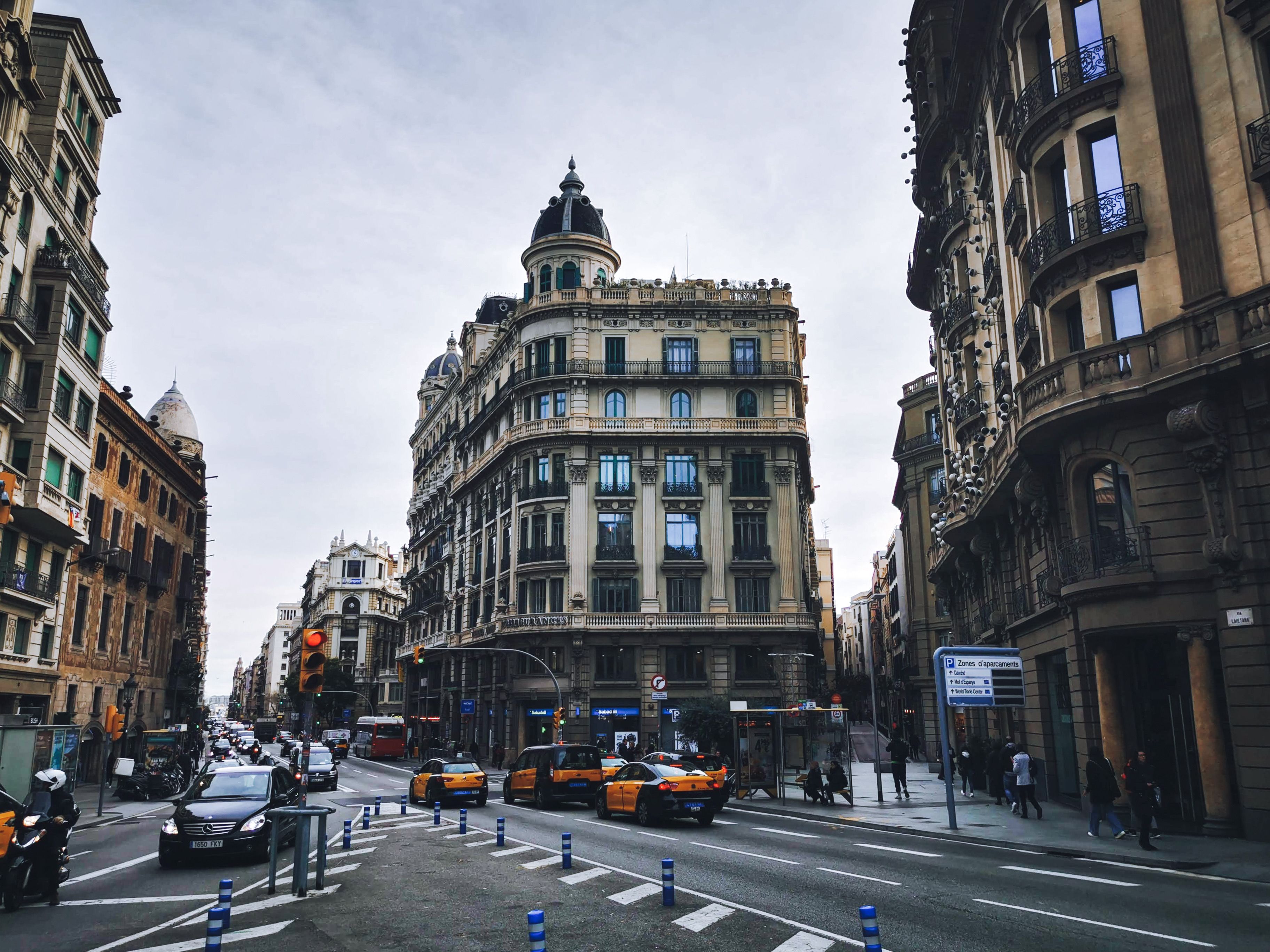
Barcelona for Mid-Range Travelers: Where to Stay, What to Spend, How to Do It Well on a Comfortable Budget
- Barcelona
- Spain
- Travel Guide
- Mid-Range
- Where to Stay
A Barcelona mid-range travel guide with a point of view: where to base yourself, a fair 3-4 star rate by season, what to splurge on, and how many days you need.
Doing Barcelona well on a comfortable budget comes down to two decisions you make before you ever look at a hotel room: which neighborhood you sleep in, and which month you go. Get those right and a mid-range trip — a central, walkable 3-4 star base, no luxury markup, no hostel bunk — feels generous. Get them wrong and you'll pay peak-season prices to commute into the city you came to see. This Barcelona mid-range travel guide is the opinionated version: where to base yourself, what a fair nightly rate actually looks like by season, what's worth paying up for versus where to save, and how many days you really need — then it points you to the right guide to close each decision.
The short answer for the default traveler — couples, friends, families on a mid budget — is this: base yourself in the Eixample grid for your first trip, go in the shoulder seasons (April-May or September-October) if you can, and spend your money on a central, walkable address rather than a fancier room two metro stops out. The rest of this page is about whether something else fits your trip better, because Barcelona genuinely rewards matching the neighborhood to the traveler.
The one idea that makes the whole trip cheaper and better
Barcelona's must-see sights are not in one tidy cluster. Gaudí's apartment blocks sit in the Eixample grid, the medieval lanes huddle down by the port, and the Sagrada Família and Park Güell are off on their own up the hill. So the value question isn't "what's the cheapest room?" — it's "what's the best location per euro?" A bargain room a 25-minute metro ride from the old town stops being a bargain the moment you've spent your evenings on transfers.
That reframes everything that follows. On a mid budget, the move is a comfortable 3-4 star inside — or one short metro hop from — the walkable core, in the shoulder season when the same room costs a third less. Two facts make the where matter even more than usual. The Eixample's wide 19th-century grid is genuinely easy to wheel a suitcase through, while the Gothic Quarter and El Born are "dense and full of narrow streets, steps, and uneven pavement" — a real chore with luggage (Radical Storage). And this is no ordinary year: the Sagrada Família's central Tower of Jesus Christ was blessed on 10 June 2026, the centenary of Gaudí's death, topping out at 172.5 metres to become the tallest church in the world (Euronews; Designboom). The centenary is pulling record crowds, which books out the popular sights — and the better-value hotel dates — earlier than usual. Plan ahead and you win twice.
Where to base yourself on a mid budget
Five areas cover almost every sensible mid-range stay: the Eixample, the Gothic Quarter, El Born, Gràcia, and Barceloneta for the beach crowd. Here's the honest version of each — the vibe, who it suits, and the one trade-off that comes with it.
Eixample — the smartest first-trip base
The Eixample is the grown-up, get-it-right choice for a first visit. It's the city's modernist heart — wide, tree-lined boulevards on a geometric grid laid out in the 19th century by Ildefons Cerdà (Santorini Dave; Expedia – Eixample guide) — with Gaudí's Casa Batlló and La Pedrera on the doorstep and the Sagrada Família a short walk or hop away. It feels safe, it's well connected on the metro, and crucially, that grid is "much more luggage-friendly than other parts of Barcelona" (Radical Storage).
Within it, the right-hand side (Dreta de l'Eixample, around Passeig de Gràcia above Plaça de Catalunya) is "as central as it gets," with the old town, La Rambla and the metro all within reach (Go Ask A Local). The left side (Esquerra de l'Eixample) is quieter and more residential — calmer and often better value, if "a bit mundane" architecturally (Go Ask A Local).
Who it suits: first-timers, couples and families who want central, safe and easy over maximum medieval atmosphere. The trade-off: it's the priciest central pocket, and the stretch of Passeig de Gràcia itself is touristy and commercial (Go Ask A Local) — book a side street a block or two off the main boulevard for quieter nights and better rates.
For the full first-timer breakdown with specific mid-range hotels, see our guide to the best areas to stay in Barcelona for first-timers, and the head-to-head in Eixample vs the Gothic Quarter.
Gothic Quarter (Barri Gòtic) — atmosphere, eyes open
The Barri Gòtic is the Barcelona of the imagination: a warren of medieval and Roman-era alleys, intensely atmospheric, the most central address in the city and walkable to almost everything including the beach. The pitch is real — step out of your hotel and you're in the old town.
But be clear-eyed. Local guides describe it as "absolutely overrun with tourists from spring to fall," with pickpockets more active in the dense pedestrian lanes and noise that runs late (Santorini Dave; Go Ask A Local). One author bluntly advises against staying here in peak season and prefers neighbouring El Born (Wheatless Wanderlust). And those photogenic lanes are a genuine drag with a wheeled suitcase.
Who it suits: atmosphere-seekers on a short trip who'll trade calm for being in the thick of it — ideally off-peak. The trade-off: crowds, weekend noise and pickpocket-awareness; if you book here, book a street or two off La Rambla, not on it (Wheatless Wanderlust).
El Born — the old-town sweet spot
El Born is the answer for people who want the medieval-lane charm without the full Gothic Quarter crush. It sits right beside the Barri Gòtic but stays "less touristy," hip and packed with local businesses, galleries and some of the city's best food, and it's a flat, easy walk to the old town, Parc de la Ciutadella and on toward the beach (Santorini Dave; Wheatless Wanderlust).
Who it suits: couples and food-minded travellers who want atmosphere and a great dinner downstairs, and are happy to walk into the sights. The trade-off: two of them. Hotel inventory is genuinely thin here, so the good-value rooms go early; and like the Gothic Quarter it gets "very noisy at night" near the bar drags, with pricier dining (Wheatless Wanderlust; Go Ask A Local) — book off the main lanes.
Deciding between the two old-town options? See El Born vs the Gothic Quarter.
Gràcia — local life and better value (if you'll ride the metro)
Gràcia is a former independent village absorbed by the city, and it still feels like one: bohemian, residential, full of independent shops and plaza life, with a real neighbourhood rhythm rather than a tourist one (Wheatless Wanderlust; Santorini Dave). It's the nearest base to Park Güell, and your euro tends to stretch further here than in the dead-centre.
Who it suits: returning visitors, slower travellers and families who'd rather sleep in a living neighbourhood than a sightseeing one. The trade-off: it's not in the old town. The metro stops ring the area rather than sit inside its core, so you'll ride or take a longish walk down to the Gothic Quarter and the waterfront (Go Ask A Local; Wheatless Wanderlust) — fine for a 3-4 day trip, less ideal for a quick 48-hour dash.
Barceloneta — the beach option, with caveats
If sand-out-the-door is the priority, Barceloneta is the old fishermen's quarter turned beach neighbourhood: down-to-earth, good for low-key seafood, a short flat walk from the old town (Santorini Dave). But go in with the caveats: it's increasingly hollowed out by vacation rentals, real hotels are scarce, metro links are poor, and the beach is mobbed all summer — enough that local guides suggest visiting Barceloneta but sleeping elsewhere (Wheatless Wanderlust; Santorini Dave).
Who it suits: beach-first travellers who'll trade central convenience for morning swims, ideally outside July-August. The trade-off: few mid-range hotels, weak transit, summer crowds — and a genuine sea-view room commands a real premium (more on whether that's worth it below). Weighing the beach against a central base? See Barceloneta vs the city centre.
Travelling as a family or a couple specifically? We break those down in the best Barcelona areas for families and where couples should stay in Barcelona.
The Barcelona mid-range travel guide table: neighborhoods at a glance
| Neighborhood | The vibe | Best for | Walkable to | Rough 3-4★ nightly band |
|---|---|---|---|---|
| Eixample (Dreta) | Wide modernist grid; central, easy, safe | Most first-timers; couples, families | Gaudí houses, Plaça de Catalunya, old town | $$–$$$ |
| Eixample (Esquerra) | Quieter, residential, better value | Calm-seekers, repeat visitors, families | Gaudí houses, metro everywhere | $$ |
| Gothic Quarter | Medieval alleys; most central, most crowded | Atmosphere-seekers, short off-peak stays | Everything, incl. the beach | $$–$$$ |
| El Born | Old-town charm, less crush, top food | Couples, foodies who'll walk | Old town, Ciutadella, beach | $$–$$$ |
| Gràcia | Bohemian village; local, calmer | Returning visitors, families, slow trips | Park Güell, Gràcia's own plazas | $$ |
| Barceloneta | Beach quarter; down-to-earth | Beach-first travellers, off-summer | The sand, old town (flat walk) | $$–$$$ (sea view $$$) |
Bands are relative within Barcelona's mid-range: $ = lower mid-range, $$ = typical 3-4 star, $$$ = top of mid-range / boutique. Actual rates swing hard by season — see the next section.
What a fair mid-range rate actually looks like (and what you really pay)
Most guides quote a single average and move on. That's useless, because Barcelona's hotel prices swing dramatically by month. Here's the honest framing, stated as bands, not promises — your exact dates will vary, so always check live rates before you commit.
A typical Barcelona 3-star runs in the ballpark of €90-135 a night, with the national 3-star benchmark sitting around €92 (Loving Life in Spain). A comfortable 4-star averages roughly €115-145, climbing steeply in the busy months — Barcelona's average daily rate hit roughly €178 in May and the province sat near €142 even in November (Loving Life in Spain; Gotripzi – Barcelona cost). Translated into seasons:
- Shoulder (April-May, September-October): the sweet spot for value-per-experience — good weather, slightly below-peak rates. Note May and September are themselves strong months and price up accordingly; aim for April or October for the best balance.
- Peak (June-August, plus the 2026 Gaudí-centenary surge): the most expensive and the most crowded. Expect upper-band rates and book early.
- Winter (November-February): the cheapest window, with rates running meaningfully below peak — November is among the most affordable months to book (Loving Life in Spain). Cooler and quieter, but the city is very walkable in winter.
Then there's the bit the room rate hides: the city tax. Catalonia's tourist tax rose on 1 April 2026, and Barcelona stacks a €5 municipal surcharge on top of the regional rate. Per person, per night, that currently works out to about €8.40 for a 4-star hotel, €7.00 for other hotels, €9.50 for a tourist apartment, and €6.00 for a hostel (a 5-star is €12.00) (Chekin – Catalonia tourist tax 2026; Idealista). It's charged on the first 7 nights of a stay, and children under 16 are exempt (Chekin – Catalonia tourist tax 2026). For two adults in a 4-star for four nights, that's roughly €67 added at checkout — small against the room bill, but worth knowing it's coming so your budget is honest. (The municipal surcharge is legislated to keep rising by €1 a year through 2029 (Idealista) — another reason this is a verified-before-you-trust-it number.)
The single best value move once you're there: eat your big meal at lunch. On weekdays, restaurants run a menú del día — a fixed two-to-three-course lunch with bread and a drink — typically €10-15, where the same kitchen charges far more à la carte at dinner (Devour Tours). Sit down around 1:30pm a few streets off the tourist drags and you'll eat better for less.
Worth paying up for, vs worth skipping — on a mid budget
Neutral guides won't tell you where to spend. Here's the opinionated version.
Pay up for: a central, walkable base. This is the one upgrade that pays for itself. Every euro you put toward being inside the walkable core (Eixample/old town) buys back time, energy and taxi fares you'd otherwise spend commuting. It's the whole thesis of this guide.
Pay up for: skip-the-line, timed tickets to the big Gaudí sights. Not optional, and not a place to gamble. The Sagrada Família and Park Güell are timed-entry with hourly caps, and tickets routinely sell out days to weeks ahead in high season — more so in the 2026 centenary year (Barcelona.com – Sagrada Família tickets; Barcelona Hacks). Even free children's tickets must be reserved in advance to respect the basilica's safety capacity (lasagradafamiliatickets.org). Book these the moment your dates are set; turning up without a ticket can mean not getting in at all.
A rooftop terrace or pool: worth it in summer, a nice-to-have otherwise. In June-August heat, a rooftop plunge pool or shaded terrace genuinely changes the trip, and plenty of Barcelona 3-4 stars have one. In April or October it's a pleasant bonus, not something to pay a premium to chase.
A sea-view room in Barceloneta: usually skip on a mid budget. Honestly judged, the sea-view premium is steep, the inventory is thin, and you'll be at the beach in ten minutes from a far better-value central room anyway (Santorini Dave). Put that money toward location or a rooftop instead.
Skip: the dead-centre "location premium" room if it's a shoebox. Steps from La Rambla often means a smaller, plainer, noisier room than the same money buys a few blocks into the Eixample. Sleep a short walk out: you trade a marginally longer stroll for a better room and a better night's sleep.
How many days you actually need
Three full days is the sweet spot for a first mid-range trip — enough to do Gaudí's Eixample, the old town and waterfront, and the Sagrada Família / Park Güell hill on the third day, each as one walkable cluster, without rushing. A fourth day earns its keep if you want to slow the pace, add Montjuïc or the Picasso Museum, or spend a half-day on the beach — but three is genuinely the line where Barcelona stops feeling like a checklist. Two days is doable but tight; you'll be choosing what to cut.
For the hour-by-hour version — grouped by area, with the pre-book traps flagged and the menú del día built into every afternoon — follow our 3-day Barcelona itinerary.
Plan it in this order
The whole trip gets easier if you sequence the decisions:
- Pick your season. Shoulder (April or October) for the best value-per-experience; winter for the lowest rates; book peak and the 2026 centenary dates early.
- Pick your neighborhood, then your hotel — in that order. Use the map above and lean toward the most central room your budget allows. Start with the best areas for first-timers, then narrow with our pick of the best mid-range hotels in Barcelona.
- Book the timed sights (Sagrada Família, Park Güell, Casa Batlló) the moment your dates are set.
- Check live rates for your exact dates before you commit — that's where the bands above turn into a real number.
On the tightest budgets, the same logic still holds — there's a value-first version of all of this in Barcelona on a budget: where to stay.
Do Barcelona in this order and it stops being a logistics puzzle. Choose the most central room your season and budget allow, eat your big meal at lunch, and book the Gaudí sights ahead — and you've already done the three things that separate a smooth comfortable trip from an expensive, tiring one.
FAQ
Where should most mid-range travelers stay in Barcelona? The Eixample, for most first trips — specifically the Dreta side around Passeig de Gràcia, a block or two off the main boulevard. It's central, safe, well connected, and its wide grid is easy to walk and wheel luggage through, with the Gaudí houses on the doorstep. El Born is the best old-town alternative for charm; Gràcia is the pick if you'd rather sleep in a local neighborhood and don't mind riding the metro to the sights.
How much is Barcelona's tourist tax in 2026, and is it included in the room rate? It's separate — added at checkout, on top of your room. Since 1 April 2026 it's roughly €8.40 per person per night for a 4-star hotel, €7.00 for other hotels, €9.50 for a tourist apartment and €6.00 for a hostel (€12.00 for a 5-star), charged on the first 7 nights, with children under 16 exempt (Chekin – Catalonia tourist tax 2026).
Do I really need to book Sagrada Família and Park Güell in advance? Yes. Both are timed-entry with hourly caps and regularly sell out days to weeks ahead in high season, even more so in the 2026 centenary year — and even free children's tickets must be reserved (Barcelona.com – Sagrada Família tickets; lasagradafamiliatickets.org). Book them as soon as your dates are fixed.
Sources
- Santorini Dave — Where to Stay in Barcelona (Best Neighborhoods): santorinidave.com
- Go Ask A Local — Where to Stay in Barcelona (a local's neighborhood guide): goaskalocal.com
- Wheatless Wanderlust — Where to Stay in Barcelona: Complete Guide for First Timers: wheatlesswanderlust.com
- Radical Storage — The Ultimate Luggage Storage Guide in Barcelona: radicalstorage.com
- Expedia — Visit Eixample: 2026 Eixample, Barcelona Travel Guide: expedia.com
- Loving Life in Spain — Hotel Prices in Spain 2026 (by city, season & type): lovinglifeinspain.com
- Gotripzi — How Much Does Barcelona Cost? 2026 Budget Guide: gotripzi.com
- Chekin — Tourist Tax Catalonia 2026: New Rates, Rules & Compliance: chekin.com
- Idealista — Barcelona's tourist tax is now double: here's what to know: idealista.com
- Devour Tours — The Cost of Food for a Day in Barcelona: devourtours.com
- Barcelona.com — Sagrada Família Tickets 2026: Prices, Skip-the-Line & Booking: barcelona.com
- Barcelona Hacks — Last-Minute Sagrada Família Tickets (sellouts): barcelonahacks.com
- La Sagrada Familia Tickets — 2026 Ticket Types, Prices & How To Buy: lasagradafamiliatickets.org
- Euronews — Pope Leo XIV blesses completion of Sagrada Família's tallest tower: euronews.com
- Designboom — Sagrada Família inaugurates 176-metre tower on centenary of Gaudí's death: designboom.com